JAC Class 10 Social Science Solutions Civics Chapter 8 लोकतंत्र की चुनौतियाँ

JAC Board Class 10th Social Science Solutions Civics Chapter 8 लोकतंत्र की चुनौतियाँ

JAC Class 10th Civics लोकतंत्र की चुनौतियाँ Textbook Questions and Answers

गतिविधि एवं क्रियाकलाप सम्बन्धी प्रश्न

कार्टून चित्र से (पृष्ठ संख्या 103)

प्रश्न 1.
इनमें से प्रत्येक कार्टून लोकतंत्र की एक चुनौती को दिखाता है। बताएँ कि वह चुनौती क्या है? यह भी बताएँ कि इस अध्याय में चुनौतियों की जो श्रेणियाँ बतायी गई हैं यह उनमें से किस श्रेणी की चुनौती है?
1. मुबारक फिर चुने गए,
उत्तर:
यह चुनावी प्रक्रिया है, पर धनी एवं ताकतवर लोगों के प्रभाव को दिखाता है। चुनौती-लोकतंत्र की जड़ें मज़बूत करने से संबंधित है।

2. लोकतंत्र पर नज़र
उत्तर:
यह दिखलाना चाहता है कि लोकतंत्र बुलेट के प्रयोग से नहीं आता, बल्कि लोगों के समर्थन से आता है। चुनौती-बुनियादी आधार से संबंधित।

3. उदारवादी लैंगिक समानता
उत्तर:
यह पता चलता है कि हम केवल सैद्धान्तिक रूप से महिला समानता की बात करते हैं, जबकि व्यवहार में लोकतंत्र में पुरुषों का ही बोलबाला है। चुनौती-विस्तार से संबंधित चुनौती।

4. चुनाव अभियान का पैसा
उत्तर:
यह प्रदर्शित करता है कि लोकतंत्र में किस तरह धनी एवं शक्तिशाली लोगों द्वारा निर्णय की प्रक्रिया को धन के प्रयोग द्वारा प्रभावित किया जाता है। चुनौती-लोकतंत्र की जड़ें मजबूत करने से संबंधित चुनौती।

पाठगत प्रश्न (पृष्ठ संख्या-104 – 105)

उदाहरण और संदर्भइस मामले में लोकतंत्र की चुनौती का आपका विवरण
1. मैक्सिको: पी. आर. आई की पराजय के बाद 2000 में दूसरा स्वतंत्र चुनाव; पराजित उम्मीदवारों ने चुनावी धाँधली  की शिकायत की।स्वतंत्र एवं निष्पक्ष चुनावों का आयोजन करना।
2. चीन: कम्युनिस्ट पार्टी आर्थिक सुधार अपनाती है पर राजनीतिक सत्ता पर एकाधिकार बनाए रखती है। विकेन्द्रीकरण।लोकतांत्रिक राज्यों की स्थापना, प्रांतों के मध्य सत्ता का विकेन्द्रीकरण।
3. पाकिस्तान: जनरल मुशर्रफ जनमत संग्रह कराते; मतदाता सूची में गड़बड़ी के आरोप लगाते थे।स्वतंत्र एवं निष्पक्ष चुनावों का आयोजन, लोकतांत्रिक व्यवस्था को मजबूत करने की चुनौती।
4. इराक: नई सरकार अपनी सत्ता कायम नहीं कर पाती; बड़े पैमाने पर सांप्रदायिक हिंसा।जातीय समूहों के बीच वार्ता तथा संवाद, बहुसंख्यक एवं अल्पसंख्यक समूहों के नेताओं के मध्य वार्ता ।
5. दक्षिण अफ्रीका : मंडेला का सक्रिय राजनीति से संन्यास, उनके उत्तराधिकारियों पर गोरे अल्पसंख्यकों को दी गईराजनीतिक दलों के बीच समझौता, बहुसंख्यक एवं अल्पसंख्यक दलों के प्रतिनिधियों के मध्य समझौता।
6. अमेरिका, गुआंतानामो बे: संयुक्त राष्ट्र संघ के महासचिव इसे अन्तर्राष्ट्रीय कानून का उल्लंघन बताते थे; अमेरिका का उनकी बात मानने से इनकार।अमेरिका के साथ बातचीत, भुक्तभोगियों को मुआवजे का प्रबन्ध ।
7. सऊदी अरब : महिलाओं को सार्वजनिक गतिविधियों में हिस्सा लेने की अनुमति नहीं; धार्मिक अल्पसंख्यकों को आजादी नहीं।लोकतांत्रिक मूल्यों के प्रति लोगों में जागरूकता उत्पन्न करना, नागरिकों की समानता के प्रति लोगों को जागरूक बनाना।
8. यूगोस्लाविया : कोसोवो प्रांत में सर्व और अल्बानियाई लोगों के बीच जातीय तनावः यूगोस्लाविया बिखर गया।विभिन्न जातीय समुदायों के बीच वार्ता, शांति-स्थापना से संबंधित  उपाय, आम चुनावों का आयोजन।
9. बेल्जियम: संवैधानिक सुधारों का एक दौर चला लेकिन डच भाषी लोग असंतुष्ट; उनकी अधिक स्वायत्तता की माँग।विभिन्न भाषायी समूहों के साथ वार्ता, जायज माँगों का समायोजन।
10. श्रीलंका : 2009 में गृहयुद्ध का अंत हुआ; विभिन्न समुदायों के बीच सामंजस्य की प्रक्रिया शुरू।हिंसा की रोकथाम, लिट्टे तथा सरकार के बीच वार्ता का दौर पुनः शुरू करना। पुनः शुरू करना।
11. अमेरिका, नागरिक अधिकार : अश्वेत लोगों को समान अधिकार मिले लेकिन वे अब भी गरीब, कम शिक्षित और कमजोर स्थिति में।अश्वेतों को देश के विकास में भाग लेने हेतु प्रोत्साहित करना, लोगों के मध्य जागरूकता उत्पन्न करना।
12. उत्तरी आयरलैंड : गृह-युद्ध समाप्त पर कैथोलिक और प्रोटेस्टेंट लोगों में पारस्परिक विश्वास का अभाव।आपसी विश्वास हेतु आवश्यक उपाय करना, विभिन्न धार्मिक समूहों के साथ बातचीत।
13. नेपाल : राजतंत्र को खत्म किया, संविधान सभा ने नये समानता का भाव पैदा करना।संविधान का निर्माण करना, उसे देश में लागू करना व लोगों में संविधान को अपनाया।
14. बोलिविया : जल-संघर्ष के समर्थक मोरालेज प्रधानमंत्री बने। बहुराष्ट्रीय कम्पनियों ने धमकी दी कि हम देश छोड़कर चले जाएँगे।जल-आपूर्ति की समस्या का समाधान ढूँढ़ना, बहुराष्ट्रीय कम्पनियों से बातचीत करना।

JAC Class 10 Social Science Solutions Civics Chapter 8 लोकतंत्र की चुनौतियाँ

पाठगत प्रश्न (पृष्ठ संख्या 106)

अब, जबकि आपने इन सभी चुनौतियों को लिख डाला है तो आइए बड़ी श्रेणियों में डालें। नीचे लोकतांत्रिक राजनीति के कुछ दायरों को खानों में रखा गया है। पिछले खंड में एक या एक से अधिक देशों में आपने कुछ चुनौतियाँ लक्ष्य की थीं। कुछ कार्टून में भी आपने इन्हें देखा। आप चाहें तो नीचे दिए गए खानों के सामने मेल का ध्यान रखते हुए इन चुनौतियों को लिख सकते हैं। इनके अलावा भारत से भी इन खानों में दिए जाने वाले एक-एक उदाहरण दर्ज करें। अगर आपको कई चुनौती इन खानों में फिट बैठती नहीं लगतीं तो आप नयी श्रेणियाँ बनाकर उनमें इन मुद्दों को रख सकते हैं।

1. उत्तर: संवैधानिक बनावट:
चिली: संविधान सभा की स्थापना।
घाना: नए संविधान बनाने की आवश्यकता।
म्यांमार: लोकतांत्रिक युग की स्थापना एवं नए संविधान का निर्माण।
इराक: संदर्भित संवैधानिक प्रावधान बनाकर जातीय समूहों को एक समान आधार पर रखना।
सऊदी अरब: नागरिकों की समानता।
श्रीलंका: किसी विशेष भाषा को संवैधानिक संरक्षण नहीं दिया जाना चाहिए।
दक्षिणी अफ्रीका: कानून के समक्ष समानता का अधिकार संरक्षित करने के प्रावधान।
भारत: समान पारिवारिक कानून के प्रावधान।

2. लोकतांत्रिक अधिकार:
चिली: सभी नेताओं को निर्वासन से वापस बुलाना।
म्यांमार: सू की रिहाई-लोकतांत्रिक शासन की स्थापना।
बोलिविया: जलापूर्ति की समस्या का हल ढूँढ़ना।
चीन: लोकतांत्रिक मूल्यों की स्थापना।
अमरीका, गुआंतानामो खाड़ी: प्रभावित लोगों के लिए मुआवजे का प्रबंध।
भारत: विधायी निकायों में महिलाओं के लिए 33% आरक्षण।

3. संस्थाओं का कामकाज:
चिली: सभी सरकारी संस्थानों पर नागरिक नियंत्रण स्थापित करना।
घाना: एक प्रभावी प्रशासनिक एवं न्यायिक व्यवस्था की स्थापना।
नई नीतियों एवं कार्यक्रमों का आयोजन।
सऊदी अरब: लोगों को लोकतांत्रिक मूल्यों तथा समान नागरिक अधिकारों के प्रति जागरूक बनाना।
भारत: कैद के दौरान होने वाली मृत्यु पर रोक लगाना।

4. चुनाव:
चिली: पहले बहुदलीय चुनावों का आयोजन।
पोलैंड: सभी प्रमुख दलों को साथ लेकर आम चुनावों का आयोजन।
स्वतंत्र एवं निष्पक्ष चुनावों को सुनिश्चित करना।
मैक्सिको: स्वतंत्र एवं निष्पक्ष चुनावों का आयोजन।
म्यांमार: स्वतंत्र एवं निष्पक्ष चुनावों का आयोजन।
पाकिस्तान: स्वतंत्र एवं निष्पक्ष चुनावों का आयोजन।
इराक: बहुदलीय, स्वतंत्र एवं निष्पक्ष चुनावों का आयोजन।
यूगोस्लाविया: आम चुनावों का आयोजन।
आयरलैंड: स्वतंत्र एवं निष्पक्ष चुनावों का आयोजन करना।
भारत: चुनावी धाँधली रोकने के उपाय करना।

5. संघवाद विकेन्द्रीकरण:
घाना: सम्पूर्ण देश में प्रभावी प्रशासनिक एवं न्यायिक व्यवस्था की स्थापना।
चीन: राज्यों के मध्य सत्ता का विकेन्द्रीकरण।
भारत: स्थानीय स्वशासन की और अधिक स्वायत्तता एवं वित्तीय संसाधन उपलब्ध कराना।

6. विविधता को समेटना:
यूगोस्लाविया: जातीय समूहों के मध्य वार्ता विश्वास बढ़ाने वाले उपायों का विकास।
सऊदी अरब: नागरिकों की समानता के प्रति लोगों में जागरूकता पैदा करना।
नेपाल: तराई क्षेत्र में हिंसक आन्दोलन पर रोक लगाना।
भारत: विशेष पिछड़े वर्ग को दिए जाने वाले आरक्षण के मुद्दे को सुलझाना।

7. राजनीतिक संगठन:
म्यांमार: राजनीतिक दलों के गठन द्वारा लोकतंत्र की स्थापना।
चीन: लोकतांत्रिक मूल्यों की स्थापना तथा सत्ता का विकेन्द्रीकरण।
सऊदी अरब: जनता में लोकतांत्रिक मूल्यों के प्रति जागरूकता पैदा करना।
नेपाल: संविधान, सभा का गठन। अन्तर्राष्ट्रीय संगठन-संयुक्त राष्ट्र संघ के अंदर तथा बाहर अमेरिका पर दबाव डालना।
भारत: राजनेताओं द्वारा किए जा रहे भ्रष्टाचार की निगरानी के लिए एक स्वायत्त निकाय की स्थापना।

8. कोई अन्य श्रेणी – (विवादों पर वार्ता):
इराक: जातीय समूहों के बीच वार्ता ।
दक्षिण अफ्रीका: राजनीतिक दलों के बीच वार्ता।
यूगोस्लाविया: जातीय समूहों के बीच वार्ता।
श्रीलंका: सरकार तथा लिट्टे के बीच वार्ता।
बेल्जियम: भाषायी समूहों के बीच वार्ता।
बोलिविया: भाषायी समूहों के बीच वार्ता।
भारत: दिल्ली तथा राजस्थान सरकार के बीच परिवहन विवाद पर वार्ता।
पोलैड: सैन्य कानून को वापस लेना।

9. कोई अन्य श्रेणी (शांति स्थापना संबंधी उपाय):
श्रीलंका: हिंसक संघर्षों को रोकना।
यूगोस्लाविया: शांति स्थापना संबंधी कदम उठाना।
आयरलैंड: विश्वास बढ़ाने वाले उपायों का विकास करना।
भारत: उत्तर-पूर्वी राज्यों में चरमपंथी आन्दोलनों को रोकना।

JAC Class 10 Social Science Solutions Civics Chapter 8 लोकतंत्र की चुनौतियाँ

पाठगत प्रश्न (पृष्ठ संख्या 107)

प्रश्न 1.
आइए इन श्रेणियों का नया वर्गीकरण करें। इस बार इसके लिए हम उन मानकों को आधार बनाएँगे, जिनकी चर्चा अध्याय के पहले हिस्से में हुई है। इन सभी श्रेणियों के लिए कम-से-कम एक उदाहरण भारत से भी खोजें।
उत्तर:
1. आधार तैयार करने की चुनौतियाँ:
निम्नलिखित के कारण एवं संदर्भ: पोलैंड, चिली, म्यांमार, चीन, सऊदी अरब व नेपाल।
भारत से उदाहरण: उत्तरी-पूर्वी राज्यों तथा जम्मू एवं कश्मीर की समस्याएँ।

2. विस्तार की चुनौती:
निम्नलिखित के कारण संदर्भ: मैक्सिको, इराक, घाना, यूगोस्लाविया, श्रीलंका तथा आयरलैंड।
भारत से उदाहरण: स्थानीय सरकारों को और अधिक स्वायत्तता तथा संसाधन उपलब्ध कराना।

3. लोकतंत्र को गहराई तक मजबूत बनाने की चुनौती:
निम्नलिखित के कारण एवं सदंर्भ: अन्तर्राष्ट्रीय संगठन, अमेरिका गुआंतानामो खाड़ी, बेल्जियम, दक्षिण अफ्रीका एवं पाकिस्तान। भारत से उदाहरण: चुनाव आयोग को और अधिक अधिकार

प्रदान करना। पाठगत प्रश्न (पृष्ठ संख्या 107)

प्रश्न 1.
आइए, अब सिर्फ भारत के बारे में विचार करें। समकालीन भारत के लोकतंत्र के सामने मौजूद चुनौतियों पर गौर करें। इनमें से उन पाँच की सूची बनाइए जिस पर पहले ध्यान दिया जाना चाहिए। यह सूची प्राथमिकता को भी बताने वाली होनी चाहिए यानी आप जिस चुनौती को सबसे महत्त्वपूर्ण और भारी मानते हैं, उसे सबसे ऊपर रखें। शेष को इसी क्रम के बाद में। ऐसी चुनौती का एक उदाहरण दें और बतायें कि आपकी प्राथमिकता में उसे कोई खास जगह क्यों दी गई है?
उत्तर:

लोकतंत्र की चुनौतीउदाहरणप्राथमिकता का कारण
विधायिका में महिलाओं की सहभागितामहिलाऐँ हमारे देश कीं आधी जनसख्या बनाती हैं किन्तु विधायिकाओं में उनका प्रतिनिधित्व न्यूनतम है।महिलाओं को सत्ता में भागीदारी मिलनी चाहिए, ताकि उनके ऊपर हो रहे अत्याचार तथा भेदभाव को प्रभावी रूप से, रोका जा सके।
सरकारी अधिकारियों के द्वारा भ्रष्टाचारकोई भी कार्य करने अथवा करवाने के लिए घूस देना या लेना एक स्वीकृत व्यवहार का रूप ले चुका है।यह लोकतंत्र के कार्य कंरने पर बुरा प्रभाव डालता है तथा कई लोगों को उनके अधिकार से वंचित करता है। इसके कारण लोग लोकतंत्र में विश्वास खो रहे हैं।
न्याय में देरीकभी-कभी तो न्याय तब मिलता है जब याचिकाकर्ता इस दुनिया में ही नहीं रहता।यह लोकतंत्र में लोगों के विश्वास को कमजोर करेगा। अर्थात् इससे लोकतंत्र का आधार कमजोर होगा। न्याय में देरी न्याय न मिलने के बराबर ही होती है।
बढ़ती गरीबीगरीब लोग और अधिक गरीब होते जा रहे हैं।आर्थिक असमानता बढ़ी है तथा गरीबों के लिए अपनी मौलिक आवश्यकताओं को पूरा करना दिन-पर-दिन मुश्किल होता जा रहा है।
कम महिला साक्षरता दरहमारे देश में महिला साक्षरता की दर आज भी $65.46%(2011) ही है।चूँकि हमारी आधी जनसंख्या महिलाओं की है। अत हमारा आधा मानव संसाधन या तो अंल्पप्रयुक्त है या फिर अप्रयुक्त है।

पाठगत प्रश्न (पृष्ठ संख्या 112)

प्रश्न 1.
अच्छे लोकतंत्र को परिभाषित करने के लिए यह रही आपके लिखने की जगह। (अपना नाम लिखें) …………….. अच्छे लोकतंत्र की परिभाषा (अधिकतम 50 शब्दों में।)
उत्तर:
एक अच्छा लोकतंत्र वह है जिसमें जनता द्वारा निर्वाचित शासकों द्वारा, जनता की इच्छाओं तथा आशाओं को पूरी करने के लिए, संवैधानिक ढाँचे के अन्तर्गत, मुख्य फैसले लिये जाते हैं और यदि ये शासक जनता की उम्मीदों पर खरे ही उतर पाते तो इस स्थिति में, जनता के पास उन्हें वापस बुला सकने का प्रावधान हो। लोकतंत्र की विशेषताएँ:

  1. लोकतंत्र को एक दूसरे के विरोधाभासों का सम्मान करना चाहिए और उन्हें कम करने के प्रयास करने चाहिए।
  2. एक बार गंभीर अपराधी पाए जाने पर, व्यक्ति के चुनाव लड़ने पर प्रतिबंध लगा देना चाहिए।
  3. जनता को अपने प्रतिनिधियों द्वारा सही तरीके से काम न करने पर उन्हें वापस बुलाने का अधिकार प्राप्त होना चाहिए।
  4. लोकतंत्र में अल्पसंख्यकों तथा वंचितों को पर्याप्त प्रतिनिधित्व उपलब्ध कराना चाहिए।
  5. एक अच्छे लोकतंत्र में, निर्वाचित नेताओं को कुछ निश्चित नैतिक नियमों का पालन करना चाहिए।

JAC Class 10 Social Science Solutions

JAC Class 10 English Solutions First Flight Poem 4 How to Tell Wild Animals

JAC Board Class 10th English Solutions First Flight Poem 4 How to Tell Wild Animals

JAC Class 10th English How to Tell Wild Animals Textbook Questions and Answers

Thinking about the Poem (Page 45)

Question 1.
Does ‘dyin’ really rhyme with ‘lion’? Can you say it in such a way that it does ?
(आपके विचार में क्या ‘dyin’ शब्द की लय ‘lion’ शब्द से मिलती है ? क्या आप कह सकते हैं कि इस प्रकार से यह । लय मिलती है?)
Answer:
‘Dyin’ does not really rhyme with lion’. But perhaps if it is spoken in that way, it may rhyme with ‘lion’.
(‘Dyin’ शब्द की लय वास्तव में ‘lion’ शब्द से नहीं मिलती। लेकिन शायद यदि इसे इसी उच्चारण के साथ बोला गया है तो इसकी लय ‘lion’ शब्द के साथ मिल सकती है।)

JAC Class 10 English Solutions First Flight Chapter 4 How to Tell Wild Animals

Question 2.
How does the poet suggest that you identify the lion and the tiger? When can you do so, according to him?
(शेर और बाघ में अंतर करने के लिए कवि आपको क्या सुझाव देता है? कवि के अनुसार, आप ऐसा कब कर सकते हैं?)
Answer:
The poet suggests that we can identify a lion by his large and brownish-yellow colour and roar. On the other hand, the tiger has black stripes on the yellow background. He looks noble.
(कवि सुझाव देता है कि हम शेर की पहचान उसके बड़े आकार, भूरे-पीले रंग और दहाड़ से कर सकते हैं। दूसरी ओर, बाघ के पीले शरीर पर काली धारियाँ होती हैं। वह शानदार दिखाई देता है।)

Question 3.
Do you think the words ‘lept’ and ‘lep’ in the third stanza are spelt correctly? Why does the poet spell them like this?
(आपके विचार में क्या तीसरे stanza में दिए गए शब्दों ‘lept’ और ‘lep’ का सही उच्चारण किया गया है? कवि इन शब्दों का उच्चारण इस प्रकार से क्यों करता है?)
Answer:
These words are not spelt correctly. The poet spells in this way in order to create a rhyming effect.
(इन शब्दों का उच्चारण सही ढंग से नहीं किया गया है। कवि लय बनाने के उद्देश्य से इन शब्दों का उच्चारण इस प्रकार से करता है।)

JAC Class 10 English Solutions First Flight Chapter 4 How to Tell Wild Animals

Question 4.
Do you know what a ‘bearhug’is? It’s a friendly and strong bug-such as bears are thought to give, as they attack you! Again, hyenas are thought to laugh, and crocodiles to weep (crocodile tears’) as they swallow their victims.
(क्या आप जानते हो ‘भालू की जफ्फी’ क्या है? यह एक बड़ी मित्रता भरी और मजबूत जफ्फी होती है जैसी कि भालू आपको देते हैं, जब वे आप पर हमला करते हैं। पुनः माना जाता है, कि लक्कड़बग्घे मुस्कराते और मगरमच्छ आँसू बहाते रहते हैं, जब वे अपने शिकार को निगलते हैं।)

Are there similar expressions and popular ideas about wild animals in your own language(s)?
(क्या आपकी भाषा में भी जंगली जानवरों के बारे में इस प्रकार के भाव और प्रचलित विचार पाए जाते हैं?)
Answer:
A bearhug’ is the bear’s tight embrace. In common use, it means a friendly and warm embrace. Hyenas never laugh. But their faces look like that. Crocodiles do not weep but tears come when they swallow their victims.

(भालू की जफ्फी’ भालू के द्वारा कसकर मारी गई बाँहों की जकड़न होती है। सामान्य रूप से यह मित्रता और प्यार भरी जफ्फी होती है। लक्कड़बग्घे कभी भी मुस्कराते नहीं हैं। लेकिन उनके चेहरे इस प्रकार के दिखाई देते हैं। मगरमच्छ कभी भी रोते नहीं हैं लेकिन जब वे अपने शिकार को निगलते हैं तो उनकी आँखों से आँसू निकलते हैं।)

Every language has similar expressions. There are such expressions in Hindi also.
(प्रत्येक भाषा में इस प्रकार के भाव पाए जाते हैं। हिंदी भाषा में भी ऐसे ही भाव पाए जाते हैं।)

Question 5.
Look at the line “A novice might nonplus”. How would you write this ‘correctly’? Why is the poet’s ‘incorrect line better in the poem?
(इस पंक्ति पर ध्यान दीजिए “A novice might nonplus”। आप इसे सही ढंग से कैसे लिखोगे? कवि के द्वारा लिखी गई यह गलत पंक्ति भी कैसे बेहतर प्रतीत होती है?)
Answer:
It would be written like: A novice might be nonplused. The poet uses this incorrect line deliberately in order to rhyme it with ‘caress’.
(इसे सही प्रकार से लिखा जाएगा, ‘A novice might be nonplused’ कवि इस गलत पंक्ति को जान-बूझकर लिखता है ताकि इसकी ‘caress’ शब्द के साथ लय मिल जाए।)

Question 6.
Can you find other examples of poets taking liberties with language, either in English or in your own language(s)? Can you find examples of humorous poems in your own language(s)?
(क्या आप कवि के द्वारा भाषा के साथ स्वतंत्रता (मनमर्जी) चाहे अंग्रेजी हो या आपकी अपनी भाषाओं के उदाहरण देख सकते हैं ? क्या आप अपनी भाषा की हास्यप्रद कविताओं के उदाहरण खोज सकते हैं?)
Answer:
Yes, many poets take such liberties to create proper rhyming, e.g., kirk is used for church’ to rhyme with ‘Svork’, Keats uses ‘shoon’ for sun to rhyme with ‘moon’.
(हाँ, बहुत-से कवि सही लय मिलाने के लिए इस प्रकार के उदाहरण लेते हैं जैसे ‘church’ के लिए ‘kirk’ शब्द का प्रयोग किया जाता है ताकि इसकी ‘Svork’ शब्द के साथ सही लय मिल जाए। कीट्स ‘Sun’ के लिए ‘Shoon’ शब्द का प्रयोग करता है ताकि moon शब्द के साथ लय मिल जाए।)

Question 7.
Much of the humour in the poem arises from the way language is used, although the ideas are funny as well. If there are particular lines in the poem that you especially like, share these with the class, speaking briefly about what it is about the ideas or the language that you like or find funny.
(कविता में प्रयोग की गई भाषा से बहुत अधिक हास्य पैदा होता है, यद्यपि विचार भी उपहासप्रद ही हैं। यदि कविता में कोई विशेष पंक्ति है जिसे आप खासतौर पर पसंद करते हो, तो इन पंक्तियों को कक्षा के साथ साँझा कीजिए और बताइए कि आप उसमें किस बात अथवा भाषा को पसंद करते हैं या मजाकिया पाते हैं?)
Answer:
Mainly meant for the students at class level. The following lines can be cited as example:
(मुख्य रूप से विद्यार्थियों के द्वारा कक्षा में किया जाता है। उदाहरण के लिए निम्नलिखित पंक्तियाँ दी जा सकती हैं-)

  • Just notice if he eats you.
  • Twill do no good to roar with pain.
  • He’ll give you just one more caress.
  • A novice might nonplus.
  • Hyenas come with merry smiles.

The ideas in the poem are used humorously. In most of the cases, a man will recognize the wild beast by his way of eating him (the victim). What is use of that recognition?

JAC Class 10th English How to Tell Wild Animals Important Questions and Answers

Very Short Answer Type Questions

Question 1.
Where are the Asian Lions found?
Answer:
The Asian Lions are found in the eastern countries of the world.

Question 2.
How does the Asian Lion look?
Answer:
The Asian Lion is a large and yellow coloured animal.

JAC Class 10 English Solutions First Flight Chapter 4 How to Tell Wild Animals

Question 3.
What is the special feature of the Bengal Tiger?
Answer:
He has black strips on his yellow body.

Question 4.
How is the Bengal Tiger described?
Answer:
He is described as a noble wild beast.

Question 5.
How is the leopard’s skin?
Answer:
The leopard has spots on his skin.

Question 6.
How does a leopard behave when he meets a person?
Answer:
When a leopard meets a person he jumps on him at once.

Question 7.
Which animal can we meet in our yard?
Answer:
We can meet the bear in our yard.

Question 8.
What does the bear do on meeting a person?
Answer:
The bear hugs the person very hard when he meets one.

Question 9.
What is the special feature of the Hyena?
Answer:
The Hyena always comes with merry smiles

Question 10.
What is the special feature of the crocodile?
Answer:
The crocodile weeps while eating its prey.

JAC Class 10 English Solutions First Flight Chapter 4 How to Tell Wild Animals

Question 11.
What two things does a Chameleon not have?
Answer:
A Chameleon does not have ears and wings.

Question 12.
Where is the Chameleon generally found?
Answer:
It is generally found in the trees.

Short Answer Type Questions

Question 1.
What does the poet say about the Asian Lion in this poem?
(इस कविता में कवि ‘एशियाई शेर’ के विषय में क्या कहता है?)
Answer:
The poet says that the Asian Lion is a large beast. He is brownish-yellow in colour. He is found in forests of the eastern countries of the world. His roar is very loud and terrifying.
(कवि कहता है कि एशियाई शेर एक बहुत बड़ा जानवर है। उसका रंग भूरा-पीला होता है। वह संसार के पूर्वी देशों में जंगलों में पाया जाता है। उसकी दहाड़ बहुत ही ऊँची और डरावनी होती है।)

Question 2.
How does the Bengal Tiger look? What is so distinct about him?
(‘Bengal Tiger’ कैसा दिखाई देता है? उसकी विशिष्ट विशेषता क्या है?)
Or
How can one identify the Bengal Tiger?
(“Bengal Tiger’ का परीक्षण कैसे कर सकते हैं?)
Answer:
The poet says that the Bengal Tiger roams in the forest and looks noble. His skin is yellow and there are black stripes on it. As soon as the Bengal Tiger notices someone he tries to eat him.
(कवि कहता है कि ‘BengalTiger’ जंगलों में घूमता है और बहुत ही शानदार लगता है। उसकी चमड़ी पीली होती है और उसके ऊपर काली धारियाँ होती हैं। ‘Bengal Tiger’ जैसे ही किसी व्यक्ति को देखता है तो उसे खाने का प्रयास करता है।)

JAC Class 10 English Solutions First Flight Chapter 4 How to Tell Wild Animals

Question 3.
What do you learn about the leopard from this poem?
(इस कविता से आपको चीते के विषय में क्या पता चलता है?)
Or
How can one tell (recognize) the leopard ?
(चीते को किस प्रकार पहचाना जा सकता है।)
Answer:
The poem tells us that a leopard has spots on his skin. As soon as he sees someone he leaps over him at once and starts eating. He is so terrifying and powerful.
(कविता से हमें पता चलता है कि चीते की खाल पर धब्बे होते हैं। जैसे ही वह किसी को देखता है तो वह तुरंत उस पर कूद पड़ता है और खाना शुरू कर देता है। वह बहुत अधिक डरावना और शक्तिशाली होता है।)

Question 4.
How does the poet describe the bear?
(कवि भालू का वर्णन किस प्रकार से करता है?)
Answer:
The poet suggests that the bear can enter a human colony also. That is why, you can encounter a bear even in your yard. As soon as the bear comes near a human being, he embraces him. This embrace appears loving. But in fact it can be fatal.
(कवि कहता है कि भालू मानवीय बस्तियों में भी प्रवेश कर सकता है। इसीलिए आप अपने आँगन में भी भालू से आमने-सामने हो सकते हैं। जैसे ही भालू किसी इंसान के निकट आता है तो वह उसे जफ्फी में ले लेता है। यह जफ्फी प्यार-भरी प्रतीत होती है। लेकिन वास्तव में यह प्राणघातक साबित हो सकती है।)

JAC Class 10 English Solutions First Flight Chapter 4 How to Tell Wild Animals

Question 5.
Why does the poet say that a bear’s ‘hug’may confuse a novice? (कवि ऐसा क्यों कहता है कि भालू की जफ्फी एक नौसिखिए व्यक्ति को परेशानी में डाल देती है?)
Answer:
It is the tendency of a bear to kill his victim by embracing him. He hugs the victim so tightly that he usually dies. But a novice who does not know the ways of bears, may misunderstand his hug. He may think that it is a loving embrace.
(यह भालू की आदत होती है कि वह अपने शिकार को जफ्फी में लेकर मारता है। वह शिकार को इतना कसकर जफ्फी मारता है कि शिकार मर जाता है। लेकिन एक नौसिखिया जिसे भालू की इस चाल का नहीं पता होता, उसकी जफ्फी के बारे में गलतफहमी में होता है। वह इसे प्यार की जफ्फी समझ सकता है।)

Question 6.
What does the poet say about the crocodile and the hyena?
(कवि मगरमच्छ और लक्कड़बग्घे के विषय में क्या कहता है?)
Or
How can we distinguish between a hyena and a crocodile?
(हम एक मगरमच्छ और एक लक्कड़बग्घे के बीच अंतर कैसे कर सकते हैं?)
Answer:
The poet describes the crocodile and the hyena humourously. The hyena seems to be laughing. In fact it does not laugh. Only its face appears so. On the other hand, the crocodile has tears in his eyes when it eats its victim. It appears as if he is shedding tears at the death of his victim. But this is not so.
(कवि मगरमच्छ और लक्कड़बग्घे का वर्णन बड़े मजाकिया ढंग से करता है। लक्कड़बग्घा मुस्कराता हुआ प्रतीत होता है जबकि वास्तव में वह मुस्कराता नहीं है। केवल उसकी शक्ल ऐसी दिखती है। दूसरी ओर जब मगरमच्छ अपने शिकार को खाता है तो उसकी आँखों में आँसू होते हैं। ऐसा लगता है कि वह अपने शिकार की मौत पर आँसू बहा रहा होता है। लेकिन ऐसा नहीं होता।)

Essay Type Questions

Question 1.
Write the brief summary of poem ‘How to Tell Wild Animals’ in your own words.
(कविता ‘How to Tell Wild Animals’ का संक्षिप्त सारांश अपने शब्दों में लिखें।)
Answer:
‘How to Tell Wild Animals’ is a beautiful poem by Carolyn Wells about the strange habits and behaviours of some wild animals. The poet says that Asian lion is a large tawny beast with a fearful roar. A tiger has black stripes on his yellow skin and is always ready to eat his victim. A leopard has black spots on his skin. He leaps on his prey and eats it up. A bear can come to human colonies. He hugs up a person and can put to death. A crocodile always sheds tears while eating its victim. A hyena always looks smiling. A chameleon always changes its colour according to its surrounding. This is the strange world of some of the wild animals.

(How to Tell Wild Animals’ कैरोलिन वैल्ज़ द्वारा कुछ जंगली जीवों की विचित्र आदतों और व्यवहारों के बारे में लिखी गई एक सुंदर कविता है। कवि कहता है कि एशियाई शेर भूरे-पीले रंग का एक डरावनी गर्जन वाला विशालकाय पशु होता है। बाघ की पीली खाल पर काली धारियों होती हैं और वह अपने शिकार को खाने के लिए हर समय तैयार होता है। चीते के शरीर पर काले धब्बे होते हैं। वह अपने शिकार के ऊपर कूदता है और उसे खा जाता है। भालू मानवीय बस्तियों में भी आ जाता है। वह किसी व्यक्ति को आलिगन करता है और उसे मार देता है। मगरमच्छ अपने शिकार को खाते समय हमेशा आँसू बहाता है। लक्कड़बग्घा , हमेशा मुस्कराता हुआ-सा प्रतीत होता है। गिरगिट अपने आस-पास के वातावरण के अनुसार अपना रंग बदल लेता है। यह कुछ जंगली जानवरों की विचित्र दुनिया है।)

JAC Class 10 English Solutions First Flight Chapter 4 How to Tell Wild Animals

Question 2.
What is the Central Idea of the poem ‘How to Tell Wild Animals’?
(‘How to Tell Wild Animals’ का केन्द्रीय विषय क्या है?)
Or
Write Central Idea of Carolyn Wells’ poem ‘How to Tell Wild Animals.’ Explain.
( Carolyn Wells’ की कविता ‘How to Tell Wild Animals’ के केन्द्रीय विषय का वर्णन करें।)
Answer:
In the poem ‘How to Tell Wild Animals’ the poet Carolyn Wells tries to distinguish one animal from the other in a humorous way. The poet suggests that it is very risky to be in such a close proximity to these wild animals. This humorous poem suggests some dangerous ways to identify wild animals. The poet gives a beautiful description of the Asian Lion and the Bengal Tiger. Then he points out about the Leopard and the Bear. He describes the Hyena for its smiling face and the Crocodile for its tears. Then the poet describes how the Chameleon changes its colour.

(How to Tell Wild Animals’ में Carolyn Wells एक हास्यप्रद अंदाज में एक जानवर का दूसरे जानवर से भेद प्रस्तुत करता है। कवि सुझाव देता है कि इन जंगली जानवरों के साथ इतने निकट संबंध में रहना बहुत अधिक जोखिमपूर्ण हो जाता है। यह हास्यप्रद कविता जंगली जानवरों की पहचान करने के बारे में कुछ खतरनाक तरीकों का वर्णन करती है। कवि एशियाई शेर और बंगाल के बाघ का बड़ा सुंदर वर्णन करता है। तब वह चीते और भालू की पहचान के बारे में बताता है। वह लक्कड़बग्घे का वर्णन उसके मुस्कराते हुए चेहरे से और मगरमच्छ का वर्णन उसके आँसुओं से करता है। तब कवि इस बात का भी वर्णन करता है कि गिरगिट अपना रंग कैसे बदलता है।)

Multiple Choice Questions

Question 1.
Where do we see the Asian lions?
(A) western countries
(B) eastem countries
(C) southern countries
(D) all of the above
Answer:
(B) eastern countries

Question 2.
What is the colour of the Asian Lions?
(A) brownish-yellow
(B) yellow
(C) black
(D) red
Answer:
(A) brownish-yellow

Question 3.
To which animal does the poet call noble?
(A) crocodile
(B) bear
(C) tiger
(D) lion
Answer:
(C) tiger

JAC Class 10 English Solutions First Flight Chapter 4 How to Tell Wild Animals

Question 4.
Which animal has black stripes on his body?
(A) lions
(B) hyena
(C) bear
(D) tiger
Answer:
(D) tiger

Question 5.
Which animal has black spots on his hide?
(A) leopard
(B) tiger
(C) lion
(D) bear
Answer:
(A) leopard

Question 6.
Which animal is mainly associated with Bengal?
(A) lion
(B) tiger
(C) hyena
(D) crocodile
Answer:
(B) tiger

Question 7.
Which animal gives you an embrace?
(A) hyena
(B) bear
(C) crocodile
(D) leopard
Answer:
(B) bear

Question 8.
The face of which animal appears smiling?
(A) hyena
(B) bear
(C) crocodile
(D) leopard
Answer:
(A) hyena

Question 9.
Which animal sheds tears while eating its victim?
(A) lion
(B) tiger
(C) crocodile
(D) chameleon
Answer:
(C) crocodile

JAC Class 10 English Solutions First Flight Chapter 4 How to Tell Wild Animals

Question 10.
Which of the following animals lives on a tree?
(A) hyena
(B) bear
(C) crocodile
(D) chameleon
Answer:
(D) chameleon

Question 11.
Which animal changes its colour according to its surrounding?
(A) hyena
(B) chameleon
(C) lizard
(D) all of the above
Answer:
(B) chameleon

Dust of Snow Important for Comprehension Of Stanzas

Read the following stanzas and answer the questions that follow:

STANZA 1

If ever you should go by chance
To jungles in the east;
And if there should to you advance
A large and tawny beast,
If he roars at you as you’re dyin’
You’ll know it is the Asian Lion…

Questions:
(a) Where should you go by chance?
(b) How does the described animal look?
(c) How will you know that it is Asian lion?
(d) What do you mean by ‘the east’?
(e) Name the poem and
Answer:
(a) You should go to jungles in the east.
(b) The described animal looks large and yellow-coloured.
(c) It will roar at you when you are dying with fear.
(d) ‘The east’ means the countries in the eastern part of the world.
(e) Poem: How to Tell Wild Animals. Poet: Carolyn Wells.

STANZA 2

Or if some time when roaming round,
A noble wild beast greets you,
With black stripes on a yellow ground,
Just notice if he eats you.
This simple rule may help you learn
The Bengal Tiger to discern.

Questions:
(a) Who is the noble wild beast?
(b) Describe its appearance.
(c) Where will you encounter the Bengal Tiger?
(d) What are the rhyming words in this stanza?
(e) Namathe poem and the poet.
Answer:
(a) The noble wild beast is the Bengal Tiger.
(b) He has black stripes on a yellow background.
(c) You will encounter him while roaming in the jungle.
(d) The rhyming words are : round – ground you – you leam – discern
(e) Poem: How to Tell Wild Animals, Poet: Carolyn Wells.

STANZA 3

If strolling forth, a beast you view,
Whose hide with spots is peppered,
As soon as he has lept on you,
You’ll know it is the Leopard.
‘Twill do no good to roar with pain,
He’ll only lep and lep again.

Questions:
(a) Name the poem.
(b) How can you recognize the leopard?
(c) What will the leopard do if we cry with pain?
(d) What is the rhyme – scheme in the stanza?
(e) What is the meaning of the word “Walking’ in the stanza?
Answer:
(a) The name of the poem is ‘How to Tell Wild Animals’.
(b) We can recognize the leopard with spots on his skin.
(c) If we cry with pain, the leopard will go on attacking us
(d) The rhyme-scheme of the stanza is ‘abacc’.
(e) Strolling

STANZA 4

If when you’re walking round your yard
You meet a creature there,
Who hugs you very, very hard,
Be sure it is a Bear.

Questions:
(a) Name the poem and the poet.
(b) Where can you meet the bear?
(c) What does the bear do on meeting a person?
(d) What does the creature do to you?
(e) Find from the passage words which mean: embraces, courtyard.
Answer:
(a) Poem: How to tell Wild Animals, Poet: Carolyn Wells
(b) We can meet him round our yard.
(c) The bear hugs the person very hard when he meets one.
(d) The creature hugs me very hard.
(e) (a) hugs, (b) yard

STANZA 5

If you have any doubts,
I guess He’ll give you just one more caress.
Though to distinguish beasts of prey
A novice might nonplus,

Questions:
(a) From which poem have these lines been taken?
(b) Who is “he’ in the second line?
(c) How will ‘he react to the human being?
(d) About what may we have a doubt?
(e) What can nonplus a victim ?
Answer:
(a) These lines have been taken from the poem ‘How to Tell Wild Animals’.
(b) Here ‘he’ is a bear.
(c) ‘He’ will embrace tightly the human being.
(d) We may have doubt about the strength of a bear.
(e) Distinguishing beasts of prey can nonplus a victim.

STANZA 6

The Crocodile you always may
Tell from the
Hyena thus:
Hyenas come with merry smiles
But if they weep they’re
Crocodiles.

Questions:
(a) From which poem have these lines been taken?
(b) How do the hyenas come?
(c) What is so distinct about crocodiles?
(d) How can you differentiate a crocodile from a hyena?
(e) Select the rhyming words in this stanza.
Answer:
(a) These lines have been taken from the poem ‘How to Tell Wild Animals’.
(b) The hyenas come with merry smiles.
(c) Crocodiles are distincted by their weeping.
(d) A crocodile is always weeping while a hyena looks always smiling,
(e) The rhyming words are: smiles-crocodiles

STANZA 7

The true Chameleon is small,
A lizard sort of thing;
He hasn’t any ears at all,
And not a single wing.
If there is nothing on the tree,
‘Tis the chameleon you see.

Questions:
(a) Which creature has the chameleon been compared to?
(b) Mention any two physical characteristics of a chameleon.
(c) What is the point of comparison?
(d) When can one see the chameleon?
(e) Name the poem and the poet.
Answer:
(a) The chameleon has been compared to a lizard.
(b) A chameleon does not have ears and wings.
(c) The point of comparison is the size.
(d) If there is nothing on the tree, we can see the chameleon
(e) Poem: How to Tell Wild Animals, Poet: Carolyn Wells.

How to Tell Wild Animals summary in English

How to Tell Wild Animals Introduction in English

This humorous poem suggests some dangerous ways to identify wild animals. The poet gives a beautiful description of the Asian Lion and the Bengal Tiger. Then he points out about the Leopard and the Bear. He describes the Hyena for its smiling face and the Crocodile for its tears. Then the poet describes how the Chameleon changes its colour.

How to Tell Wild Animals summary in English

How to Tell Wild Animals’ is a beautiful poem by Carolyn Wells about the strange habits and behaviours of some wild animals. The poet says that Asian lion is a large tawny beast with a fearful roar. A tiger has black stripes on his yellow skin and is always ready to eat his victim. A leopard has black spots on his skin. He leaps on his prey and eats it up. A bear can come to human colonies. He hugs up a person and can put to death. A crocodile always sheds tears while eating its victim. A hyena always looks smiling. A chameleon always changes its colour according to its surrounding. This is the strange world of some of the wild animals.

How to Tell Wild Animals summary in Hindi

How to Tell Wild Animals Introduction in Hindi

(यह हास्यप्रद कविता जंगली जानवरों की पहचान करने के बारे में कुछ खतरनाक तरीकों का वर्णन करती है। कवि एशियाई शेर और बंगाल के बाघ का बड़ा सुंदर वर्णन करता है। तब वह चीते और भालू की पहचान के बारे में बताता है। वह लक्कड़बग्घे का वर्णन उसके मुस्कराते हुए चेहरे से और मगरमच्छ का वर्णन उसके आँसुओं से करता है। तब कवि इस बात का भी वर्णन करता है कि गिरगिट अपना रंग कैसे बदलता है।)

How to Tell Wild Animals summary in Hindi

कैरोलिन वैल्ज़ द्वारा कुछ जंगली जीवों की विचित्र आदतों और व्यवहारों के बारे में लिखी गई एक सुंदर कविता है। कवि कहता है कि एशियाई शेर भूरे-पीले रंग का एक डरावनी गर्जन वाला विशालकाय पशु होता है। बाघ की पीली खाल पर काली धारियाँ होती हैं और वह अपने शिकार को खाने के लिए हर समय तैयार होता है। चीते के शरीर पर काले धब्बे होते हैं। वह अपने शिकार के ऊपर कूदता है और उसे खा जाता है। भालू मानवीय बस्तियों में भी आ जाता है। वह किसी
जंगली जानवरों की विचित्र दुनिया है।

How to Tell Wild Animals Translation in Hindi

STANZA 1

If ever you should go by chance
To jungles in the east;
And if there should to you advance
A large and tawny beast,
If he roars at you as you’re dyin’
You ’ll know it is the Asian Lion…

Word-meanings: Tawny = brownish-yellow (भूरे-पीले रंग का); roars = gives out loud sound (दहाड़ना); dyin’ = dying (मरना) ।

(हिंदी अनुवाद-अगर आप कभी संयोगवश पूर्व दिशा के जंगल में जाएँ और वहाँ पर आपकी तरफ एक बड़ा और भूरे-पीले रंग का जानवर आए और अगर वह आप पर तब दहाड़े जब आप मर रहे हों या बड़ी मुसीबत में हों तो आप समझ जाएँगे कि यह एशियन शेर है।)

STANZA 2

Or if some time when roaming round,
A noble wild beast greets you,
With black stripes on a yellow ground,
Just notice if he eats you.
This simple rule may help you learn The Bengal Tiger to discern.

Word-meanings: Roaming = wandering (घूमना); beast = animal (जानवर); stripes = long narrow bands (धारियाँ); discern = see (देखना)।

(हिंदी अनुवाद-या फिर अगर इधर-उधर घूमते समय एक नेक जंगली जानवर जिसकी पीली खाल पर काली धारियाँ हों, वह आपका स्वागत करे तो केवल यह देखो कि क्या वह आपको खाता है। यह साधारण तरीका आपको बताएगा कि वह बंगाल टाइगर है।)

STANZA 3

If strolling forth, a beast you view,
Whose hide with spots is peppered,
As soon as he has lept on you,
You ’ll know it is the Leopard.
’Twill do no good to roar with pain,
He’ll only lep and lep again.

Word-meanings: Strolling = wandering (घूमना); hide = skin (खाल); peppered = spotted (चकत्ते वाला); lep = eat (खाना)।

(हिंदी अनुवाद-अगर घूमते हुए आपको कोई ऐसा जांनवर मिले जिसकी खाल पर चकत्ते बने हुए हैं और जैसे ही यह आप पर झपटेगा आप समझ जाएँगे कि वह तेंदआ है। दर्द से चिल्लाने का कोई फायदा नहीं होगा क्योंकि वह आपको बार-बार खाता रहेगा।)

STANZA 4

If when you’re walking round your yard
You meet a creature there,
Who hugs you very, very hard,
Be sure it is a Bear.

Word-meanings: Yard = courtyard (आँगन); hugs = embraces (आलिंगन करना)।

(हिंदी अनुवाद-यदि आप अपने आँगन में टहल रहे हैं और आपको एक जानवर मिल जाता है और वह आपको कसकर गले लगाता है, तो निस्संदेह यह एक भालू है।)

STANZAS 5

If you have any doubts, I guess.
He’ll give you just one more caress.
Though to distinguish beasts of prey
A novice might nonplus,

Word-meanings: Caress = loving touch (प्यार भरा स्पश); distinguish = identify (पहचानना); novice = a beginner (नौसिखिया); nonplus = confused (उलझन में)।

(हिंदी अनुवाद-अगर आपको कोई संदेह है तो मेरा अनुमान है कि वह आपको एक बार फिर आलिंगन करेगा। यद्यपि जंगली जानवरों को पहचानने में कोई नौसिखिया उलझन में पड़ सकता है।)

STANZA 6

The Crocodile you always may
Tell from the Hyena thus :
Hyenas come with merry smiles;
But if they weep they’re Crocodiles.

Word-meanings: Tell = (here) distinguish (अंतर करना); hyena = a beast of prey (लक्कड़बग्या); – merry = happy (प्रसन्न)।

(हिंदी अनुवाद-आप सदा मगरमच्छ और लक्कड़बग्घे में इस बात से अंतर कर सकते हो कि लक्कड़बग्घे प्रसन्न मुस्कान से आते हैं, जबकि यदि वे रोते हैं तो वे मगरमच्छ होते हैं।)

STANZA 7

The true. Chameleon is small,
A lizard sort of thing;
He hasn’t any ears at all,
And not a single wing.
If there is nothing on the tree,
’Tis the chameleon you see.

Word-meanings: Chameleon = a lizard-like animal (गिरगिट); lizard = a reptile (छिपकली)।

(हिंदी अनुबाद-सही गिरगिट एक छिपकली की तरह छोटा होता है। उसके कान बिल्कुल नहीं होते और न ही पंख होते हैं। अगर पेड़ पर कुछ भी नहीं है तो आप गिरगिट देख रहे हैं।)

JAC Class 10 English Solutions

JAC Class 10 English Solutions First Flight Poem 3 A Tiger in the Zoo

JAC Board Class 10th English Solutions First Flight Poem 3 A Tiger in the Zoo

JAC Class 10th English A Tiger in the Zoo Textbook Questions and Answers

Thinking about the Poem (Page 30)

Question 1.
Read the poem again, and work in pairs or groups to do the following tasks.
(कविता को पुनः पढ़िए, और जोड़े या समूह बनाकर निम्नलिखित कार्यों को कीजिए।)
(i) Find the words that describe the movements and actions of the tiger in the cage and in the wild. Arrange them in two columns.
(उन शब्दों को छाँटिए जो पिंजरे में और जंगल में बाघ की हलचलों और कामों के बारे में बताते हैं। उन्हें दो कॉलमों में लिखो।)
(ii) Find the words that describe the two places, and arrange them in two columns.
(अब उन शब्दों को छाँटिए जो दोनों स्थानों का वर्णन करते हैं। उन्हें दो कॉलमों में लिखिए।)
(iii) Now try to share ideas about how the poet uses words and images to contrast the two situations.
(अब अपने विचार बाँटिए कि कवि के द्वारा दो स्थितियों के विरोध को दिखाने के लिए शब्दों और चित्रों का प्रयोग कैसे किया जाता है?)
Answer:
(i)

In the CageIn the Wild
stalks, few steps, stalking, ignoring, hears, stareslurking, sliding, snarling, baring, terrorising

(ii)

CageForest
his cagelurking in shadow
concrete cellsliding through long grass
behind barswater hole, deer pass
length of his cagehouses, jungle’s edge, village

(iii) The poet uses these words to create a contrast between the cage and the jungle.

Question 2.
Notice the use of a word repeated in lines such as these :
(नीचे दी गई पंक्तियों में एक शब्द की दो बार आवृत्ति की गई है उस पर ध्यान दें।)
(i) On pads of velvet quiet, In his quiet rage.
(ii) And stares with his brilliant eyes, At the brilliant stars.
What do you think is the effect of this repetition ?
(आपके शब्दों में इस आवृत्ति का क्या अर्थ है ?)
Answer:
(i) The soles of the tiger are soft like pads. And he walks without noise. At the same time, he is angry at being in the cage. But he cannot do anything. So his rage is ‘quiet’
(बाघ के पाँवों के तलुए गद्दों की भाँति नर्म होते हैं। और वह बिना शोर किए चलता है। लेकिन साथ-ही-साथ वह पिंजरे में होने के कारण क्रोधित भी है। लेकिन वह कुछ कर नहीं सकता। इसलिए उसका क्रोध भी शांत है।)

(ii) The tiger’s eyes are shining. These have a natural shine. The stars are also shining. By this comparison the poet wants to stress that the tiger is also natural like the stars. He should be free like the stars. He should not be put into a cage.
(बाघ की आँखें चमक रही हैं। इनमें एक प्राकृतिक चमक है। सितारे भी चमक रहे हैं। इस तुलना के माध्यम से कवि दर्शाना चाहता है कि सितारों की भाँति बाघ भी प्रकृति की एक कृति है। उसे भी सितारों की भाँति स्वतंत्र होना चाहिए। उसे पिंजरे में नहीं डाला जाना चाहिए।)

By such kind of repetition the poet creates an effect of intensity on the reader.
(इस प्रकार से पूनरावृत्ति करके कवि पाठक के ऊपर गहराई वाला प्रभाव डालता है।)

JAC Class 10 English Solutions First Flight Chapter 3 A Tiger in the Zoo

Question 3.
Read the following two poems one about a tiger and the other about a panther. Then discuss:
(नीचे दी गई दो कविताओं को पढ़िए-एक बाघ के बारे में है और दूसरी चीते के बारे में है, फिर चर्चा करें।)

Are zoos necessary for the protection or conservation of some species of animals? Are they useful for educating the public? Are there alternatives to zoos?
(क्या पशुओं की कुछ जातियों की रक्षा और संरक्षण के लिए चिड़ियाघर अनिवार्य हैं? क्या वे जनता को शिक्षित करने के लिए लाभदायक हैं? क्या चिड़ियाघरों के विकल्प हैं?)

The Tiger
The tiger behind the bars of his cage growls,
The tiger behind the bars of his cage snarls,
The tiger behind the bars of his cage roars.
Then he thinks.
It would be nice not to be behind bars all
The time
Because they spoil my view
I wish I were wild, not on show.
But if I were wild, hunters might shoot me,
But if I were wild, food might poison me,
But if I were wild, water might drown me.
Then he stops thinking
And…
The tiger behind the bars of his cage growls,
The tiger behind the bars of his cage snaris,
The tiger behind the bars of his cage roars.
-Peter Niblett

The Panther
His vision, from the constantly passing bars,
has grown so weary that it cannot hold
anything else. It seems to him there are
a thousand bars; and behind the bars, no world.
As he paces in cramped circles, over and over,
the movement of his powerful soft strides
is like a ritual dance around a centre
in which a mighty will stands paralysed.

Only at times, the curtain of the pupils
lifts, quietly. An image enters in,
rushes down through the tensed, arrested muscles,
plunges into the heart and is gone.
-Rainer Maria Rilke
Answer:
Zoos are necessary for the protection and conservation of some species of animals. For example, the tigers and lions are becoming extinct. They are disappearing. But in a zoo, these rare species can be bred. In this way, their number can be increased.

Zoos are necessary for educating people about the life of the wild animals. Everyone cannot go to the wild areas to see these animals. We can learn a lot by observing the behaviour of wild animals which are kept in zoos. The alternative to zoos are the wild sanctuaries and national parks. But there must be tight security against poachers at these places.

(पशुओं की कुछ प्रजातियों की रक्षा और संरक्षण के लिए चिड़ियाघर आवश्यक हैं। उदाहरणस्वरूप बाघ और शेर लुप्त हो रहे हैं। वे अदृश्य हो रहे हैं। लेकिन चिड़ियाघर में इन दुर्लभ प्रजातियों का प्रजनन होता है। इस प्रकार से उनकी संख्या बढ़ाई जा सकती है।

जंगली जानवरों के जीवन के बारे में आम जनता को शिक्षित करने के लिए चिड़ियाघर आवश्यक हैं। हर कोई इन जानवरों को देखने के लिए जंगलों में नहीं जा सकता। हम चिड़ियाघरों में रखे गए जंगली जानवरों के व्यवहार को देखकर उनके बारे में बहुत कुछ सीख सकते हैं। जीव अभयारण्य और राष्ट्रीय उद्यान चिड़ियाघरों के विकल्प के रूप में देखे जा सकते हैं। लेकिन इन स्थानों पर शिकारियों के प्रवेश के खिलाफ कड़ी सुरक्षा होनी चाहिए।)

JAC Class 10 English Solutions First Flight Chapter 3 A Tiger in the Zoo

Question 4.
Take a point of view for or against zoos, or even consider both points of view and write a couple of paragraphs or speak about this topic for a couple of minutes in class.
(चिड़ियाघरों के पक्ष और विपक्ष में एक बिंदु लीजिए, या फिर दोनों बिंदुओं को लीजिए और इन पर कुछ परे या कक्षा में कुछ मिनट के लिए बोलिए।)
Answer:

Zoos are Necessary

Zoos are necessary for the preservation and protection of wild species. There are many enemies of wild life in nature. There is danger from natural forces. Floods, extreme winter, etc. harm the animals. At the same time, there is danger from poachers who kill wild animals for profit. In a zoo, the animals are safe from poachers as well as natural calamities.
of some wild species like tigers, lions, etc. is decreasing because of poaching. It is necessary to increase their number. This can only be done through zoos. These are bred in the captivity of the zoos. The young ones of these animals are cared for. There are caretakers and doctors in the zoos.

Zoos are not required

Zoos are not required because they imprison the animals which are made by nature for roaming freely. Just think what happens when we put a man in a cage. He loses his freedom. Because of lack of freedom, his life span shortens. The same happens in case of wild animals.

By being kept in a zoo, the wild animals lose their freedom. There is a significant change in their behaviour. Moreover, the exposure to continuous stream of visitors affects the animals mentally. Moreover, sometimes, the animals are not kept properly. Proper attention is not given to them. That is why, zoos are not required.

JAC Class 10th English  A Tiger in the Zoo Important Questions and Answers

Very Short Answer Type Questions

Question 1.
How does the tiger feel in the cage?
Answer:
In the cage he is in an angry mood.

Question 2.
How does the tiger walk in the cage?
Answer:
In the cage he walks with pride.

Question 3.
How should the tiger walk through the grass?
Answer:
He should walk with ease through the grass.

JAC Class 10 English Solutions First Flight Chapter 3 A Tiger in the Zoo

Question 4.
Where should the tiger hide to himself?
Answer:
The tiger should hide himself in the shadow.

Question 5.
Who pass near the water hole?
Answer:
The fat deer pass near the water hole.

Question 6. Where is the tiger’s strength locked?
Answer:
His strength is locked behind the bars.

Question 7.
How does the caged tiger react to the visitors?
Answer:
He ignores the visitors.

Question 8.
What sound does the tiger near at night?
Answer:
The tiger hears the sound of the patrolling cars at night.

Question 9.
How do the eyes of the tiger look?
Answer:
His eyes look brilliant.

Question 10.
Describe the cage where the tiger has been imprisoned.
Answer:
The tiger has been imprisoned in a concrete cell. The cage has big bars at its gate,

Short Answer Type Questions

Question 1.
How does the tiger walk in the cage?
(बाघ पिंजरे में कैसे चलता है?) ..
Answer:
The tiger walks in the cage in a proud manner. He walks quietly. But his eyes show that he is very angry at having been imprisoned in a cage. But he can’t do anything for his freedom.
(बाघ पिंजरे में गर्व के साथ चलता है। वह शांत भाव से चलता है। लेकिन उसकी आँखें दिखाती हैं कि पिंजरे में बंद किए जाने से वह बहुत नाराज है। लेकिन अपनी स्वतंत्रता के लिए वह कुछ भी नहीं कर सकता।)

JAC Class 10 English Solutions First Flight Chapter 3 A Tiger in the Zoo

Question 2.
What message do you get from the poem, ‘A Tiger in the Zoo’?
(कविता ‘A Tiger in the Zoo’ से हमें क्या संदेश मिलता है?)
Answer:
The poem ATiger in the Zoo gives the message of liberty. The tiger locked in a concrete cell is in anger. But the tiger in his natural surrounding enjoys his freedom.
(कविता ‘A Tiger in the Zoo’ स्वतंत्रता का संदेश देती है। एक मजबूत पिंजरे में बंद बाघ गुस्से में है। लेकिन अपने . प्राकृतिक परिवेश में बाघ अपनी आज़ादी का आनंद लेता है।)

Question 3.
Where is the strength of the tiger and how does he treat the visitors?
(बाघ की शक्ति कहाँ है और वह अपने आगंतुकों के साथ कैसा व्यवहार करता है?)
Answer:
The tiger is imprisoned in a cage. So his strength is behind the bars. He paces to – and – fro the length of the cage. Visitors come to his cage. But he ignores those visitors.
(बाध पिंजरे में कैद है। इसलिए उसकी शक्ति सलाखों के पीछे है। वह पूरे पिंजरे में इधर-उधर घूमता है। आगंतुक उसके पिंजरे के पास आते हैं। परंतु वह उन आंगतुकों पर ध्यान नहीं देता।)

Question 4.
How does the tiger terrify the villagers?
(बाघ ग्रामीणों को कैसे डराता है?) ।
Answer:
The tiger prowls around the houses of the villagers. He terrifies them by snarling at them. Their houses are situated near the jungle. He terrifies the villagers by baring his fangs and showing his long claws.
(बाघ ग्रामीणों के घरों के इर्द-गिर्द घूमता है। वह उनकी ओर गुर्राकर उन्हें डराता है। उनके घर जंगल के निकट स्थित होते हैं। वह अपने दाँतों और पंजों को दिखाकर ग्रामीणों को डराता है।)

Question 5.
How does the tiger behave at night?
(बाघ रात्रि के समय कैसे व्यवहार करता है?)
Or
What last voice does the tiger hear at night and what does he stare at?
(बाघ ने रात्रि के समय कौन-सी अंतिम आवाज़ सुनी और वह किसे देख रहा था?)
Answer:
At night the tiger feels lonely. He hears the sound of the patrolling cars. He looks through the bars at the shining stars. His eyes are also shining.
(रात्रि के समय बाघ अकेला होता है। वह चक्कर लगा रही कारों की आवाज सुनता है। वह सलाखों के बीच से चमक रहे सितारों की ओर देखता है। उसकी आँखें भी चमक रही होती हैं।)

JAC Class 10 English Solutions First Flight Chapter 3 A Tiger in the Zoo

Question 6.
How does the poet contrast the tiger in the cage with the tiger in the forest? (कवि पिंजरे में बंद बाघ की जंगल में घूमने वाले बाघ के साथ कैसे तुलना करता है?)
Answer:
The poet says that the caged tiger is imprisoned. He is not free. He is angry. On the other hand, the tiger in the jungle is free. He walks in the tall grass and hunts the deer that pass near the water hole.
(कवि कहता है कि पिंजरे में बंद बाघ बंदी होता है। वह स्वतंत्र नहीं होता। वह क्रोधित होता है। दूसरी ओर जंगल में घूमने वाला बाघ स्वतंत्र होता है। वह लंबे-लंबे घास में चलता है और जल स्रोत के पास से गुजरने वाले हिरणों का शिकार करता है।)

Essay Type Questions

Question 1.
Write the brief summary of poem ‘A Tiger in the Zoo’ in your own words.
(कविता ‘A Tiger in the Zoo’ का संक्षिप्त सारांश अपने शब्दों में लिखें।)
Answer:
In this poem Leslie Norris has given an appropriate description of a tiger. This poem contrasts a tiger in the zoo in his cage with the tiger in its natural habitat. The poem moves from the zoo to the jungle, and back again to the jungle. The poet sees a tiger full of rage but quiet, moving in his cage in a starry night. The poet feels that the tiger should have been moving freely in the forest and hunting at his will. But now he is locked in a concrete cell behind the bars. At night he watches stars with his brilliant eyes and longs for freedom.

(इस कविता में ‘Leslie Norris’ ने एक बाघ का उचित विवरण दिया है। यह कविता एक चिड़ियाघर के पिंजरे में बंद बाघ की अपने प्राकृतिक आवास में रहने वाले बाघ के साथ तुलना करती है। यह कविता चिड़ियाघर से जंगल और जंगल से वापिस चिड़ियाघर में ले जाती है। कवि सितारों भरी एक रात में एक बाघ को अपने पिंजरे में क्रोधपूर्वक लेकिन शांत भाव से इधर-उधर घूमते हुए देखता है। कवि को महसूस होता है कि वह बाघ जंगल में स्वतंत्र रूप से घूम रहा होता और अपनी मर्जी से शिकार कर रहा होता। लेकिन अब वह ईट-पत्थर से बनी एक कोठरी में सलाखों के पीछे बंद है। रात्रि के समय वह अपनी चमकदार आँखों से सितारों को देखता है और स्वतंत्रता की इच्छा करता है।)

Question 2.
What is the Central Idea of the poem ‘A Tiger in the Zoo’?
(‘A Tiger in the Zoo’ कविता का केन्द्रीय विषय क्या है?)
Answer:
‘A Tiger in the Zoo’ is a lovely poem by Leslie Norris. This poem contrasts a tiger in the zoo to the tiger in its natural habitat. The poem moves from the zoo to the jungle, and back again to the zoo. In his natural surrounding the tiger is happy and joyful. But in a cage he is full of rage and trouble. The poem shows the great importance of freedom. The poet says that the caged tiger is imprisoned. He is not free. He is angry. On the other hand, the tiger in the jungle is free. He walks in the tall grass and hunts the deer that pass near the water hole.

(A Tiger in the Zoo’ लैसलि नोरिस द्वारा रचित एक प्यारी कविता है। यह कविता एक चिड़ियाघर में पाए जाने वाले बाघ की अपने प्राकृतिक आवास में रहने वाले बाघ से तुलना करती है। कविता चिड़ियाघर से जंगल और फिर वापस चिड़ियाघर तक का विचरण करती है। अपने प्राकृतिक आवास में बाघ प्रसन्न और आनंदित है, लेकिन पिंजरे में वह क्रोध तथा उदासी में है। कविता स्वतंत्रता के महान् महत्त्व का वर्णन करती है। कवि कहता है कि पिंजरे में बंद बाघ बंदी होता है। वह स्वतंत्र नहीं होता। वह क्रोधित होता है। दूसरी ओर जंगल में घूमने वाला बाघ स्वतंत्र होता है। वह लंबे-लंबे घास में चलता है और जल स्रोत के पास से गुजरने वाले हिरणों का शिकार करता है।)

Multiple Choice Questions

Question 1.
What does a tiger have on his body?
(A) spots
(B) stripes
(C) stars
(D) all of the above
Answer:
(B) stripes

Question 2.
How does a tiger feel in a cage?
(A) happy
(B) contented
(C) free
(D) angry
Answer:
(D) angry

JAC Class 10 English Solutions First Flight Chapter 3 A Tiger in the Zoo

Question 3.
How are the pads of a tiger?
(A) velvet
(B) rough
(C) hard
(D) all of the above
Answer:
(A) velvet

Question 4.
What does the tiger hunt near the water hole?
(A) lions
(B) elephants
(C) deer
(D) all of the above
Answer:
(C) deer

Question 5.
Where do the tigers hunt the deer?
(A) in the cage
(B) near the water hole
(C) near the cage
(D) all of the above
Answer:
(B) near the water hole

Question 6.
Where should the tiger be snarling?
(A) at the jungle’s edge
(B) at the cage’s edge
(C) in the cage
(D) all of the above
Answer:
(A) at the jungle’s edge

Question 7.
A tiger is happy when ……….
(A) he is in the cage
(B) he is near the cage
(C) he frightens the visitors
(D) he is free in the forest
Answer:
(D) he is free in the forest

JAC Class 10 English Solutions First Flight Chapter 3 A Tiger in the Zoo

Question 8.
What is the tiger’s attitude towards the visitors?
(A) loving
(B) hating
(C) ignoring
(D) threatening
Answer:
(C) ignoring

Question 9.
What are patrolling at night?
(A) cars
(B) tigers
(C) deer
(D) all of the above
Answer:
(A) cars

Question 10.
How are the eyes of the tiger?
(A) dull
(B) brilliant
(C) sleepy
(D) sad
Answer:
(B) brilliant

Question 11.
What is brilliant’ in the poem ‘A Tiger in the Zoo’?
(A) the tiger’s eyes,
(B) the stars
(C) both (A) and (B)
(D) none of the above
Answer:
(C) both (A) and (B)

A Tiger in the Zoo Important for Comprehension Of Stanzas

Read the following stanzas and answer the questions that follow:

STANZA 1

He stalks in his vivid stripes
The few steps of his cage,
On pads of velvet quiet,
In his quiet rage.

Questions :
(a) Who is ‘he’ here? How does ‘he’ walk?
(b) What emotion does ‘he’ show?
(c) What does ‘pads of velvet’ mean?
(d) Name the poem and the poet.
(e) Which words rhyme in this stanza?
Answers :
(a) Here ‘he’ is the tiger. “He’ walks with pride.
(b) ‘He’ shows anger coupled.
(c) ‘Pads of velvet’ means this animal’s soft soles.
(d) Poem: A Tiger in the Zoo. Poet: Leslie Norris.
(e) The rhyming words are: cage – rage

STANZA 2

He should be lurking in shadow,
Sliding through long grass
Near the water hole
Where plump deer pass.

Questions:
(a) How should the tiger walk through the grass?
(b) Why should the tiger lurk in the shadow?
(c) Who pass near the water hole?
(d) Where should the tiger hide to himself?
(e) Which are the rhyming words in this stanza?
Answers:
(a) The tiger should slide through the grass.
(b) The tiger should lurk in the shadow to hunt for food.
(c) The fat deer pass near the water hole.
(d) The tiger should hide to himself near the water hole.
(e) The rhyming words are: grass-pass.

STANZA 3

He should be snarling around houses
At the jungle’s edge,
Baring his white fangs, his claws,
Terrorising the village

Questions:
(a) What should he be doing near the houses?
(b) Where are these houses situated?
(c) How would he terrorise the villagers?
(d) Who does ‘he’ refer to in this stanza?
(e) Which are the rhyming words in this stanza?
Answers:
(a) He should be snarling near the houses
(b) These houses are at the edge of the jungle.
(c) He would terrorise the villagers by showing his fangs and claws.
(d) He refers to the tiger.
(e) The rhyming words are: edge – village.

STANZA 4

But he’s locked in a concrete cell,
His strength behind bars,
Stalking the length of his cage,
Ignoring visitors.

Questions:
(a) In what kind of a cell is he locked?
(b) Whose strength is behind bars?
(c) How does he react to the visitors?
(d) Who are being ignored?
(e) Name the poem and the poet.
Answers:
(a) He is locked in a concrete cell.
(b) The strength of the locked animal is behind bars.
(c) He ignores the visitors.
(d) The visitors are being ignored.
(e) Poem: A Tiger in the Zoo Poet: Leslie Norris.

STANZA 5

He hears the last voice at night,
The patrolling cars,
And stares with his brilliant eyes
At the brilliant stars.

Questions:
(a) What sound does the tiger hear at night?
(b) How do his eyes look?
(c) At what does he look at night?
(d) Which word in the stanza means ‘looks intently’?
(e) Which are the rhyming words in this stanza?
Answer:
(a) The tiger hears the sound of the patrolling cars at night.
(b) His eyes look brilliant.
(c) He looks at the shining stars at night.
(d) The word is stares.
(e) The rhyming words are : car

A Tiger in the Zoo summary in English

A Tiger in the Zoo Introduction in English

A Tiger in the Zoo’ is a lovely poem by Leslie Norris. This poem contrasts a tiger in the zoo to the tiger in its natural habitat. The poem moves from the zoo to the jungle, and back again to the zoo. In his natural surrounding the tiger is happy and joyful. But in a cage he is full of rage and trouble. The poem shows the great importance of freedom.

A Tiger in the Zoo summary in English

In this poem Leslie Norris has given an appropriate description of a tiger. This poem contrasts a tiger in the zoo in his cage with the tiger in its natural habitat. The poem moves from the zoo to the jungle, and back again to the jungle. The poet sees a tiger full of rage but quiet, moving in his cage in a starry night. The poet feels that the tiger should have been moving freely in the forest and hunting at his will. But now he is locked in a concrete cell behind the bars. At night he watches stars with his brilliant eyes and longs for freedom.

A Tiger in the Zoo summary in Hindi

A Tiger in the Zoo Introduction in Hindi

(A Tiger in the Zoo’ लैसलि नोरिस द्वारा रचित एक प्यारी कविता है। यह कविता एक चिड़ियाघर में पाए जाने वाले बाघ की अपने प्राकृतिक आवास में रहने वाले बाघ से तुलना करती है। कविता चिड़ियाघर से जंगल और फिर वापस चिड़ियाघर तक का विचरण करती है। अपने प्राकृतिक आवास में बाघ प्रसन्न और आनंदित है, लेकिन पिंजरे में वह क्रोध तथा उदासी में है। कविता स्वतंत्रता के महान महत्त्व का वर्णन करती है।)

A Tiger in the Zoo summary in Hindi

इस कविता में ‘Leslie Norris’ ने एक बाघ का उचित विवरण दिया है। यह कविता एक चिड़ियाघर के पिंजरे में बंद बाघ की अपने प्राकृतिक आवास में रहने वाले बाघ के साथ तुलना करती है। यह कविता चिड़ियाघर से जंगल और जंगल से वापिस चिड़ियाघर में ले जाती है। कवि सितारों भरी एक रात में एक बाघ को अपने पिंजरे में क्रोधपूर्वक लेकिन शांत भाव से इधर-उधर घूमते हुए देखता है। कवि को महसूस होता है कि वह बाघ जंगल में स्वतंत्र रूप से घूम रहा होता और अपनी मर्जी से शिकार कर रहा होता। लेकिन अब वह ईट-पत्थर से बनी एक कोठरी में सलाखों के पीछे बंद है। रात्रि के समय वह अपनी चमकदार आँखों से सितारों को देखता है और स्वतंत्रता की इच्छा करता है।

A Tiger in the Zoo Translation in Hindi

STANZA 1

He stalks in his vivid stripes
The few steps of his cage,
On pads of velvet quiet,
In his quiet rage.

Word-meanings: Stalks = walks with pride (गर्व से चलना); vivid = clear (स्पष्ट); velvet = a soft cloth (मखमल); rage = anger (गुस्सा)।
हिंदी अनुवाद-वह स्पष्ट धारियों वाला है और अपने पिंजरे में मखमली शांति एवं खामोश गुस्से के साथ चलता है।

STANZA 2

He should be lurking in shadow,
Sliding through long grass
Near the water hole
Where plump deer pass.

Word-meanings: Lurking = hiding (छुपना); sliding = walking with ease (आसानी से चलना); plump = fat (मोटे)।

हिंदी अनुवाद-उसे छाया में घात लगाकर बैठना चाहिए और वहाँ लंबी घास में, पानी के छोटे स्रोत के पास जहाँ से हिरण गुजरते हैं।

STANZA 3

He should be snarling around houses
At the jungle’s edge,
Baring his white fangs, his claws,
Terrorising the village!

Word-meanings: Snarling = growling (दहाड़ना); edge = margin (किनारा); baring = showing (दिखाना); fangs = teeth (दाँत); claws = nails (पजे); terrorising = frightening (डराना)।

हिंदी अनुवाद-उसे जंगल के किनारे बने घरों के आस-पास दहाड़ना चाहिए और गाँव वालों को अपने सफेद दाँत एवं पँजे दिखाकर डराना चाहिए।

STANZA 4

But he’s locked in a concrete cell,
His strength behind bars,
Stalking the length of his cage,
Ignoring visitors.

Word-meanings: Locked = imprisoned (कैद); concrete = ( made of ) cement and stone dust, etc. (कंक्रीट का बना); cell = cage (पिंजरा); ignoring = not caring (उपेक्षा करना)।

हिंदी अनुवाद-मगर वह कंकीट की एक कोठरी (पिंजरे) में बंद (कैद) है। उसकी शक्ति सलाखों के पीछे है। वह पिंजरे की पूरी लंबाई में चलता है और आने वाले लोगों की उपेक्षा करता है।

STANZA 5

He hears the last voice at night,
The patrolling cars,
And stares with his brilliant eyes
At the brilliant stars.

Word-meanings: Patrolling = on vigil (गश्त वाली); stares = looks intently (ध्यान से देखना); brilliant = shining (चमकीले)।

हिंदी अनुवाद-वह रात को गश्त लगाने वाली कारों की आखिरी आवाज़ सुनता है और अपनी चमकीली आँखों से चमकते हुए तारों को देखता है।

JAC Class 10 English Solutions

JAC Class 10 English Solutions First Flight Poem 2 Fire and Ice

JAC Board Class 10th English Solutions First Flight Poem 2 Fire and Ice

JAC Class 10th English Fire and Ice Textbook Questions and Answers

Thinking about the Poem (Page 15)

Question 1.
There are many ideas about how the world will end’. Do you think the world will end some day? Have you ever thought what would happen if the sun got so hot that it ‘burst’, or grew colder and colder?
(संसार का ‘अंत’ कैसे होगा इसके विषय में बहुत सारे विचार हैं। आपके विचार में क्या किसी दिन संसार का अंत हो जाएगा? क्या आपने सोचा है कि यदि सूर्य इतना गर्म हो जाए कि इसमें ‘विस्फोट’ हो जाए या यह अत्यधिक ठंडा हो जाए?)
Answer:
I think the world will end some day. But that will be after millions of years from now. If the sun got hot, it would burn everything. If it grew colder, there would be night everywhere. Without the heat of the sun, nothing would grow and everything shall die.

(मेरे विचार में एक दिन संसार का अंत हो जाएगा। लेकिन ऐसा अब से लाखों सालों के बाद होगा। यदि सूर्य अत्यधिक गर्म हो गया तो यह सब कुछ जला देगा। यदि सूर्य ठंडा हो गया तो चारों ओर रात-ही-रात होगी। सूर्य की उष्मा के बिना कोई भी चीज नहीं उगेगी और सब कुछ मर जाएगा।)

JAC Class 10 English Solutions First Flight Chapter 2 Fire and Ice

Question 2.
For Frost, what do ‘fire’ and ‘ice’ stand for? Here are some ideas:
greed, avarice, cruelty, lust, conflict, fury, intolerance, rigidity, insensitivity, coldness, indifference, hatred,
Answer:
For Frost “fire’ and ‘ice’ stand for different ideas. These are given below:

FireIce
greed, conflict avarice, fury intolerance, lust, rigidityinsensitivity, coldness, cruelty, indifference, hatred

Question 3.
What is the rhyme scheme of the poem? How does it help in bringing out the contrasting ideas in the poem?
(कविता की लय योजना क्या है? यह कविता में विरोधी विचारों को समझाने में कैसे सहायता करती है?)
Answer:
The rhyme scheme of the poem is: a, b, aa ; b, c, b, c, b. This rhyme scheme brings out the contrasting ideas by separating them. There is different rhyme scheme for different ideas symbolising ‘fire’ and ‘ice’.

(इस कविता की लय योजना है a, b,aa; b, c, b, c, b. यह लय योजना विरोधी विचारों को अलग-अलग करके प्रस्तुत करती है। विभिन्न विचारों के लिए विभिन्न लय योजना बनाई गई है जैसे ‘fire’ और ‘ice’।)

JAC Class 10th English Fire and Ice Important Questions and Answers

Very Short Answer Type Questions

Question 1.
What is ‘fire’ a symbol of?
Answer:
“Fire’ is a symbol of lust and endless desires.

Question 2.
What is ‘Ice’ a symbol of?
Answer:
‘Ice’ is a symbol of hatred.

JAC Class 10 English Solutions First Flight Chapter 2 Fire and Ice

Question 3.
What will fire do to the world?
Answer:
Fire will put the world to an end.

Question 4.
What will the world end in?
Answer:
The world will end in fire as well as ice.

Question 5.
Why does the poet hold with those who favour fire?
Answer:
The poet holds with those who favour fire because the lust for material things is increasing fastly.

Question 6.
Why do some people say that the world will end in ice?
Answer:
They say so because hatred among people is increasing fastly.

Question 7.
Who is the poet of the poem ‘Fire and Ice’?
Answer:
Robert Frost.

Short Answer Type Questions

Question 1.
What do the people think about the ending of the world? What does the poet think?
(लोग संसार का अंत होने के विषय में क्या सोचते हैं ? इसके विषय में कवि क्या सोचता है?)
Or
What are the ideas about how the world will end?
(संसार का अंत कैसा होगा इसके विषय में क्या विचार है?)
Answer:
Some people think that some day the world will end in fire. On the other hand, some people say that it will end in ice. The poet has tasted both the fire and the ice. He thinks that the world will end in fire. Here fire stands for the fire of desire.
(कुछ लोग सोचते हैं कि किसी दिन संसार का अंत अग्नि में हो जाएगा। दूसरी ओर, कुछ लोग कहते हैं कि संसार का अंत बर्फ में होगा। कवि ने अग्नि और बर्फ दोनों का स्वाद चखा है। वे सोचते हैं कि संसार का अंत अग्नि में होगा। यहाँ पर अग्नि का भाव इच्छाओं की अग्नि से है।)

JAC Class 10 English Solutions First Flight Chapter 2 Fire and Ice

Question 2.
How will the world end twice?
(संसार का दो बार कैसे अंत होगा?)
Answer:
The poet says that both fire and ice are destructive. Here fire stands for the heat of desire and ice stands for hatred. He thinks that our violent desires will end the world. If it survives, it will be ruined by hatred.
(कवि कहता है कि आग और बर्फ दोनों विध्वंस करने वाली हैं। यहाँ पर अग्नि का अर्थ इच्छाओं की आग से है और बर्फ का अर्थ घृणा है। वे मानते हैं कि हमारी हिंसक इच्छाएँ एक दिन इस संसार को नष्ट कर देंगी। यदि संसार इससे बच गया तो इसे घृणा तबाह कर देगी।)

Question 3.
What is the main idea of the poem?
(कविता का मुख्य विचार क्या है?)
Answer:
The main idea of the poem is that there are violent passions in the world. They are destructive. But more destructive than those violent desires is the hatred between man and man. The poet thinks that one day this hatred will destroy the world.
(कविता का मुख्य विचार यह है कि संसार में बहुत सारी उग्र भावनाएँ विद्यमान हैं। वे विध्वंस करने वाली हैं। लेकिन इन सभी उग्र भावनाओं से भी अधिक उग्र आदमी-आदमी के बीच में पाई जाने वाली घृणा है। कवि मानता है कि एक दिन यह घृणा संसार का अंत कर देगी।)

Essay Type Questions

Question 1.
Write the brief summary of Robert Frost’s poem ‘Fire and Ice’ in your own words.
(रॉबर्ट फ्रॉस्ट की कविता ‘Fire and Ice’ का संक्षिप्त सारांश अपने शब्दों में लिखें।)
Answer:
‘Fire and Ice’ is a symbolic poem by Robert Frost. The poet wants to aware the humanity that everything will end one day as a result of human misdeeds. The poet says that both fire and ice are destructive. Fire of violent desires will put the world to an end. If the world had to perish twice then it will be perished by the hatred between man and man. Ice has been presented as a symbol of hatred.

(‘Fire and Ice’ रॉबर्ट फ्रॉस्ट द्वारा रचित एक संकेतात्मक कविता है। कवि मानवता को जागरूक करना चाहता है कि एक दिन मानव के कुकृत्यों के द्वारा यह संसार समाप्त हो जाएगा। कवि कहता है कि आग और बर्फ दोनों विध्वंसात्मक हैं। उग्र इच्छाओं की ज्वाला संसार को नष्ट कर देगी। यदि संसार को दो बार नष्ट होना पड़ा तो यह आदमी-आदमी के बीच में पाई जाने वाली नफरत के कारण समाप्त हो जाएगा। बर्फ को घृणा के प्रतीक के रूप में प्रस्तुत किया गया है।)

JAC Class 10 English Solutions First Flight Chapter 2 Fire and Ice

Question 2.
What is the Central-Idea of the poem ‘Fire and Ice’?
(कविता ‘Fire and Ice’ का केंद्रीय विषय क्या है?)
Answer:
The central idea of the poem is based on the meditation about how the world will end. Some people think that some day the world will end in fire. On the other hand, some people say that it will end in ice. The poet has tasted both the fire and the ice. The poet says that both fire and ice are destructive. Here fire stands for the heat of desire and ice stands for hatred. He thinks that our violent desires will end the world. If it survives, it will be ruined by hatred.

(कविता का केंद्रीय विषय इस चिंतन पर आधारित है कि संसार का अंत कैसे होगा। कुछ लोग सोचते हैं कि किसी दिन संसार का अंत अग्नि में हो जाएगा। दूसरी ओर, कुछ लोग कहते हैं कि संसार का अंत बर्फ में होगा। कवि ने अग्नि और बर्फ दोनों का स्वाद चखा है। कवि कहता है कि आग और बर्फ दोनों विध्वंस करने वाली हैं। यहाँ पर अग्नि का अर्थ इच्छाओं की आग से है और बर्फ का अर्थ घृणा है। वे मानते हैं कि हमारी हिंसक इच्छाएँ एक दिन इस संसार को नष्ट कर देंगी। यदि संसार इससे बच गया तो इसे घृणा तबाह कर देगी।)

Multiple Choice Questions

Question 1.
What will the world end in?
(A) fire
(B) ice
(C) both (A) and (B)
(D) none of the above
Answer:
(C) both (A) and (B)

Question 2.
What does violent desire refer to?
(A) fire
(B) ice
(C) both (A) and (B)
(D) none of the above
Answer:
(A) fire

Question 3.
What does ‘ice’ symbolizes?
(A) love
(B) hatred
(C) violent desire
(D) all of the above
Answer:
(B) hatred

JAC Class 10 English Solutions First Flight Chapter 2 Fire and Ice

Question 4.
What does some people think, the world will end in?
(A) fire
(B) sun
(C) moon
(D) rain
Answer:
(A) fire

Question 5.
What does the poet think, the world will end in?
(A) love
(B) ice
(C) both
(D) none of the above
Answer:
(B) ice

Question 6.
Can hatred destroy the world?
(A) yes
(B) no
(C) may be
(D) may not be
Answer:
(A) yes

Question 7.
According to Robert Frost, what will end one day?
(A) fire
(B) ice
(C) both (A) and (B)
(D) the world
Answer:
(D) the world

JAC Class 10 English Solutions First Flight Chapter 2 Fire and Ice

Question 8.
Who is the poet of the poem ‘Fire and Ice’?
(A) Robert Frost
(B) William Cowper
(C) Ben Jonson
(D) William Blake
Answer:
(A) Robert Frost

Fire and Ice Important for Comprehension Of Stanzas

Read the following stanzas and answer the questions that follow :

STANZA 1

Some say the world will end in fire
Some say in ice.
From what I’ve tasted of desire
I hold with those who favour fire.

Questions:
1. Name the poem.
2. What do peopple think about the ending of the world?
3. What does the poet think about the ending of the world?
4. What does “desire” mean here?
5. Find words from the stanza which mean same as (i) agree (ii) take the side of
Answer:

  1. The name of the poem is ‘Fire and Ice’.
  2. Some people think that some day the world will end in fire and some people say that it will end in ice.
  3. Poet think that the world will end in fire.
  4. Desire means fire.
  5. (i) hold (ii) favour

STANZA 2

But if it had to perish twice,
I think I know enough of hate
To say that for destruction ice
Is also great
And would suffice.

Questions:
1. Name the poet.
2. What does ‘it’ indicate here?
3. Why does the poet compare hate to ice?
4. What is ice a symbol of?
5. What is the rhyme scheme of the stanza?
Answer:

  1. The name of the poet is ‘Robert Frost’.
  2. Here ‘it’ refers to the ‘world’.
  3. The poet compares hate to ice because it is as cold as ice.
  4. Ice is a symbol of hatred.
  5. The rhyme scheme of this stanza is ‘ababa’.

Fire and Ice summary in English

Fire and Ice Introduction in English

Fire and Ice’ is a highly symbolic poem by Robert Frost. This poem is a meditation about how the world will end. The poet says that the fire of lusts and endless desires and ice of hatred among human beings will put this world to an end one day.

Fire and Ice summary in English

Fire and Ice’ is a symbolic poem by Robert Frost. The poet wants to aware the humanity that everything will end one day as a result of human misdeeds. The poet says that both fire and ice are destructive. Fire of violent desires will put the world to an end. If the world had to perish twice then it will be perished by the hatred between man and man. Ice has been presented as a symbol of hatred.

Fire and Ice summary in Hindi

Fire and Ice Introduction in Hindi

(‘Fire and Ice’ राबर्ट फ्रॉस्ट द्वारा रचित एक अति प्रतीकात्मक कविता है। यह कविता इस विषय में एक चिंतन है कि संसार का अंत कैसे होगा। कवि कहता है कि आकांक्षाओं और असीम इच्छाओं की अग्नि तथा एक मनुष्य की दूसरे मनुष्य से घृणा रूपी बर्फ इस संसार को एक दिन नष्ट कर देगी।)

Fire and Ice summary in Hindi

‘Fire and Ice’ रॉबर्ट फ्रॉस्ट द्वारा रचित एक संकेतात्मक कविता है। कवि मानवता को जागरूक करना चाहता है कि एक दिन मानव के कुकृत्यों के द्वारा यह संसार समाप्त हो जाएगा। कवि कहता है कि आग और बर्फ दोनों विध्वंसात्मक हैं। उग्र इच्छाओं की ज्वाला संसार को नष्ट कर देगी। यदि संसार को दो बार नष्ट होना पड़ा तो यह आदमी-आदमी के बीच में पाई जाने वाली नफरत के कारण समाप्त हो जाएगा। बर्फ को घृणा के प्रतीक के रूप में प्रस्तुत किया गया है।

Fire and Ice Translation in Hindi

STANZA 1

Some say the world will end in fire
Some say in ice.
From what I’ve tasted of desire
I hold with those who favour fire.

Word-meanings: Hold agree (मानाना); favour – take the side of (पक्ष लनो)

हिंदी अनुवाद-कुछ कहते हैं कि दुनिया का अंत आग में होना है, कुछ कहते हैं कि बर्फ में होना है। इच्छा के बारे में मैं जो कुछ जानता हूँ उससे मैं उन लोगों के साथ हूँ जो आग का पक्ष लेते हैं।

STANZA 2

But if it had to perish twice,
I think I know enough of hate
To say that for destruction ice
Is also great
And would suffice.

Word-meanings : Perish = destroy (नष्ट होना); destruction = ruin (विनाश); suffice = be sufficient (पर्याप्त होना)।

हिंदी अनुवाद-लेकिन अगर इसने दो बार नष्ट होना है, तो मैं समझता हूँ कि मैं नफरत के बारे में इतना जानता हूँ कि संसार के विनाश के लिए बर्फ ही काफी है।

JAC Class 10 English Solutions

JAC Class 10 English Solutions First Flight Poem 1 Dust of Snow

JAC Board Class 10th English Solutions First Flight Poem 1 Dust of Snow

JAC Class 10th English Dust of Snow Textbook Questions and Answers

Thinking about the Poem (Page 14)

This poem presents a moment that seems simple, but has a larger significance. (Compare this other quotation from Robert Frost: “Always, always a larger significance… A little thing touches a larger thing.”)
(यह कविता एक क्षण को प्रस्तुत करती है जो साधारण प्रतीत होता है, परंतु इसका बहुत अधिक महत्त्व है। (इस कवन की रॉबर्ट फ्रॉस्ट के एक अन्य कथन “हमेशा, हमेशा, एक गहन महत्त्व……. एक छोटी-सी चीज़ बड़ी चीज़ को छू लेती है।” तुलना करें।)

Question 1.
What is a “dust of snow”? What does the poet say has changed his mood? How has the poet’s mood changed?
(“बर्फ की धूल” क्या है? कवि के विचार में क्या चीज उसके मूड को बदल देती है? कवि का मूड कैसे बदला गया है?)
Answer:
A dust of snow” means small particles of snow. The poet was in a sad mood. But the falling of the dust of snow on him changed his mood. Now he saw the beauty of nature and appreciated it.
(“बर्फ की धूल” का अभिप्राय है बर्फ के कण। कवि एक उदास मुद्रा में था। लेकिन उसके ऊपर बर्फ के गिरने से उसका मूड बदल गया। अब उसने प्रकृति की सुंदरता को देखा और उसकी प्रशंसा की।)

JAC Class 10 English Solutions First Flight Chapter 1 Dust of Snow

Question 2.
How does Frost present nature in this poem? The following questions may help you to think of an answer.
(कवि इस कविता में प्रकृति को कैसे प्रस्तुत करता है ? निम्नलिखित प्रश्न उत्तर ढूँढ़ने में आपकी मदद कर सकते हैं।)
(i) What are the birds that are usually named in poems? Do you think a crow is often mentioned in poems? What images come to your mind when you think of a crow?
(कविताओं में आमतौर पर किन पक्षियों का वर्णन किया जाता है? क्या आपके विचार में कौवे का कविताओं में आमतौर पर वर्णन किया जाता है? जब आप कौवे के बारे में सोचते हैं तो आपके दिमाग में कौन-कौन से चित्र उभरते हैं?)
(ii) Again, what is “a hemlock tree”? Why doesn’t the poet write about a more beautiful’ tree such as a maple, or an oak, or a pin?
(पुनः “एक हेमलॉक (धतूरा) का पेड़” क्या है? कवि इससे अधिक सुंदर’ किसी अन्य वृक्ष जैसे एक मैपल, एक बलूत अथवा एक देवदार के पेड़ के बारे में क्यों नहीं लिखता है?)
(iii) What do the ‘crow’ and ‘hemlock’ represent – joy or sorrow? What does the dust of snow that the crow shakes off a hemlock tree stand for?
(‘कौवा’ और ‘धतूरा’-सुख अथवा दुख में से किसका प्रतिनिधित्व करते हैं? बर्फ की धूल जो कौवा धतूरे के पेड़ से हिलाकर नीचे गिरा देता है उसका क्या अर्थ है?)
Answer:
(i) Generally birds which are beautiful or which have a sweet voice are usually named in poems. Some of such popular birds are cuckoo, mynah, peacock, parrot, etc. song is jarring and it is considered ominous. But Frost is a poet of nature. He considers every bird worth mentioning in his poems. When we think of a crow the image of sadness comes to our mind.

(आमतौर पर सुंदर और मधुर आवाज़ वाले पक्षियों का वर्णन कविताओं में किया जाता है। ऐसे कुछ पक्षी हैं, कोयल, मैना, मोर, तोता इत्यादि। कविताओं में कौवे का वर्णन कभी-कभार ही होता है। इसका स्वर कर्कश और मनहूस माना जाता है। लेकिन फ्रॉस्ट एक प्रकृति-प्रेमी कवि है। वह प्रत्येक पक्षी को अपनी कविताओं में वर्णन करने योग्य मानता है। जब हम कौवे के बारे में सोचते हैं तो हमारे दिमाग में उदासी का चित्र प्रकट हो जाता है।)

(ii) ‘A hemlock tree’ is a poisonous plant with small white flowers. The poet mentions this plant or tree because the crow as well as the plant match the poet’s mood.
(धतूरे का वृक्ष’ सफेद रंग के छोटे-छोटे फूलों वाला एक जहरीला वृक्ष होता है। कवि इस पौधे अथवा वृक्ष का वर्णन करता है ताकि कौवा और पेड़ दोनों कवि के मूड से मेल खा जाएँ।)

(iii) The crow’ and ‘a hemlock tree’ represent sorrow and evil. They match the poet’s mood. The dust of snow stands for something joyful. So the falling of the snow on him changed his mood.
(‘कौवा’ और ‘धतूरे का पेड़’ दुख और बुराई के प्रतीक हैं। वे कवि के मूड के साथ मेल खाते हैं। बर्फ की धूल किसी सुखद चीज़ का अहसास कराती है। इसलिए उसके ऊपर बर्फ के गिर जाने से उसका मूड बदल जाता है।)

Question 3.
Have there been times when you felt depressed or hopeless? Have you experienced a similar moment that changed your mood that day?
(क्या कभी ऐसा समय आया है जब आप हताश और निराश हो गए थे ? क्या आपने भी किसी ऐसे ही अनुभव का एहसास किया था जिसने आपके मूड को बदल दिया था?)
Answer:
Yes, there have been many times when I was in a bad mood. I was sad or depressed. But something always changed my mood into that of joy. Once I felt sad as I had a quarrel with one of my friends. But then I went into the garden. I heard the song of a cuckoo bird. That sweet song changed my mood.
(हाँ, ऐसा कई बार हुआ है जब मेरा मूड खराब था। मैं उदास और हताश था। लेकिन हमेशा ही किसी चीज ने मेरे मूड को प्रसन्नता में बदल दिया। एक बार मैं उदास था क्योंकि मेरी अपने एक मित्र के साथ लड़ाई हो गई थी। लेकिन तब मैं बगीचे में चला गया। मैंने कोयल पक्षी का गीत सुना। उस मधुर गीत ने मेरे मूड को बदल दिया।)

JAC Class 10th English Dust of Snow Important Questions and Answers

Very Short Answer Type Questions

Question 1.
Where was the crow sitting?
Answer:
The crow was sitting in a hemlock tree.

Question 2.
What did the crow shake down on the poet?
Answer:
He shook down snow on the poet.

Question 3.
In what mood was the poet before falling of snow on him?
Answer:
He was in an unpleasant mood.

JAC Class 10 English Solutions First Flight Chapter 1 Dust of Snow

Question 4.
What type of a plant is ‘a hemlock tree’?
Answer:
It is a poisonous plant with small white flowers.

Question 5.
What fell on the poet from the hemlock tree?
Answer:
Some dust of snow fell on the poet from the hemlock tree.

Question 6.
How did the dust of snow affect the poet?
Answer:
It changed the poet’s mood.

Question 7.
Who is the poet of the poem ‘Dust of Snow”?
Answer:
The poet of this poem is ‘Robert Frost’.

Short Answer Type Questions

Question 1.
Write a note on the substance of the poem.
(कविता के विषय-वस्तु निर्धारण पर एक नोट लिखिए।)
Answer:
The poem presents a perfect setting. There are four elements in the poem. All these four elements match one another. The snow stands for depression. The hemlock tree is a symbol of sadness. The crow is considered ominous. The poet’s mood was also sad. But suddenly the way in which the crow shook the hemlock tree and falling of the dust of snow, changed the poet’s mood.
(कविता में विषय-वस्तु का संपूर्ण निर्धारण किया गया है। कविता में चार तत्त्व दिए गए हैं। ये चारों तत्त्व एक-दूसरे से मेल खाते हैं। बर्फ हताशा का प्रतीक है। धतूरे का पेड़ निराशा का प्रतीक है। कौवे को अपशकुन का प्रतीक माना जाता है। कवि का मूड भी उदास था। लेकिन अचानक ही कौवे के द्वारा धतूरे के पेड़ को हिलाया जाना और बर्फ की धूल के गिरने से कवि का मूड बदल गया।)

JAC Class 10 English Solutions First Flight Chapter 1 Dust of Snow

Question 2.
Where was the poet and what happened to him?
Answer:
There was snow everywhere. The poet was under a hemlock tree. The tree was covered with snow. Suddenly a crow shook the tree. The dust of snow fell on the poet. It changed his mood.
(चारों ओर बर्फ-ही-बर्फ थी। कवि एक धतूरे के पेड़ के नीचे था। पेड़ बर्फ से ढका हुआ था। अचानक ही एक कौवे ने पेड़ को हिलाया। बर्फ की धूल कवि के ऊपर गिरी। इसने कवि के मूड को बदल दिया।)

Question 3.
How was the poet’s mood? What brought a sudden change in it? (कवि का मूड कैसा था? किस बात ने इसमें अचानक परिवर्तन पैदा कर दिया?)
Answer:
The poet was in a bad mood. He considered that his day was ruined. But the crow shook the tree. The dust of snow fell on him. His mood changed. The rest of the day was saved for him.
(कवि का मूड खराब था। वह मानता था कि उसका दिन खराब हो गया था। लेकिन कौवे ने पेड़ को हिला दिया और बर्फ की धूल उसके ऊपर गिरी। उसका मूड बदल गया। उसका शेष दिन खराब होने से बच गया।)

Question 4.
What did the poet think of the day before the dust of snow fell on him? (बर्फ की धूल के गिरने से पहले कवि दिन के बारे में क्या सोच रहा था?)
Answer:
Before the fall of the dust of snow, the poet thought that his day was ruined. He was in a bad mood. But then the dust of snow fell on him. It signalled something good and joyful. His mood changed.
(बर्फ की धूल के गिरने से पहले कवि सोचता था कि उसका दिन खराब हो गया था। वह एक खराब मूड में था। लेकिन तब बर्फ की धूल उसके ऊपर गिरी। इसने किसी अच्छी और आनंददायक बात का संकेत दिया। उसका मूड बदल गया।)

Essay Type Questions

Question 1.
Write the brief summary of Robert Frost’s poem “Dust of Snow’ in your own words.
(रॉबर्ट फ्रॉस्ट की कविता ‘Dust of Snow’ का संक्षिप्त सारांश अपने शब्दों में लिखें।)
Answer:
‘Dust of Snow’ is a beautiful poem of nature by Robert Frost. In this poem a symbolic incident is presented. The poet is standing beneath a hemlock tree. He is in a sad mood. He thinks that his day has been ost. Just then a crow shakes the hemlock tree and the dust of snow falls on him. This little incident brings about a sudden change in the state of the poet’s mind. His mood has changed. He thinks that it has saved the rest of his day and gets busy with his work like the crow.
(‘Dust of Snow’ रॉबर्ट फ्रॉस्ट द्वारा लिखी गई प्रकृति से संबंधित एक सुंदर कविता है। इस कविता में एक प्रतीकात्मक घटना का वर्णन किया गया है। कवि धतूरे के एक पेड़ के नीचे खड़ा है। वह उदास मूड में है। वह सोचता है कि उसका दिन खराब हो चुका है। तभी एक कौवा धतूरे के पेड़ को हिला देता है और ऊपर से बर्फ की धूल उस पर गिरती है। यह छोटी-सी घटना कवि की मानसिक दशा में एक बहुत बड़ा परिवर्तन लाती है। उसका मूड बदल जाता है। वह सोचता है कि इसने उसके शेष दिन को बचा लिया है और वह कौवे की भाँति अपने काम पर लग जाता है।)

JAC Class 10 English Solutions First Flight Chapter 1 Dust of Snow

Question 2.
What is the central idea of the poem ‘Dust of Snow’? (“Dust of Snow fear that far RT?)
Answer:
Robert Frost was a great American poet of nature. In this poem the poet has presented the blessing of nature through the examples of a hemlock tree and a crow. The poet was in a bad mood. He considered that his day was ruined. But the crow shook the tree. The dust of snow fell on him. His mood changed. It signalled something good and joyful. The rest of the day was saved for him. He got busy with his work
(रॉबर्ट फ्रॉस्ट अमेरिका के एक महान प्रकृति प्रेमी कवि थे। इस कविता में कवि ने धतूरे के पेड़ तथा कौने का उदाहरण प्रस्तुत करके प्रकृति के वरदान का वर्णन किया है? कवि का मूड खराब था। वह मानता था कि उसका दिन खराब हो गया था। लेकिन कौवे ने पेड़ को हिला दिया और बर्फ की धूल उसके ऊपर गिरी। उसका मूड बदल गया। इसने किसी अच्छी और आनंददायक बात का संकेत दिया। उसका शेष दिन खराब होने से बच गया। वह अपने काम के साथ व्यस्त हो गया।)

Multiple Choice Questions

Question 1.
Who shook down the hemlock tree?
(A) crow
(B) cuckoo
(C) mynah
(D) parrot
Answer:
(A) crow

Question 2.
Which tree did the crow shake?
(A) mango
(B) mapple
(C) hemlock
(D) oak
Answer:
(C) hemlock

Question 3.
What fell on the poet?
(A) dust of tree
(B) dust of snow
(C) dust of rain
(D) dust of crow
Answer:
(B) dust of snow

Question 4.
In what mood was the poet earlier?
(A) happy
(B) good
(C) pleasant
(D) sad
Answer:
(D) sad

Question 5.
What was the effect of the fall of the dust of snow on the poet?
(A) changed his mood
(B) changed his luck
(C) changed his job
(D) changed his colour
Answer:
(A) changed his mood

Question 6.
What was saved for the poet?
(A) crow
(B) tree
(C) some part of the day
(D) snow
Answer:
(C) some part of the day

JAC Class 10 English Solutions First Flight Chapter 1 Dust of Snow

Question 7.
Under which tree was the poet standing?
(A) oak
(B) hemlock
(C) mapple
(D) pine
Answer:
(B) hemlock

Question 8.
Who is the poet of the poem ‘Dust of Snow?
(A) Robert Frost
(B) Robert Browning
(C) William Wordsworth
(D) John Keats
Answer:
(A) Robert Frost

Dust of Snow Important for Comprehension Of Stanzas

Read the following stanzas and answer the questions that follow :

STANZA 1

The way a crow
Shook down on me
The dust of snow
From a hemlock tree

Questions:
1. Where was the crow sitting?
2. What did the crow do?
3. What is dust of snow?
4. What does “dust of snow” stand for?
5. Name the poem and the poet.
Answer:

  1. The crow was sitting in a hemlock tree.
  2. The crow shook the hemlock tree.
  3. Dust of snow is the small particles of snow.
  4. “Dust of snow” stands for depression.
  5. Poem: Dust of Snow, Poet: Robert Frost

STANZA 2

Has given my heart
A change of mood
And saved some part of a day
I had rued.

Questions:
1. What had given the poet ‘a change of mood?
2. What had the poet thought of that day?
3. How was some part of the day saved for the poet?
4. Name the poem.
5. Name the poet.
Answer:
(a) The falling of dust of snow on the poet had changed his mood.
(b) He had felt sad about that day. But the fall of snow dust changed his mood.
(c) He stopped ruing the day and his mood changed.
(d) Dust of Snow.
(e) Robert Frost.

Dust of Snow summary in English

Dust of Snow Introduction in English

Cobert Frost, a well known American poet of nature, in this poem presents a moment that seems simple but has a larger significance. It is a highly symbolic poem. One day the poet was in a dispressed mood. A pleasant thing happened in a tree. It changed the poet’s mood. It saved the rest of the day for the poet.

Dust of Snow summary in English

‘Dust of Snow’ is a beautiful poem of nature by Robert Frost. In this poem a symbolic incident is presented. The poet is standing beneath a hemlock tree. He is in a sad mood. He thinks that his day has been lost. Just then a crow shakes the hemlock tree and the dust of snow falls on him. This little incident brings about a sudden change in the state of the poet’s mind. His mood has changed. He thinks that it has saved the rest of his day and gets busy with his work like the crow.

Dust of Snow summary in Hindi

Dust of Snow Introduction in Hindi

(रॉबर्ट फ्रॉस्ट अमेरिका का एक चिर-परिचित प्रकृति प्रेमी कवि, इस कविता में एक ऐसे पल के बारे में बताता है जो है तो बहुत आम लेकिन बहुत अधिक महत्त्वपूर्ण है। यह एक अति प्रतीकात्मक कविता है। एक दिन कवि बहुत ही हताशा भरे मूड में था। एक वृक्ष पर एक सुखद घटना घटी। इसने कवि के मूड को बदल दिया। इसने कवि के शेष दिन को बचा दिया।)

Dust of Snow summary in Hindi

‘Dust of Snow’  रॉबर्ट फ्रॉस्ट द्वारा लिखी गई प्रकृति से संबंधित एक सुंदर कविता है। इस कविता में एक प्रतीकात्मक घटना का वर्णन किया गया है। कवि धतूरे के एक पेड़ के नीचे खड़ा है। वह उदास मूड में है। वह सोचता है कि उसका दिन खराब हो चुका है। तभी एक कौवा धतूरे के पेड़ को हिला देता है और ऊपर से बर्फ की धूल उस पर गिरती है। यह छोटी-सी घटना कवि की मानसिक दशा में एक बहुत बड़ा परिवर्तन लाती है। उसका मूड बदल जाता है। वह सोचता है कि इसने उसके शेष दिन को बचा लिया है और वह कौवे की भाँति अपने काम पर लग जाता है।

Dust of Snow Translation in Hindi

STANZA 1

The way a crow Shook down on me The dust of snow From a hemlock tree
Word-meanings: Dust of snow – particles of snow (बर्फ के कण); hemlock tree = a plant (धतूरे का वृक्ष)। हिंदी अनुवाद-एक कौबे ने धतूरे के वृक्ष से जिस प्रकार बर्फ के कण मुझ पर गिराए।

STANZA 2

Has given my heart A change of mood And saved some part of a day I had rued.
Word-meaning: Rued – feel sad about (उदास होना)। हिंदी अनुवाद-उस बात ने मेरे मिज़ाज़ को बदल दिया और
उस दिन के कुछ भाग को बचा दिया जब मैं खराब मनोवृत्ति में था।

JAC Class 10 English Solutions

JAC Class 10 English Solutions First Flight Chapter 10 The Sermon at Benares

JAC Board Class 10th English Solutions First Flight Chapter 10 The Sermon at Benares.

JAC Class 10th English The Sermon at Benares Textbook Questions and Answers

Before You Read (Page – 133)

Activity

Use a dictionary or ask for your teacher’s help as you discuss the following questions in groups.

Question 1.
What is a sermon? Is it different from a lecture or a talk? Can this word also be used in a negative way or as a joke (as in “my mother’s sermon about getting my work done on time…”)?
Answer:
Sermon is mainly a talk or a speech given by a priest on religious or moral subject. It is totally different from a lecture or a talk. No, this word can’t be used in a negative way or as a joke.

Question 2.
Find out the meanings of the words and phrases given in the box.
alllicted with be composed desolation
lamentation procure be subject to
Answer:

  1. afflicted with – cause pain or suffering
  2. desolation – sorrow, sadness
  3. be composed – calm
  4. procure – to obtain
  5. lamentation – mourning
  6. be subject to – determined to, liable to

Question 3.
Have you heard of the Sermon on the Mount? Who delivered it? Who do you think delivered a sermon at Benares?
Answer:
Yes, I have heard about the, ‘Sermon on the Mount’. Jesus Christ delivered the Sermon on the Mount. Gautam Buddha delivered a Sermon at Benares.

Thinking about the Text

Question 1.
When her son dies, Kisa Gotami goes from house to house. What does she ask for? Does she get it? Why not?
Answer:
When Kisa Gotami’s son dies, she goes from house to house to get some medicine that would cure her child. No, she does not get it. Because her child died and no medicine can cure a dead person.

JAC Class 10 English Solutions First Flight Chapter 10 The Sermon at Benares

Question 2.
Kisa Gotami again goes from house to house after she speaks with the Buddha. What does she ask for, the second time around? Does she get it? Why not?
Answer:
Kisa Gotami goes from house to house to get a handful of mustard seeds from a house where no one has lost a child, husband, parent, or friend. But, she does not get it. Because there was not a single house where no one had died in the family.

Question 3.
What does Kisa Gotami understand the second time that she failed to understand the first time? Was this what the Buddha wanted her to understand?
Answer:
Kisa Gotami understands the second time that death is common to all. It is bound to happen. It is inevitable. Nobody can deny this fact. There is no house where someone has not died. This was what the Buddha wanted her to understand.

Question 4.
Why do you think Kisa Gotami understood this only the second time? In what way did the Buddha change her understanding?
Answer:
Kisa Gotami understood that death is common to all. She understood this only the second time because it was then that she found that there was not a single house where some beloved had not died. Firstly, she was only thinking about her grief. That is why she was asking for a medicine that would cure her son. When she met the Buddha, he asked her to get a handful of mustard seeds from a house where no one had died.

He did this intentionally to make her realize that there was not a single house where no body had died. Death is inevitable. Second time, when she went to all the houses she felt depressed that she could not gather the mustard seeds. Ultimately, she realized that the fate of men is such that they live and die. It is the natural course of life. Death is common to all. This is what the Buddha had intended her to understand.

JAC Class 10 English Solutions First Flight Chapter 10 The Sermon at Benares

Question 5.
How do you usually understand the idea of ‘selfishness’? Do you agree with Kisa Gotami that she was being ‘selfish in her grief’?
Answer:
‘Selfishness’ means being concerned only about one’s own interests without caring for others. Yes, it can be said that Kisa Gotami is ‘selfish in her grief’. She was so grieved at her son’s death that she was not able to understand that death is something that strikes all beings. If we take the usual sense of the word ‘selfish’, then calling Kisa Gotami selfish would be inappropriate, because every person becomes selfish in his/her grief.

Thinking about Language

I. This text is written in an old-fashioned style, for it reports an incident more than two millennia old. Look for the following words and phrases in the text, and try to rephrase them in more current language, based on how you understand them.
1. give thee medicine for thy child
2. Pray tell me
3. Kisa repaired to the Buddha
4. there was no house but someone had died in it
5. kinsmen
6. Mark!
Answer:

  1. give you medicine for your child
  2. Please tell me
  3. Kisa went to the Buddha
  4. there was no house where no one had died
  5. relatives
  6. Listen!

II. You know that we can combine sentences using words like and, or, but, yet and then. But sometimes no such word seems appropriate. In such a case we can use a semicolon (;) or a dash (—) to combine two clauses.

She has no interest in music; I doubt she will become a singer like her mother. The second clause here gives the speaker’s opinion on the first clause. Here is a sentence from the text that uses semicolons to combine clauses. Break up the sentence into three simple sentences. Can you then say which has a better rhythm when you read it, the single sentence using semicolons, or the three simple sentences? For there is not any means by which those who have been born can avoid dying; after reaching old age there is death; of such a nature are living beings.
Answer:
The single sentence using semicolons has a better rhythm. This is because the three parts of the sentence are connected to each other in their meanings. The second clause gives further information on the first clause. The third clause is directly related to both the first and the second. Their meanings are better conveyed when they are joined by semicolons.

Speaking

The Buddha’s sermon is over 2500 years old. Given below are two recent texts on the topic of grief. Read the texts, comparing them with each other and with the Buddha’s sermon. Do you think the Buddha’s ideas and way of teaching continue to hold meaning for us? Or have we found better ways to deal with grief? Discuss this in groups or in class.

I. A Guide to Coping with the Death of a Loved One

Martha is having difficulty sleeping lately and no longer enjoys doing things with her friends. Martha lost her husband of 26 years to cancer a month ago. Anya, age 17, doesn’t feel like eating and spends the days in her room crying. Her grandmother recently died. Both of these individuals are experiencing grief. Grief is an emotion natural to all types of loss or significant change.

Feelings of Grief

Although grief is unique and personal, a broad range of feelings and behaviours are commonly experienced after the death of a loved one.

  1. Sadness. This is the most common, and it is not necessarily manifested by crying.
  2. Anger. This is one of the most confusing feelings for a survivor. There may be frustration at not being able to prevent the death, and a sense of not being able to exist without the loved one.
  3. Guilt and Self – reproach. People may believe that they were not kind enough or caring enough to the person who died, or that the person should have seen the doctor sooner.
  4. Anxiety. An individual may fear that she/he won’t be able to care for herself/himself.
  5. Loneliness. There are reminders throughout the day that a partner, family member or friend is gone. For example, meals are no longer prepared the same way, phone calls to share a special moment don’t happen.
  6. Fatigue. There is an overall sense of feeling tired.
  7. Disbelief. This occurs particularly if it was a sudden death.

Helping Others Who Are Experiencing Grief

When a friend, loved one, or co – worker is experiencing grief how can we help? It helps to understand that grief is expressed through a variety of behaviours. Reach out to others in their grief, but  understand that some may not want to accept help and will not share their grief. Others will want to talk about their thoughts and feelings or reminisce. Be patient and let the grieving person know that you care and are there to support him or her.

II. Good Grief Amitai Etzioni

Soon after my wife died her car slid off an icy road in 1985 a school psychologist warned me that my children and I were not mourning in the right way. We felt angry; the proper first stage, he said, is denial. In late August this year, my 38-year-old son, Michael, died suddenly in his sleep, leaving behind a 2 – year – old son and a wife expecting their next child. There is no set form for grief, and no ‘right’ way to express it. There seems to be an expectation that, after a great loss, we will progress systematically through the well-known stages of grief. It is wrong, we are told, to jump to anger or to wallow too long in this stage before moving towards acceptance. But I was, and am, angry.

To make parents bury their children is wrong; to have both my wife and son taken from me, for forever and a day, is cruel beyond words. A relative from Jerusalem, who is a psychiatrist, brought some solace by citing the maxim: ‘We are not to ask why, but what.’ The ‘what’ is that which survivors in grief are bound to do for one another. Following that advice, my family, close friends and I keep busy, calling each other and giving long answers to simple questions like, “How did your day go today?” We try to avoid thinking about either the immediate past or the bereft future. We take turns playing with Max, Michael’s two – year – old son. Friends spend nights with the young widow, and will be among those holding her hand when the baby is born. Focusing on what we do for one another is the only consolation we can find.
Answer:
The paragraphs mentioned above deal with grief. It is mainly felt after the loss of the near and dear ones. So far Buddha’s ideas and way of teaching are concerned they have meaning for us.

Writing

Write a page (about three paragraphs) on one of the following topics. You can think about the ideas in the text that are relevant to these topics, and add your own ideas and experiences to them.
Question 1.
Teaching someone to understand a new or difficult idea.
Answer:
To teach someone a new or difficult idea is really a tedious task. Because people are preoccupied with preconceived notions. To do this, the new concept should be simplified to keep into their mind. The concept should be repeated in their mind. Because the more they hear it, the better they understand it. Only teachers should not be delivered to students. But they should be taught through problem – solving or discussion among teachers and students. It should be elaborately explained so that new ideas can be taught. This way teaching someone to understand a new or difficult idea will become more easier.

JAC Class 10 English Solutions First Flight Chapter 10 The Sermon at Benares

Question 2.
Helping each other to get over difficult times.
Answer:
Being human beings, it is our moral duty to help others in difficult times. If someone is in difficulty, he must be helped. Human life is full of problems and difficulties. If we have to live in society, we also need the cooperation of others. If we seek other’s help then we should also help them in adverse circumstances. Human beings can’t live alone. Difficulty may be of any kind. It might be difficulty of money, health related, study, marriage, etc. At each and every stage of life, it should be solved through cooperation.

Question 3.
Thinking about oneself as unique, or as one among billions of others.
Answer:
Each individual considers himself to be unique. He always tries to differentiate himself from others. In the crowd of millions, he always tries to think about himself unique. It is a common phenomenon of human being. But, it shows his arrogant nature and feeling of pride. But it also varies from person to person. If someone is a very important person even then he mixes up with common people. But if someone has a unique idea then that will certainly create an effect on the people. It will mould his understanding.

JAC Class 10th English The Sermon at Benares Important Questions and Answers

I. Short Answer Type Questions (20 – 30 words & 2 marks each)

Question 1.
Who was Gautam Buddha? Write in few lines about his early life.
Answer:
Gautam Buddha was a prince. He was named Siddhartha Gautam by his parents. He was bom in 563 B.C. in North India. He was sent away for schooling when he was twelve years old but four years later he got married to a princess.

Question 2.
Which people did the Buddha call ‘wise’ in his sermons?
Answer:
Buddha said that everyone is subject to death. The world is afflicted with death and decay. But the ones who do no lament and grieve knowing the terms of the world, are wise.

Question 3.
Which two values are depicted in the statement, ‘To seek peace one has to draw out the arrow of lamentation’?
Answer:
The above statement depicts that no lamentation can bring back someone dear to life. Lamenting tells upon one’s health. One becomes sick and pale and may lose appetite and interest in life.

Question 4.
Why was Kisa Gotami sad? What did she do in her hour of grief?
Answer:
Kisa Gotami w as sad because her only son had died. In her hour of grief, she went from house to house in search of medicine to cure her son.

Question 5.
What did the Buddha want Kisa Gotami to understand?
Answer:
Buddha wanted Kisa Gotami to understand that death is common to all. Death is permanent. It is bound to happen. No one can avoid dying. No one can save their kith and kin. So, this reality must be accepted at all costs.

Question 6.
What does the Buddha say about the world?
Answer:
The Buddha says that everything in this world is subject to death. He further says that the world is deeply affected by suffering, disease or pain. Death is inevitable. Nobody can escape from it.

II. Short Answer Type Questions (40 – 50 words & 3 marks each)

Question 1.
Which inanimate object did Kisa Gotami compare human life? Why?
Answer:
Kisa Gotami compared human life to the lights of the city, which flickered up and extinguished again and at last the darkness of the night reigned everywhere. Similarly the life and fate of humans flicker up and are extinguished again. She did so because she realised that death was common to all and she was being selfish in her own grief.

Question 2.
How did Siddhartha become the Buddha?
Answer:
Siddhartha at the age of 25 confronted a sick man, an aged man, a funeral procession and finally a monk begging for alms. These sights moved him so much that he at once went out into the world to seek enlightenment concerning the sorrows he had witnessed. He wandered for seven years and finally sat down under a peepal tree, where he gained enlightenment. After seven days of enlightenment, he renamed the tree to Bodhi Tree and began to teach and share his new understanding. At that point he became known as Buddha.

JAC Class 10 English Solutions First Flight Chapter 10 The Sermon at Benares

Question 3.
Why did Prince Siddhartha leave the palace and become a beggar?
Answer:
One day while hunting, Prince Siddhartha saw a sick man, an aged man, then a funeral procession and a monk begging for alms. These sights of humans’ suffering moved him so much that he left the palace to seek enlightenment.

Question 4.
Which incidents prompted Prince Siddhartha to become a monk?
Answer:
Once Prince Siddhartha had gone for hunting where he came across a sick man, an aged man, a monk asking for alms and also saw a funeral procession. He was unable to understand these sufferings. Seeing this, he got perturbed. After wandering hither and thither, he went in search of spiritual knowledge.

Question 5.
What did Kisa Gotami learn in the end?
Answer:
In the end, Kisa Gotami learnt that death is common to all. No one can deny this fact. People weep over their dead ones but it is only the wise who do not grieve as they have accepted the truth. A person should only try to seek inner peace.

Question 6.
How did Buddha teach Kisa Gotami the truth of life?
Answer:
Kisa Gotami was totally dejected by the death of her only son. She wandered from door to door to save the life of her son. She ultimately went to the Buddha, who asked her to bring a handful of mustard seeds. This raised a hope in Gotami’s heart that her son could be revived. But the Buddha imposed a condition. He told that the seeds should be from a house where people had not lost a loved one to death. It made Kisa Gotami realize the bitter truth of life. Sorrows are a part and parcel of life. It can never be denied.

III. Long Answer Type Questions (100 – 120 words & 5 marks each)

Question 1.
Life is full of trials and tribulations. Kisa Gotami also passes through a period of grief in her life. How does she behave in those circumstances?
Answer:
Kisa Gotami was very sad losing her only child. She carried her dead child to her neighbours in order to get medicine to bring him back to life. Her neighbours thought that she had gone insane as she was not able to accept the fact. It was at that time when someone suggested her to go to Sakyamuni, the Buddha. When she asked the Buddha to give her the medicine to cure her boy, the Buddha told her to fetch a handful of mustard-seed from a house where no one had lost a child, a husband, parent or friend. She went from door to door of people’s houses but didn’t find a single house where no one had died. Observing this, she chanced upon a realisation that death is an inevitable part of life and anyone who is bom is bound to die one day. Thus, the Buddha changed her understanding of death by this exercise.

Question 2.
“The life of mortals in this world is troubled and brief and combined with pain .” With this statement of the Buddha, find out the moral values that Kisa Gotami learnt after the death of her child.
Answer:
After the death of her only son, Kisa Gotami went to the Buddha. Firstly, she went to every neighbour, asking for medicine for her dead son. She had lost all her senses. She forgot that no medicine could bring back the dead. Then she went to Buddha for making his son alive. Buddha asked her to bring a handful of mustard seeds from a house where no death had occurred. But she couldn’t find such a house. The Buddha made her realise that death is common to all. It also shows the detachment from mundane life. Only grieving cannot bring peace of mind.

Question 3.
At about the age of twenty-five, the prince there shielded from the sufferings of the world, while out hunting, chanced upon a sick man, then an aged man, then a funeral procession, and finally a monk begging for alms. These sights so moved him that he at once went out into the world to seek enlightenment concerning the sorrows he had witnessed.
On the basis of the above passage, explain why Buddha was so moved that he went out to seek enlightenment.
Answer:
Gautam Budha belonged to a princely state. He was sent for schooling by his parents at the age of twelve. After returning from there, he married a princess and was blessed with a son. But he was not meant for the worldly affairs. At the age of twenty-five, he went out for hunting. He saw a sick man, then an old man, funeral procession and finally a monk begging for alms, seeing such things, he was moved. These sights frustrated.

He was much thrilled seeing such a situation. He got frustrated and went out into the world to seek enlightenment. It was his opinion that all things are worthless in this world. Through this, we come to the conclusion that such sufferings are the part and parcel of this world. If someone is bom, he will certainly die one day. If someone is healthy, he will certainly be sick one day. If someone is young, he will certainly be old one day. These are the bare truths of life. One must accept these realities.

Question 4.
The Buddha answered, “I want a handful of mustard seed.” And when the girl in her joy promised to procure it, the Buddha added. “The mustard – seed must be taken from a house where no one has lost a child – husband, parent or friend.” On the basis of the passage, discuss the context in which the following has been written.
Answer:
Kisa Gotami had lost her child. But she did not want to accept this reality. So, taking her son, she went out from her home in her neighbourhood to find medicine that could cure her son. Although their neighbours tried to convince her a lot, she did not get convinced. At this she was advised to go to the Buddha who would tell her about the medicine to cure her son. When she reached to the Buddha, he told her to bring a handful of mustard seed. She considered it an easy task.

She was very happy. The Buddha told her to do so but with the condition that the mustard seed must be taken from a house where no one has lost a child, parent, husband or a friend. Hearing this, she became awestruck because there is no family in this world where not even a single man has not died. It is a universal truth that if someone has come on this earth, he will certainly die. Nobody can deny this phenomenon. Birth and death are the part and parcel of this world and everyone should accept this reality.

Reference To Context

Read the extracts given below and answer the questions that follow:

Question 1.
GAUTAMA Buddha (563 B.C.- 483 B.C.) began life as a prince named Siddhartha Gautama, in northern India. At twelve, he was sent away for schooling in the Hindu sacred scriptures and four years later he returned home to marry a princess. They had a son and lived for ten years as befitted royalty. At about the age of twenty-five, the Prince, heretofore shielded from the man, then a funeral procession, and finally a monk begging for alms. These sights so moved him that he at once went out into the world to seek enlightenment concerning the sorrows he had witnessed.

Choose the correct option:
(a) Where did Gautama Buddha begin his life as a prince?
(i) In southern India
(ii) In western India
(iii) In northern India
(iv) In eastern India
Answer:
(iii) In northern India

(b) At what age was Gautama sent away for schooling?
(i) Ten
(ii) Twelve
(iii) Thirteen
(iv) Fifteen
Answer:
(ii) Twelve

(e) After four years, Gautama returned to marry a princess.
(i) home
(ii) Patliputra
(iii) Kathmandu
(iv) nowhere
Answer:
(i) home

(d) What did move Gautama when he went out hunting?
(i) A sick and aged man
(ii) A funeral procession
(iii) A monk begging for alms
(iv) All of these
Answer:
(iv) All of these

(e) Find out a word from the passage similar in meaning to ‘protected’.
(i) exposed
(ii) shielded
(iii) vulnerable
(iv) unsecured
Answer:
(ii) shielded

JAC Class 10 English Solutions First Flight Chapter 10 The Sermon at Benares

Question 2.
He wandered for seven years and finally sat down under a peepal tree, where he vowed to stay until enlightenment came. Enlightened after seven days, he renamed the tree the Bodhi Tree (Tree of Wisdom) and began to teach and to share his new understandings. At that point he became known as the Buddha (the Awakened or the Enlightened). The Buddha preached his first sermon at the city of Benares, most holy of the dipping places on the River Ganges; that sermon has been preserved and is given here. It reflects the Buddha’s wisdom about one inscrutable kind of suffering.

Choose the correct option:
(a) What does ‘Buddha’ mean?
(i) The Enlightened
(ii) Illiterate
(iii) Uncivilised
(iv) None of these
Answer:
(i) The Enlightened

(b) Where did Buddha preach his first sermon?
(i) Gaya
(ii) Allahabad
(iii) Benares
(iv) Patna
Answer:
(iii) Benares

(c) Gatam Buddha sat down under the …………. enlightenment. tree until he attained
(i) Mango
(ii) Peepal
(iii) Banyan
(iv) Eucalyptus
Answer:
(ii) Peepal

(d) For how many years did Gautam Buddha wander?
(i) Three years
(ii) Four years
(iii) Five years
(iv) Seven years
Answer:
(iv) Seven years

(e) Find out a word from the passage similar in meaning to ‘conserved.’
(i) ignored
(ii) hurt
(iii) preserved
(iv) skip
Answer:
(iii) preserved

Question 3.
Poor Kisa Gotami now went from house to house, and the people pitied her and said, “Here is mustard seed; take it!” But
when she asked, “Did a son or daughter, a father or mother, die in your family?” they answered her, “Alas! the living are few, but the dead are many. Do not remind us of our deepest grief.” And there was no house but some beloved one had died in it.

Choose the correct option:
(a) Who went from house to house?
(i) Kisa Gotami
(ii) Gautama Buddha
(iii) Buddha’s son
(iv) All of these
Answer:
(i) Kisa Gotami

(b) What did Kisa Gotami demand from the people?
(i) Water
(ii) Mustard seed
(iii) Lemon
(iv) Grains
Answer:
(ii) Mustard seed

(c) The living are few, but the are many.
(i) alive
(ii) worst
(iii) dead
(iv) none of these
Answer:
(iii) dead

(d) What did the people tell Kisa Gotami?
(i) Not to remind of their deepest grief
(ii) Only to remind of their deepest grief
(iii) Not to remind of their childhood days
(iv) Not to remind of their old days
Answer:
(i) Not to remind of their deepest grief

(e) Find out a word from the passage opposite in meaning to ‘remind’.
(i) recall
(ii) caution
(iii) cite
(iv) forget
Answer:
(iv) forget

Question 4.
Kisa Gotami became weary and hopeless, and sat down at the wayside watching the lights of the city, as they flickered up and were extinguished again. At last the darkness of the night reigned everywhere. And she considered the fate of men, that their lives flicker up and are extinguished again. And she thought to herself, “How selfish am I in my grief. Death is common to all; yet in this valley of desolation there is a path that leads him to immortality who has surrendered all selfishness.”

Choose the correct option:
(a) What did Kisa Gotami watch at the wayside?
(i) The movement of the people
(ii) The lights of the city
(iii) The activities of small children
(iv) The working style of people
Answer:
(ii) The lights of the city

(b) What is common to all, according to the passage?
(i) Death
(ii) Life
(iii) Education
(iv) Habits
Answer:
(i) Death

(c) Kisa Gotami became and
(i) tired, sad
(ii) weary, hopeless
(iii) shy, unhappy
(iv) happy, hopeful
Answer:
(ii) weary, hopeless

(d) What reigned everywhere?
(i) Darkness of the night
(ii) Light of the day
(iii) Disappointment of life
(iv) All of these
Answer:
(i) Darkness of the night

(e) Find out a word from the passage opposite in meaning to ‘hopeful.’
(i) happy
(ii) eager
(iii) content
(iv) hopeless
Answer:
(iv) hopeless

The Sermon at Benares Summary

The Sermon at Benares About the Author

Betty Renshaw was bom on October 2, 1921 in Shannon, Mississippi. “ Values and Voices: A College Reader” is her important work.

The Sermon at Benares Gist of the Lesson
In the story, ‘ The Sermon at Benares’, the author has presented an account of the journey of Gautam Buddha. While on hunting, Buddha saw a sickman, an old man, a funeral procession and a man begging for alms. These sights moved him much. He was so moved that he went into the world to seek enlightenment.

He attained enlightenment under the Bodhi tree at Bodh Gaya. The Buddha preached his first sermon at Benares. A lady named, Kisa Gotami, was grieving over the death of her son. She carried the dead child to all her neighbours asking them for medicine. She needed the medicine that could cure her. Then a man advised her to go to Sakyamuni, the Buddha. The Buddha told her to bring a handful of mustard seed.

But it must be taken from that house where no one had lost a child, husband, parent or friend. Kisa Gotami went from house to house. But she could not find the house where no one had died. She got tired and helpless. This way she knew that the lives of mortals in this world are troubled and grieved. Mortals are always in danger of death. It is inevitable. The world is full of pain and suffering. It is afflicted with death and decay.

The Sermon at Benares Summary

1. Early life of Gautam Buddha: Siddhartha Gautama was a prince of north India. When he was twelve years-old, he was sent away for schooling. After four years, he was married to a princess. He was blessed with a son. Moved by the sufferings of the world: Gautam Buddha was moved by the sufferings of the world. While on hunting, he saw a sick man, an aged man, a funeral procession and a monk begging for alms. These sights moved him.

2. To seek enlightenment: He was so much moved by these sufferings that he went out into the world to seek enlightenment. After wandering for seven years, he sat under a peepal tree and stayed there until he got enlightenment. He got enlightenment under the Bodhi Tree (Tree of Wisdom) and shared his teachings among the people. Now, he was known as the Buddha. He preached his first sermon in Benares on the bank of the River Ganges.

3. The story of Kisa Gotami: Kisa Gotami had only one son. He died. After his death, she took her son to her neighbours and asked them for medicine that could cure him. Although they told her that the boy was dead even then she did not adhere to.

4. A handful of mustard seed: Kisa Gotami went to the Buddha and told him to give medicine to cure her son. The Buddha told her to bring a handful of mustard seed. But the seed must be taken from a house where no one had lost a child, husband, parent or friend. She went from house to house but did not get such house where no one had died.

5. Gotami became hopeless: After this, Gotami became weary and hopeless. She sat down at the wayside and watched the lights of the city. The light flickered up and extinguished again. This thing gave her a good lesson. Now she understood the fact that Death is common to all.

6. Buddha’s spirituality: The Buddha told that the life of mortals in this world is troubled and painful. No body can deny death. All are subject to death whether they are young or adult, fool or wise.

7. Terms of the world: The world is afflicted with death and decay. The wise people know the terms of the world. So, they do not grieve on the death of anyone. We can’t obtain the peace of mind by weeping or grieving. Those who have become composed will obtain peace of mind.

The Sermon at Benares Lesson at a Glance

  1. This lesson gives a vivid account of the life of Gautam Buddha.
  2. Gautam Buddha (563 BC – 483 BC) was bom in a royal family as Siddhartha Gautama in northern India.
  3. He was sent for schooling when he was twelve-years old.
  4. After four years, he was married to a princess.
  5. At the age of twenty-five, he was deeply shaken by the sufferings of the world.
  6. While he was hunting, he saw a sick man, an aged man, a funeral procession and a monk begging for alms. He was completely moved by these sights.
  7. He was so much moved with this that he went out into the world to seek enlightenment.
  8. After wandering for seven years, he sat down under a peepal tree to seek enlightenment.
  9. This tree was named as the Bodhi Tree (Tree of Wisdom).
  10. He also came to be known as the Buddha (the Enlightened).
  11. He preached his first sermon at Benares.
  12. Once a woman, named Kisa Gotami came to him requesting to bring her dead son to life.
  13. She went from house to house to get medicine to cure her child. But nobody could give her the
    medicine.
  14. On the advise of people, she met Buddha and told her misery.
  15. The Buddha told her to bring a handful of mustard seed but with the condition that the mustard seed must be taken from a house where no one had lost his near and dear ones, child, husband, parent or friend.
  16. Kisa Gotami went from house to house but did not get the family like that where no one had died. At this she became weary and hopeless.
  17. After this she could be able to understand that death is common to all.
  18. According to Buddha, the life of mortals in this world is troubled, brief and combined with pain.
  19. Mortals when bom are always in danger of death.
  20. All people whether fool or wise are subject to death.
  21. This world is affliced with death and decay. The wise people do not grieve knowing the terms of the world.

The Sermon at Benares Character Sketch

Gautam Buddha: Gautam Buddha was a prince. He was bom is 563 B.C. He studied Hindu sacred scriptures. When he was 25 years old, he saw a sick man, an aged man, a funeral procession, and a monk begging for alms. Seeing this, he was totally moved. He left the luxuries of the world and wandered hither to thether. After seven years, he meditated under a peepal tree at Bodh Gaya and got enlightenment. It was the Tree of Wisdom. He preached his first sermon at Benares.

The Sermon at Benares Word – Meanings

WordMeaningWordMeaning
sermonreligious or moral talksacredholy, spiritual
scripturessacred textbefittedappropriate
royaltynobilityshieldedcovered
funeralburial, last ritesalmscharity
enlightenmenthigh spiritual knowledgewitnessedobserved
vowpromisepreacheddelivered a sermon
inscrutabledifficult to understandrepaired(here) went to
procureto obtainflickered upa faint or wavering light
extinguishedput outdesolationsorrow, grief
immortalityendlessnesskinsmenrelatives
departto leave, to goafflicted withtroubled with
slaughterthe killing of animallamentationexpression of sorrow
mortalsthose bound to die

JAC Class 10 English Solutions

JAC Class 10 English Grammar Tenses

JAC Board Class 10th English Grammar Tenses

JAC Class 10th English Grammar Tenses Textbook Questions and Answers

An event or action may have happened in the past or may happen in the present or the future. To show the time of happening of the events we use tenses.
Tenses are the various forms of the verbs which indicate the time of an action or a condition. Given below are its types.
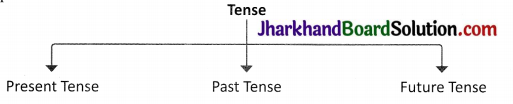
JAC Class 10 English Grammar Tenses -1

1. Present Tense: The form of the verb that refers to present time is said to be in the Present Tense.
Examples:
Dhruv does his homework daily.
The police inspector catches the thieves.

2. Past Tense: The form of the verb that refers to past time is said to be in the Past Tense.
Examples:
Dhruv did his homework daily.
The police inspector caught the thieves.

3. Future Tense: The form of the verb that refers to future time is said to be in the Future Tense.
Examples:
Dhruv will do his homework daily.
The police inspector will catch the thieves.

JAC Class 10 English Grammar Tenses

Various Forms Of Tenses

Each of the above tenses has four forms as stated below:

JAC Class 10 English Grammar Tenses -2

1. Present Indefinite Tense:

Use(s) of Present Simple Tense
The Present Simple Tense:
expresses an event or action taking place in the present moment.
Examples:
The police stand guard outside the MP’s residence.
The news anchor on TV speaks eloquently.

denotes the habitual action.
Examples:
Ishaan eats breakfast after exercise.
My mother tends to our garden daily in the evening.

expresses universal truth.
Examples:
The Sun is the ultimate source of energy.
The Earth revolves around the sun.

expresses scientific facts.
Examples:
Sound travels slower than light.
Helium is lighter than hydrogen.

JAC Class 10 English Grammar Tenses

Sentence Construction:
1. Affirmative Sentences: With I, we, you, they and plural nouns, we use first form of the verb. With he, she, it or singular nouns, we use first form of the verb + s or es.

Structure: Subject + V1 (s/es) + other words.

Examples:
Mr. Khurana plays golf in the evening.
They participate in all athletic events.

2. Negative Sentences: I, we, you, they and plural nouns are followed by do not. He, she, it and singular nouns are followed by does not.

Structure: Subject + do/does + not + V1 + other words.

Examples:
I do not do work on Sundays.
My granny does not believe in ghosts.

3. Interrogative Sentences: We place Do or Does before the subject and the first form of the verb after the subject.

Structure: Do/Does + subject + V1 + other words?

Examples:
Do we eat wheat flour or millet flour?
Does the chairman allow the employees to give their feedback?

4. Interrogative-Negative Sentences: To make interrogative-negative sentences, helping verb do/does is placed before the subject and not after that.

Structure: Do/Does + subject + not + V1 + other words?

Examples:
Do you not go to park for morning walk?
Does the lion not eat deer?

JAC Class 10 English Grammar Tenses

2. Present Continuous Tense:

Use(s) of Present Continuous Tense-
The Present Continuous Tense:
denotes an action/event/activity going on at the time of speaking.
Examples:
Kabir’s mother is calling him to complete his homework.
The servant is bringing tea for the guests.

denotes an action which is likely to happen in the near future.
Example:
The economic condition of the nation is going to improve in the current financial year.

Sentence Construction:
1. Affirmative Sentences: We use is with he, she, it and singular noun’, am with / and are with we, you, they and a plural noun.

Structure: Subject + is/am/are + V1 + ing + other words.

Examples:
She is thinking to switch her job.
They are sitting on a dhama against the new tax regime.
I am driving my car.

2. Negative Sentences: To make negative sentences, not is placed between the helping verb and the principal verb.

Structure: Subject + is/am/are + not + V1 + ing + other words.

Examples:
The government is not taking strict action against the criminals.
The new generation computers are not working properly due to a fault in their CPUs. ”
I am not going outside in the rain.

3. Interrogative Sentences: The helping verb is placed before the subject.

Structure: Ts/Am/Are + subject + V1 + ing + other words?

Examples:
Is the new fan making noise?
Am I doing my work properly?
Are we going out for dinner?

4. Interrogative-Negative Sentences: To make interrogative-negative sentences, helping verb is/ am/are come before the subject and not after that.

Structure: Is/Am/Are + subject + not + V1 + ing + other words?

Examples:
Is he not coming to the workshop?
Am I not drawing the sketch neatly?
Are they not frightening the juniors?

3. Present Perfect Tense:

Use(s) of Present Perfect Tense-

The Present Perfect Tense:
expresses an action that has been completed.
Example:
The President of India has addressed the nation.

denotes a past time the result of which is continuing in the present.
Example:
We have lived in Dehradun for ten years.

Sentence Construction
1. Affirmative Sentences: Helping verbs has, have are used as per the number and person of the subject. Has is used with he, she, it and singular nouns and have with I, we, you, they and plural nouns.

Structure: Subject + has/have + V3 + other words.

Examples:
The USA and North Korea have ended their old enmity.
The delivery boy has delivered the pizza.

2. Negative Sentences: To make negative sentences, not is placed between the helping verb and the main verb.

Structure: Subject + has/have + not + V3 + other words.

Examples:
I have not watched any of the new movies.
The maid has not washed the clothes.

3. Interrogative Sentences: The helping verb (has/have) comes before the subject.

Structure: Has/have + subject + V3 + other words?

Examples:
Has Rohit ever been to the Science Museum?
Have you cleared the first-term exams?

4. Interrogative-Negative Sentences: To make interrogative-negative sentences, helping verb has/have comes before the subject and not after that.

Structure: Has/Have + subject + not + V3 + other words?

Examples:
Has she not prepared for the examination?
Have they not completed their work?

Note: Adverbs like yet, so far, ever since, already, just, just now, presently, once, twice, etc., are often used in sentences of present perfect tense.
Example: The fire fighters have already doused the fire.

JAC Class 10 English Grammar Tenses

4. Present Perfect Continuous Tense:

Use(s) of Present Perfect Continuous Tense-
The Present Perfect Continuous Tense is used to express an action/event/activity that started in the past and continues in the present (with a time of reference).
Example: Nikita has been painting a picture for two hours.

Sentence Construction:

1. Affirmative Sentences: Has/Have is accompanied by been before the first form of the verb + ing.

Structure: Subject + has/have + been + V1 + ing + other words + for/since + time phrase.

Examples:
This statue has been standing tall here since the 1950s.
They have been managing the crowd for the past three hours.

2. Negative Sentences: Here, not comes between has/have and been.

Structure: Subject + has/have + not + been + V1 + ing + other words + for/since + time phrase.

Examples:
He has not been studying continuously for seven hours.
I have not been doing my work since morning.

3. Interrogative Sentences: Helping verb has/have comes in the starting of the sentence before the subject and been follows the subject.

Structure: Has/Have + subject + been + V1 + ing + other words + for/since + time phrase?

Examples:
Has the boy been understanding anything for the past half an hour?
Have the devotees been visiting this shrine since 1900s?

4. Interrogative-Negative Sentences: To make interrogative-negative sentences, helping verb has/have comes before the subject and not after that.

Structure: Has/Have + subject + not + been + V1 + ing + other words + for/since + time phrase?

Examples:
Has he not been doing his homework properly for one month?
Have the soldiers been guarding the frontier since the independence?

Use of Since and For
Prepositions since and for are used mainly in perfect continuous tenses.

Since is used with the point of time at which an action started.
Examples:
Everyone has been benefiting from the government’s insurance scheme since its inception.
This shop has been serving its customers since 1970.

For is used with the period of time during which the action continued.
Examples:
The athletes from Australia have been winning the World Championship for nine years.
Rita has been running in the park for one hour.

JAC Class 10 English Grammar Tenses

B. Past Tense

1. Past Indefinite/Simple Tense:

Use(s) of Past Indefinite Tense-

The Past Indefinite Tense:
expresses an action that took place in the past.
Example: Alexander Graham Bell invented the phone in 1876.

denotes a habitual action in the past.
Example: I went to tuition classes till 10th standard.

Sentence Construction:
1. Affirmative Sentences: In affirmative sentences, second form of the verb is used.

Structure: Subject + V2 + other words.

Example: The bird flew right into the glass window.

2. Negative Sentences: In negative sentences, after the subject, did not and the first form of the verb is used.

Structure: Subject + did + not + V1 + other words.

Example: She did not lose her temper after the poor performance.

3. Interrogative Sentences: Helping verb did is placed before the subject and the first form of the verb is used after the subject.

Structure: Did + subject + V1 + other words?

Example: Did Renu bake a chocolate cake for the guests?

4. Interrogative-Negative Sentences: To make interrogative-negative sentences, helping verb did is placed before the subject and not comes after the subject.

Structure: Did + subject + not + V1 + other words?

Example: Did the game not resume after the rain?

JAC Class 10 English Grammar Tenses

2. Past Continuous Tense:

Use(s) of Past Continuous Tense-
The Past Continuous Tense is used to denote an activity that was in progress in the past. f-
Example: Sonia was singing a song on the stage.

It is also used with the simple past tense to denote that one activity was in progress while another took place.
Example: They were sleeping when the door bell rang. .

Sentence Construction:
1. Affirmative Sentences: Helping verbs was, were are used according to the subject, with first form of the Verb + ing.

Structure: Subject + was/were + V1 + ing + other words.

Examples:
Manish was running in the marathon.
The leaves were falling from the tree.

2. Negative Sentences: In negative sentences, not is placed between the helping verb and the present participle (First form + ing) of the main verb.

Structure: Subject + was/were + not + V1 + ing + other words.

Examples:
The teacher was not teaching the students.
We were not going across the canal.

3. Interrogative Sentences: The helping verb was/were is put before the subject.

Structure: Was/were + subject + V1 + ing + other words?

Examples:
Was the commander allowing the soldiers to sleep for seven hours?
Were the sages preaching the people about happiness?

4. Interrogative-Negative Sentences: In it, helping verb was/were is put before the subject and not is placed after the subject.

Structure: Was/were + subject + not + V1 + ing + other words?

Examples:
Was he not researching about his new assignment?
Were the students not studying quietly?

JAC Class 10 English Grammar Tenses

3. Past Perfect Tense:

Use(s) of Past Perfect Tense-
The Past Perfect Tense expresses an action that has already been completed in the past before the beginning of an another action.

Example: Everyone had solved the sum before the teacher dictated the complete statement.

Sentence Construction
1. Affirmative Sentences: The helping verb had and the third form of the verb are used with all the subjects.

Structure: Subject + had + V3 + other words.

Example: Prem had written all four paragraphs before he went to play outside.

2. Negative Sentences: To make negative sentences, we use not after had.

Structure: Subject + had + not + V3 + other words.

Example: The train had not left when I reached the platform.

3. Interrogative Sentences: To make interrogative sentences, had is put before the subject.

Structure: Had + subject + V1 + other words?

Example: Had you booked a hotel room before you started packing for the trip?

4. Interrogative-Negative Sentences: These are formed using had before the subject and not after the subject.

Structure: Had + subject + not + V3 + other words?

Example:
Had Arun not bought any medicine before the doctor prescribed him one?

4. Past Perfect Continuous Tense:

Use(s) of Past Perfect Continuous Tense-

The Past Perfect Continuous Tense expresses an action in the past, which was going on with respect to a given reference of time in the past.
Example: They had,been studying for the examination since evening, when the exam got cancelled.

It is also used to denote an action that began before the time of speaking in the past.
Example: The teacher had been teaching the children of classes 5-10 for thirteen years.

It is also used to denote a repeated action in the past.
Example: The board members had been trying to meet the CEO of the company for the past two weeks.

Sentence Construction:
1. Affirmative Sentences: We use had been and present participle with all the subjects.

Structure: Subject + had + been + V1 + ing + for/since + other words.

Example: Brinda had been watching movies since morning.

2. Negative Sentences: In negative sentences, not is used between had and been.

Structure: Subject + had + not + been + V1 + ing + for/since + other words.

Example: They had not been running their business for fifty years.

3. Interrogative Sentences: In these, had precedes the subject and been follows it.

Structure: Had + subject + been + V1 + ing + for/since + other words?

Example: Had I been using my smart phone since 2015?

4. Interrogative-Negative Sentences: These sentences are formed using had before the subject and not after the subject.

Structure: Had + subject + not + been + V1 + ing + for/since + other words?

Example: Had the new actress not been starring in the TV serials for two years?

JAC Class 10 English Grammar Tenses

3. Future Tense

1. Simple Future Tense:

Use(s) of Simple Future Tense-
The Simple Future Tense expresses an action that takes place at some time in future.
Example: The flight to New York will arrive at 7:40 am.

This tense is also used to denote the opinion of the speaker.
Example: I believe that Ramesh will definitely impress the investors.

In future tense. we use shall and will to denote future time.
Will is used w itli the lirst person, i.e.. 1 and Wo to denote determination and willingness.
Example: My friends will delimteK support me.

Shall is used with the HIM person to denote an offer.
Example: Shall we proceed to the foodcountei?

Sentence Construction:
1. Affirmative Sentences: We use shall with / and we only; and will with rest of the pronouns and all nouns.

Structure: Subject + shall/will + V1 + other words.

Examples:
The renowned author, Mr Rakul will launch his new novel next week.
I shall remain inside the room.

2. Negative Sentences: We add not after will and shall.

Structure: Subject + shall/will + not + V1 + other words.
Examples:
The security guards will not allow anyone to enter into the premises.
We shall not interfere in your work.

3. Interrogative Sentences: We use shall or will before the subject and first form of the verb after the subject.

Structure: Shall/Will + subject + V1 + other words?

Examples: Will the traffic police announce the traffic advisory for smooth flow of vehicles at Diwali?

4. Interrogative-Negative Sentences: In it, we use shall or will before the subject and not after the subject.

Structure: Shall/Will + subject + not + V1 + other words?

Examples:
Will he not shift to Australia for work?
Shall we not allow children to go outside at night?

2. Future Continuous Tense:

Use(s) of Future Continuous Tense-
The Future Continuous Tense denotes an action going on at some time in future.
Example: The babysitter will be taking care of the child on Sunday.

Sentence Construction:
1. Affirmative Sentences: We use shall be/will be according to the subject, followed by first form of the verb + ing.

Structure: Subject + shall/will + be + V1 + ing + other words.

Examples:
I shall be doing my project on my own.
They will be attending the grand celebration party of new year.

2. Negative Sentences: We use not between shall/will and be.

Structure: Subject + shall/will + not + be + V1 + ing + other words.

Examples:
We shall not be writing any letter now.
The crowd will not be protesting against the police.

3. Interrogative Sentences: We use shall or will before the subject and be after the subject.

Structure: Shall/Will + subject + be + V1 + ing + other words?

Examples:
Will Naresh be performing on stage?
Shall I be cutting the pizza into four pieces?

4. Interrogative-Negative Sentences: We use shall and will before the subject and not after the subject.

Structure: Shall/Will + subject + not + be + V1 + ing + other words?

Examples:
Will the company not be disbursing the bonus to the employees?
Shall I not be bringing my pet dog along with me?

3. Future Perfect Tense:

Use(s) of Future Perfect Tense-
The Future Perfect Tense denotes an action that will be completed in future with reference to a given time.
Example: Sahil will have got a government job by next year.

Sentence Construction:
1. Affirmative Sentences: We use shall have/will have according to the subject and add third form of the verb.

Structure: Subject + shall/will + have + V3 + other words.

Examples:
Sagar will have travelled 2000 kms on his bike by next week.
I shall have eaten my food before 8 pm.

2. Negative Sentences: We use not between shall/will and have.

Structure: Subject + shall/will + not + have + V3 + other words.

Examples:
Kiara will not have purchased a new purse by next two years.
We shall not have reached Mumbai before sunset.

3. Interrogative Sentences: We use shall or will before the subject and have after it.

Structure: Shall/Will + subject + have + V3 + other words?

Examples:
Will Malhotras have moved out of this town by next month?
Shall we have donated 50,000 rupees before the new year starts?

4. Interrogative-Negative Sentences: We use shall/will before the subject and not have after it.

Structure: Shall/Will + subject + not + have + V3 + other words?

Examples:
Will the children not have practised enough by the time their exams start?
Shall I not have come to you before this month ends?

JAC Class 10 English Grammar Tenses

4. Future Perfect Continuous Tense:

Use(s) of Future Perfect Continuous Tense-

The Future Perfect Continuous Tense expresses an action continuing beyond some given time in future.
Example:
The direct flight to California will have been completing one year of its successful operation by next week.

Sentence Construction
1. Affirmative Sentences: In affirmative sentences, we use shall have been/will have been followed by the first form of the verb + ing.

Structure: Subject + shall/will + have + been + V1 + ing + other words.

Examples:
The salesman will have been selling all the policies by next week.
I shall have been waiting for twenty minutes, at 6 pm.

2. Negative Sentences: In negative sentences, not is used between shall/will and have been.

Structure: Subject + shall/will + not + have + been + V1 + ing + other words.

Examples:
They will not have been doing their new assignment by next Wednesday.
I shall not have been leaving for Amsterdam next Tuesday.

3. Interrogative Sentences: Shall/Will comes before the subject and have been after it.

Structure: Shall/Will + subject + have + been + V1 + ing + other words?

Examples:
Will Dev have been completing his homework by evening?
Shall we have been watching movie in the theatre in evening?

4. Interrogative-Negative Sentences: We use shall/will before the subject and not have been after it.

Structure: Shall/Will + subject + not + have + been + V1 + ing + other words?

Examples:
Will Vaani not have been going to Mumbai by next Saturday?
Shall we not have been decorating our house by morning?

JAC Class 10 English Grammar Tenses

Exercise (Solved)

(A) PRESENT TENSE

Answer any ten of the questions given below by choosing the most appropriate option. [10 x 1 = 10]

1. My mother usually …………. at five o’clock early in the morning.
(a) gets up
(b) getting up
(c) got up
(d) get up
Answer:
(a) gets up

2. Rohan …………. his grandparents since Monday.
(a) has not been visiting
(b) did not visit
(c) is visiting
(d) had been visiting
Answer:
(a) has not been visiting

3. His friend who …………. from Tamil Nadu visited me yesterday.
(a) hailing
(b) hails
(c) hailed
(d) hail
Answer:
(b) hails

4. He …………. for Vice President in this election.
(a) is not run
(b) is not runs
(c) is not running
(d) is not ran
Answer:
(c) is not running

5. Choose the sentence that is in the form of present perfect continuous tense.
(a) Which TV channel do you usually watch?
(b) Which TV channel are you usually watching?
(c) Which TV channel have you usually watched?
(d) Which TV channel have you been usually watching?
Answer:
(d) Which TV channel have you been usually watching?

JAC Class 10 English Grammar Tenses

6. Choose the sentence that is in the form of present perfect tense.
(a) She has reached the railway station by 9 pm.
(b) She have reached the railway station by 9 pm.
(c) She reaches the railway station by 9 pm.
(d) She has been reaching the railway station by 9 pm.
Answer:
(a) She has reached the railway station by 9 pm.

7. She …………. to Mumbai yesterday.
(a) is gone
(b) has gone
(c) have gone
(d) was gone
Answer:
(b) has gone

8. She …………. in the kitchen for more than an hour.
(a) is not
(b) has not been
(c) have not been
(d) none of the above
Answer:
(b) has not been

9. She …………. living in this house for the last ten years.
(a) is
(b) are
(c) has been
(d) have been
Answer:
(c) has been

10. Rajesh …………. to Karnataka.
(a) belong
(b) belongs
(c) belonged
(d) none of these
Answer:
(b) belongs

11. Akash …………. not completed his homework vet.
(a) is
(b) has
(c) was
(d) have
Answer:
(b) has

JAC Class 10 English Grammar Tenses

12. Raju …………. gone to Patna last night.
(a) is
(b) am
(c) are
(d) has
Answer:
(d) has

(B) PAST TENSE

Answer any ten of the questions given below by choosing the most appropriate option. [10 x 1 = 10]

1. Which of the following sentences is not written in the simple past tense?
(a) Hemant did not appear in the examination.
(b) Where did Aruna keep the papers?
(c) Did you visit the trade fair last month?
(d) She had already met her manager.
Answer:
(d) She had already met her manager.

2. The teacher …………… an exciting question in the classroom yesterday.
(a) has asked
(b) has been asking
(c) asked
(d) was asked
Answer:
(c) asked

3. You both were not studying when I …………… for my exam.
(a) preparing
(b) prepared
(c) had prepared
(d) waspreparing
Answer:
(d) waspreparing

4. They were playing basketball yesterday. Change the sentence into simple past tense.
(a) They had been playing basketball yesterday.
(b) They played basketball yesterday.
(c) They had played basketball yesterday.
(d) They were playing basketball yesterday.
Answer:
(a) They had been playing basketball yesterday.

5. Manoj …………… the gift yesterday, because his mother asked him to do so.
(a) would open
(b) have opened
(c) had been opened
(d) opened
Answer:
(d) opened

6. He …………… the door because he …………… for someone.
(a) doesn’t close / was waiting
(b) will not close / waiting
(c) didn’t close / was waiting
(d) close / was waiting
Answer:
(c) didn’t close / was waiting

JAC Class 10 English Grammar Tenses

7. Which of the following sentences is written in past perfect tense?
(a) They were going to school.
(b) The train had left the station before I reached.
(c) They had been working on the project since five weeks.
(d) The boys were playing games when it started raining.
Answer:
(b) The train had left the station before I reached.

8. What …………… you …………… last week?
(a) were/do
(b) did/does
(c) wasn’t/did
(d) did/do
Answer:
(d) did/do

9. She …………… all evening on Monday.
(a) knitting
(b) am knitting
(c) was knitting
(d) has knitted
Answer:
(c) was knitting

10. Raiesh told me that he …………… won a prize.
(a) has
(b) have
(c) had
(d) is
Answer:
(c) had

11. Rakesh …………… keeping well since a vear.
(a) has not been
(b) have not been
(c) had not been
(d) none of these
Answer:
(c) had not been

12. Riva …………… a new mobile last month.
(a) purchases
(b) purchased
(c) is purchase
(d) none of these
Answer:
(b) purchased

JAC Class 10 English Grammar Tenses

(C) FUTURE TENSE

Answer any ten of the questions given below by choosing the most appropriate option. [10 x 1 = 10]

1. They will be sleeping till late at night on Sunday. Write the sentence in negative interrogative for future continuous tense.
(a) Will they be sleeping till late at night on Sunday?
(b) They will not be sleeping till late at night on Sunday.
(c) They had been sleeping till late at night on Sunday.
(d) Will they not be sleeping till late at night on Sunday?
Answer:
(d) Will they not be sleeping till late at night on Sunday?

2. At three o’clock tomorrow, she …………… at the gym.
(a) will be
(b) is
(c) are
(d) none of these
Answer:
(a) will be

3. Mohini …………… to the class next week.
(a) wasn’t coming
(b) will not coming
(c) had not been coming
(d) will not be coming.
Answer:
(d) will not be coming.

4. Which of the following sentences is in future continuous tense?
(a) My mother did a lot for me when she was alive.
(b) She has just started her class.
(c) We have been joined the meeting before we came here.
(d) My parents will be happy tomorrow during my dance performance.
Answer:
(d) My parents will be happy tomorrow during my dance performance.

JAC Class 10 English Grammar Tenses

5. Carol thinks the Congress …………… the election this time.
(a) will win
(b) will be winning
(c) will have won
(d) will have been winning
Answer:
(a) will win

6. You ………….. very differently about this when you are older.
(a) will think
(b) will be thinking
(c) will have been thinking
(d) will have thought
Answer:
(b) will be thinking

7. When …………. all the social studies assignments?
(a) will you have completed
(b) will you not be completing
(c) will you had not been completing
(d) None of the above.
Answer:
(a) will you have completed

8. We …………… to the airport to see off our cousin Madhuri.
(a) shall have gone
(b) shall be going
(c) shall go
(d) shall have been going
Answer:
(c) shall go

9. Will …………… your project by this time next week?
(a) you have finished
(b) you have been finishing
(c) you be finishing
(d) you finish
Answer:
(a) you have finished

10. The vehicles …………… not ply on the road due to lockdown.
(a) is
(b) will
(e) shall
(d) are
Answer:
(b) will

JAC Class 10 English Grammar Tenses

11. New guidelines …………… available for the public soon.
(a) will be
(b) shall be
(c) shall
(d) will
Answer:
(a) will be

12. Will she …………… writing a novel?
(a) has been
(b) have been
(e) has
(d) had
Answer:
(b) have been

JAC Class 10 English Solutions

JAC Class 10 Social Science Solutions Civics Chapter 1 सत्ता की साझेदारी

JAC Board Class 10th Social Science Solutions Civics Chapter 1 सत्ता की साझेदारी

JAC Class 10th Civics सत्ता की साझेदारी Textbook Questions and Answers

प्रश्न 1.
आधुनिक लोकतान्त्रिक व्यवस्थाओं में सत्ता की साझेदारी के अलग-अलग तरीके क्या हैं ? इनमें से प्रत्येक का एक उदाहरण भी दें।
अथवा
सत्ता की साझेदारी के किन्हीं तीन रूपों का वर्णन कीजिए।
उत्तर:
आधुनिक लोकतान्त्रिक व्यवस्थाओं में सत्ता की साझेदारी के अनेक रूप हो सकते हैं:

1. शासन के विभिन्न अंग; जैसे-विधायिका, कार्यपालिका, न्यायपालिका के बीच सत्ता का बँटवारा रहता है। न्यायपालिका, कार्यपालिका पर तथा विधायिका द्वारा बने कानून पर अंकुश रखती है।

2.सरकारों के बीच विभिन्न स्तरों पर सत्ता का बँटवारा हो सकता है। जैसे पूरे देश के लिए एक सामान्य सरकार हो और फिर राज्य या क्षेत्रीय स्तर पर अलग-अलग सरकार रहे।

3. सत्ता का बँटवारा विभिन्न सामाजिक समूहों, मसलन भाषायी और धार्मिक समूहों के बीच हो सकता है। बेल्जियम में सामुदायिक सरकार इस व्यवस्था का एक अच्छा उदाहरण है।

4. सत्ता के बँटवारे का एक रूप हम विभिन्न प्रकार के दबाव-समूह और आन्दोलनों द्वारा शासन को प्रभावित और नियन्त्रित करने के तरीके में भी लक्ष्य कर सकते हैं। लोकतन्त्र में लोगों के समक्ष सत्ता के दावेदारों के बीच चुनाव का विकल्प रहता है। इसमें विभिन्न राजनीतिक दल सत्ता के लिए आपस में प्रतिस्पर्धा करते हैं। दलों की यह प्रतिद्वन्द्विता ही इस बात को सुनिश्चित करती है कि सत्ता एक व्यक्ति या समूह के हाथ में न रहे। सत्ता विभिन्न दलों के मध्य आती-जाती रहती है।

JAC Class 10 Social Science Solutions Civics Chapter 1 सत्ता की साझेदारी

प्रश्न 2.
भारतीय सन्दर्भ में सत्ता की हिस्सेदारी का एक उदाहरण देते हुए इसका एक युक्तिपरक और एक नैतिक कारण बताएँ।
उत्तर:
भारत जनसांख्यिक विविधता वाला देश है, जहाँ समाज में एक जाति व्यवस्था कायम है। प्रत्येक जाति का अपना हित है। अतः किसी संघर्ष तथा राजनीतिक अस्थिरता को कम करने के लिए सत्ता में भागीदारी समान रूप से रखी गयी है। भारत में लोकतान्त्रिक शासन व्यवस्था अपनायी गयी है।

पिछड़े वर्गों को प्राचीनकाल से ही राजनीतिक अधिकारों से वंचित रखा गया है। जनसंख्या अधिक होने पर भी उनकी राजनीतिक भागीदारी संख्या के आधार पर कम है। अब उन्हें सत्ता में भागीदारी करने का अवसर प्रदान किया जा रहा है। सत्ता की हिस्सेदारी का यह दृष्टिकोण नैतिक दृष्टिकोण कहलाता है।

प्रश्न 3.
इस अध्याय को पढ़ने के बाद तीन छात्रों ने अलग-अलग निष्कर्ष निकाले। आप इनमें से किससे सहमत हैं और क्यों ? अपना जवाब करीब 50 शब्दों में दें। थम्मन-जिन समाजों में क्षेत्रीय, भाषायी और जातीय आधार पर विभाजन हो, सिर्फ वहीं सत्ता की साझेदारी ज़रूरी है। मथाई सत्ता की साझेदारी सिर्फ ऐसे बड़े देशों के लिए उपयुक्त है, जहाँ क्षेत्रीय विभाजन मौजूद होते हैं। औसेफ-हर समाज में सत्ता की साझेदारी की ज़रूरत होती है, भले ही वह छोटा हो या उसमें सामाजिक विभाजन न हों।
उत्तर:
औसेफ का निष्कर्ष उत्तम है। मैं औसेफ के निष्कर्ष से सहमत हूँ, जिसमें प्रत्येक समाज की सत्ता में साझेदारी आवश्यक होती है। चाहे वह समाज छोटा हो या बड़ा, उसमें सामाजिक विभाजन हो या न हो, क्योंकि यह लोकतन्त्र का मौलिक सिद्धान्त है। इसमें लोग अपने प्रतिनिधियों द्वारा स्वयं शासन करते हैं। समाज छोटा हो या बड़ा या उसमें विभाजन हो अथवा न हो। इससे किसी भी प्रकार की राजनीतिक अस्थिरता को रोका जा सकता है तथा संघर्ष की सम्भावना नहीं रहती इसलिए सभी को सत्ता में भागीदारी का अवसर प्रदान करना चाहिए।

JAC Class 10 Social Science Solutions Civics Chapter 1 सत्ता की साझेदारी

प्रश्न 4.
बेल्जियम में ब्रूसेल्स के निकट स्थित शहर मर्चटेम के मेयर ने अपने यहाँ के स्कूलों में फ्रेंच बोलने पर लगी रोक को सही बताया है। उन्होंने कहा कि इससे डच भाषा न बोलने वाले लोगों को इस फ्लेमिश शहर के लोगों से जुड़ने में मदद मिलेगी। क्या आपको लगता है कि यह फैसला बेल्जियम की सत्ता की साझेदारी की व्यवस्था की मूल भावना से मेल खाता है ? अपना जवाब करीब 50 शब्दों में लिखें।
उत्तर:
नहीं, यह प्रतिबन्ध बेल्जियम में सत्ता में भागीदारी की व्यवस्था से मेल नहीं खाता है, क्योंकि बेल्जियम में विभिन्न भाषा-भाषी लोग रहते हैं। यहाँ डच बोलने वाले लोग रहते हैं, जो फ्लेमिश क्षेत्र में निवास करते हैं तथा वेलोनिया क्षेत्र में रहने वाले लोग फ्रेंच बोलते हैं।

यदि एक क्षेत्र में एक भाषा पर प्रतिबन्ध लगाया जाता है तो दूसरे क्षेत्र में रहने वाले लोग दूसरी भाषा पर प्रतिबन्ध लगाने की माँग करेंगे, इससे राजनीतिक अस्थिरता और संघर्ष प्रारम्भ हो जायेगा और देश में अशान्ति फैल जायेगी। अतः यह फैसला सत्ता की भागीदारी की व्यवस्था की मूल भावना से मेल नहीं खाता है।

प्रश्न 5.
नीचे दिए गए उद्धरण को गौर से पढ़ें और इसमें सत्ता की साझेदारी के जो युक्तिपरक कारण बताए गए हैं, उसमें से किसी एक का चुनाव करें।
“महात्मा गाँधी के सपनों को साकार करने और अपने संविधान निर्माताओं की उम्मीदों को पूरा करने के लिए हमें पंचायतों को अधिकार देने की ज़रूरत है। पंचायती राज ही वास्तविक लोकतन्त्र की स्थापना करता है। यह सत्ता उन लोगों के हाथों में सौंपता है, जिनके हाथों में इसे होना चाहिए। भ्रष्टाचार कम करने और प्रशासनिक कुशलता को बढ़ाने का एक उपाय पंचायतों को अधिकार देना भी है। जब विकास की योजनाओं को बनाने और लागू करने में लोगों की भागीदारी होगी तो इन योजनाओं पर उनका नियन्त्रण बढ़ेगा। इससे भ्रष्ट बिचौलियों को खत्म किया जा सकेगा। इस प्रकार पंचायती राज लोकतन्त्र की नींव को मज़बूत करेगा।”
उत्तर:
साझेदारी का युक्तिपरक कारण-पंचायतों को शक्ति देना भ्रष्टाचार को कम करने तथा प्रशासनिक दक्षता बढ़ाने का भी एक तरीका है।

JAC Class 10 Social Science Solutions Civics Chapter 1 सत्ता की साझेदारी

प्रश्न 6.
सत्ता के बँटवारे के पक्ष और विपक्ष में कई तरह के तर्क दिए जाते हैं। इनमें से जो तर्क सत्ता के बँटवारे के पक्ष में हैं, उनकी पहचान करें और नीचे दिए गए कोड से अपने उत्तर का चुनाव करें। सत्ता की साझेदारी
(क) विभिन्न समुदायों के बीच टकराव को कम करती है।
(ख) पक्षपात का अंदेशा कम करती है।
(ग) निर्णय लेने की प्रक्रिया को अटका देती है।
(घ) विविधताओं को अपने में समेट लेती है।
(ङ) अस्थिरता और आपसी फूट को बढ़ाती है।
(च) सत्ता में लोगों की भागीदारी बढ़ाती है।
(छ) देश की एकता को कमज़ोर करती है।

JAC Class 10 Social Science Solutions Civics Chapter 1 सत्ता की साझेदारी 1

उत्तर:
(सा) क, ख, घ, च

प्रश्न 7.
बेल्जियम और श्रीलंका की सत्ता में साझेदारी की व्यवस्था के बारे में निम्नलिखित बयानों पर विचार करें:
(क) बेल्जियम में डच-भाषी बहुसंख्यकों ने फ्रेंच-भाषी अल्पसंख्यकों पर अपना प्रभुत्व जमाने का प्रयास किया।
(ख) सरकार की नीतियों ने सिंहली-भाषी बहुसंख्यकों का प्रभुत्व बनाए रखने का प्रयास किया।
(ग) अपनी संस्कृति और भाषा को बचाने तथा शिक्षा तथा रोजगार में समानता के अवसर के लिए श्रीलंका के तमिलों ने सत्ता को संघीय ढाँचे पर बाँटने की माँग की।
(घ) बेल्जियम में एकात्मक सरकार की जगह संघीय शासन व्यवस्था लाकर मुल्क को भाषा के आधार पर टूटने से बचा लिया गया।
ऊपर दिए गए बयानों में से कौन-से सही हैं ?
(सा) क. ख, ग और घ
(रे) क, ख और घ
(गा) ग घ और ख
(मा) ख, ग और घ
उत्तर:
(२) क, ख, ग और घ।

JAC Class 10 Social Science Solutions Civics Chapter 1 सत्ता की साझेदारी

प्रश्न 8.
सूची 1 (सत्ता के बँटवारे के स्वरूप) और सूची 2 (शासन के स्वरूप) में मेल कराएँ और नीचे दिए गए कोड का उपयोग करते हुए सही जवाब दें

सूची 1सूची 2
1. सरकार के विभिन्न अंगों के बीच सत्ता का बँटवारा(क) सामुदायिक सरकार
2. विभिन्न स्तर की सरकारों के बीच अधिकारों का बँटवारा(ख) अधिकारों का वितरण
3. विभिन्न सामाजिक समूहों के बीच सत्ता की साझेदारी(ग) गठबन्धन सरकार
4. दो या अधिक दलों के बीच सत्ता की साझेदारी(घ) संघीय सरकार

JAC Class 10 Social Science Solutions Civics Chapter 1 सत्ता की साझेदारी 2
उत्तर:
(गा) 1. ख, 2. घ, 3. क, 4. ग।

प्रश्न 9.
सत्ता की साझेदारी के बारे में निम्नलिखित दो बयानों पर गौर करें और नीचे दिए गए कोड के आधार पर जवाब दें
(अ) सत्ता की साझेदारी लोकतन्त्र के लिए लाभकर है।
(ब) इससे सामाजिक समूहों में टकराव का अंदेशा घटता है। इन बयानों में कौन सही है और कौन गलत?
(क) अ सही है लेकिन ब गलत है।
(ख) अ और ब दोनों सही हैं।
(ग) अ और ब दोनों गलत हैं।
(घ) अ गलत है लेकिन ब सही है।
उत्तर:
(ख) अ और ब दोनों सही हैं।

गतिविधि एवं क्रियाकलाप आधारित प्रश्न

उन्नी-मुन्नी के सवाल (पृष्ठ संख्या 2)

प्रश्न 1.
मेरे दिमाग में सीधा-सा समीकरण यह है कि सत्ता बँटवारा = सत्ता के टुकड़े करना = देश को कमज़ोर करना। हम इस बात से शुरुआत क्यों कर रहे हैं ?
उत्तर:
ऐसा कुछ भी नहीं है कि सत्ता के बँटवारे या सत्ता के टुकड़े करने से देश कमज़ोर होगा। वास्तविकता यह है कि सत्ता के टुकड़े करने अर्थात् सत्ता की साझेदारी से देश मज़बूत होता है। यूरोप का बेल्जियम नामक देश इसका स्पष्ट उदाहरण है।

मानचित्र (पृष्ठ संख्या 2, 3)

प्रश्न 2.
बेल्जियम और श्रीलंका के मानचित्रों को देखें। इनके किस इलाके में विभिन्न समुदायों की सघन आबादी नज़र आ रही है?
उत्तर:
1. बेल्जियम में फ्रेंच और डच भाषी लोगों के समूह हैं। फ्रेंच भाषी लोग देश के उत्तर में स्थित वेलोनिया में रहते हैं तथा डच भाषी लोग फ्लेमिश इलाके में रहते हैं, जो दक्षिण प्रदेश है। जर्मन बोलने वाले लोग र्वी बेल्जियम में रहते हैं।

2. श्रीलंका में सिंहलियों का समूह प्रमुख है। सिंहली कुछ भागों को छोड़कर सम्पूर्ण श्रीलंका निवास करते हैं। श्रीलंका के तमिल भाषी लोग उत्तरी एवं पूर्वी समुद्रतटीय प्रदेशों में रहते हैं। भारतीय मूल के तमिल भाषी लोग उत्तरी, दक्षिणी तथा केन्द्रीय प्रदेश में निवास करते हैं। मुस्लिम समुदाय भी अल्प मात्रा में श्रीलंका में निवास करता है।

उन्नी-मुन्नी के सवाल (पृष्ठ सं. 4)

प्रश्न 3.
बहुसंख्यक समुदाय के शासन में क्या हर्ज है ? अगर श्रीलंका में सिंहलियों का राज नहीं होगा तो किसका राज होगा?
उत्तर:
जो राजनीतिक दल सबसे अधिक सीटें प्राप्त करता है, वही शासन करता है। चाहे वह अल्पसंख्यक हो या बहुसंख्यक। यदि शासन बहुसंख्यक, समुदाय के प्रतिनिधियों द्वारा चलाया जाता है तो उसे सभी समुदायों के विकास के लिए कार्य करना होगा। यदि सिंहली सर्वाधिक सीटें प्राप्त नहीं करते तो इस स्थिति में जिस दल को सर्वाधिक सीटें प्राप्त होंगी वह शासन करेगा।

JAC Class 10 Social Science Solutions Civics Chapter 1 सत्ता की साझेदारी

प्रश्न 4.
एनिते बेल्जियम के उत्तरी इलाके के एक डच माध्यम के स्कूल में पढ़ती है। फ्रेंच बोलने वाले उसके अनेक स्कूली साथी चाहते हैं कि पढ़ाई फ्रेंच में ही हो। सेल्वी श्रीलंका की राजधानी कोलंबो के एक स्कूल में पढ़ती है। वह और उसके स्कूल के बहुत-से दोस्त तमिल-भाषी हैं और इनके माता-पिता पढ़ाई का माध्यम तमिल ही रखना चाहते हैं।
कौन-सी सरकार एनिते और सेल्वी के माता-पिता की इच्छा पूरी कर सकती है ? किसे सफलता मिलने की सम्भावना अधिक है और क्यों ?
उत्तर:
बेल्जियम की सरकार एनिते के माता-पिता की इच्छा पूरी कर सकती है। एनिते के माता-पिता को सफलता मिलने की अधिक सम्भावना है क्योंकि बेल्जियम में सामुदायिक सरकार का चुनाव एक ही भाषायी समुदाय द्वारा किया जाता है। इस सरकार को सांस्कृतिक, शैक्षणिक एवं भाषायी समस्याओं के समाधान की शक्ति प्राप्त है।

पाठगत प्रश्न (पृष्ठ संख्या 7)

प्रश्न 5.
क्या आप बेचारे विक्रम को बेताल के सवाल का जवाब देने में मदद कर सकते हैं ?
उत्तर:
हाँ, मैं विक्रम को बेताल के सवाल का जवाब देने में मदद कर सकता हूँ। विक्रम के लिए बेताल का सवाल

प्रश्न 6.
अगर आपको लेबनान का कानून फिर से लिखने का अधिकार होता तो आप क्या करते ?
उत्तर:
अगर मुझे लेबनान का कानून फिर से लिखने का अधिकार होता तो मैं सभी लोगों के लिए समान कानून बनाता, जिसमें किसी भी समुदाय का व्यक्ति चुनाव लड़ सकता है।

प्रश्न 7.
क्या आप पुरानी व्यवस्था ही चलने देते या आप कुछ नया करते ?
उत्तर:
नहीं, मैं पुरानी व्यवस्था को हटाकर सभी समुदायों की भागीदारी से सभी पदों पर अच्छे लोगों के चयन की व्यवस्था करता, चाहे वे किसी भी जाति या समुदाय के हों।

कार्टून (पृष्ठ संख्या 8)

प्रश्न 8.
कार्टून के अनुसार लोकतन्त्र और सत्ता के केन्द्रीकरण में क्या सम्बन्ध है? यहाँ जिस चीज की तरफ ध्यान खींचा गया है उसकी पुष्टि में क्या आप कुछ और कार्टून जुटा सकते हैं ?
उत्तर:
कार्टून में दर्शाया गया है लोकतन्त्र को अपने हाथों में रखने के लिए ब्लादिमीर ने ऐसे कानून बनाये जिससे कि वह लोकतन्त्र को अपने इशारों पर नचा सके। लोकतन्त्र मात्र दिखावे के लिए है, इसी बात को इस कार्टून में दिखाया गया है। (कार्टून छात्र स्वयं बनाएँ)

JAC Class 10 Social Science Solutions Civics Chapter 1 सत्ता की साझेदारी

उन्नी-मुन्नी के सवाल (पृष्ठ संख्या 9)

प्रश्न 9.
मेरे स्कूल में हर महीने क्लास मॉनीटर बदल जाता है। क्या आप इसे ही सत्ता की भागीदारी बता रहे हैं ?
उत्तर:
हर महीने क्लास मॉनीटर का बदला जाना सत्ता की भागीदारी नहीं है। सत्ता में भागीदारी करने वाली पार्टियाँ अपनी शक्तियों का प्रयोग करके एक-दूसरे के कार्यों पर नियन्त्रण रखती व प्रभावित करती हैं। क्या समझा? क्या जाना?

(पृष्ठ संख्या 10)

प्रश्न 10.
सत्ता के बँटवारे के कुछ उदाहरण निम्नलिखित हैं। ये सत्ता की साझेदारी की चार श्रेणियों में से किसमें आते हैं? यहाँ सत्ता का साझा कौन किसके साथ कर रहा है ?
मुम्बई उच्च न्यायालय ने महाराष्ट्र सरकार को आदेश दिया कि वह तत्काल कार्रवाई करे और मुम्बई के सात अनाथालयों के 2000 बच्चों के रख-रखाव में सुधार करे।
उत्तर:

  1. यह सरकार के विभिन्न अंगों के बीच शक्ति के विभाजन का उदाहरण है।
  2. सरकार न्यायपालिका और कार्यपालिका के बीच में साझेदारी कर रही है।

1. कनाडा के ओंटेरियो प्रान्त की सरकार ने वहाँ के मूलवासी समुदाय के साथ जमीन के दावों का निपटारा करने पर सहमति दे दी। स्थानीय मामलों के लिए जवाबदेह मन्त्री ने घोषणा की कि सरकार मूलवासी समुदाय के साथ पारस्परिक सम्मान और सहयोग की भावना से काम करेगी।
उत्तर:

  1. यह विभिन्न सामाजिक समूहों के बीच सत्ता की भागीदारी का उदाहरण है।
  2. यहाँ आदिवासियों तथा अन्य सामाजिक समूहों के बीच सत्ता की साझेदारी हो रही है।

2. रूस की दो प्रभावशाली राजनीतिक पार्टियों-द यूनियन ऑन राइट फोर्सेज और लिबरल याब्लोको मूवमेन्ट ने एक मजबूत दक्षिणपंथी गठबन्धन बनाने के लिए अपने संगठनों के विलय का फैसला किया। इनका प्रस्ताव है कि अगले संसदीय चुनाव में हम उम्मीदवारों की साझा सूची बनाएँगे।
उत्तर:

  1. जिस तरह से राजनीतिक दल, दबाव समूह तथा आन्दोलन सत्ता को नियन्त्रित या प्रभावित करते हैं, सत्ता का यह विभाजन उसी का उदाहरण है।
  2. यहाँ द यूनियन ऑफ राइट फोर्सेज तथा लिबरल याब्लोको मूवमेन्ट के बीच सत्ता की साझेदारी हो रही है।

3. नाइजीरिया के विभिन्न प्रान्तों के वित्तमन्त्रियों ने एकजुट होकर माँग की है कि संघीय सरकार अपनी आमदनी के स्रोतों को घोषित करे। वे यह भी जानना चाहते थे कि विभिन्न प्रान्तों के बीच राजस्व का बँटवारा किस आधार पर होता है ?
उत्तर:

  1. यह विभिन्न स्तरों पर सत्ता में भागीदारी का उदाहरण है।
  2. यहाँ संघीय सरकार तथा राज्य सरकारों के बीच आपस में सत्ता की भागीदारी हो रही है।

JAC Class 10 Social Science Solutions

JAC Class 10 Social Science Solutions Geography Chapter 7 राष्ट्रीय अर्थव्यवस्था की जीवन रेखाएँ

JAC Board Class 10th Social Science Solutions Geography Chapter 7 राष्ट्रीय अर्थव्यवस्था की जीवन रेखाएँ

JAC Class 10th Geography राष्ट्रीय अर्थव्यवस्था की जीवन रेखाएँ Textbook Questions and Answers

बहुवैकल्पिक

प्रश्न 1.
(i) निम्नलिखित में कौन-से दो दूरस्थ स्थित स्थान पूर्वी-पश्चिमी गलियारे से जुड़े हैं ?
(क) मुम्बई तथा नागपुर
(ख) मुम्बई और कोलकाता
(ग) सिलचर तथा पोरबन्दर
(घ) नागपुर और सिलिगुड़ी
उत्तर:
(ग) सिलचर तथा पोरबन्दर

(ii) निम्नलिखित में से परिवहन का कौन-सा साधन वहनांतरण हानियों तथा देरी को घटाता है ?
(क) रेल परिवहन
(ख) पाइपलाइन
(ग) सड़क परिवहन
(घ) जल परिवहन
उत्तर:
(ख) पाइपलाइन

(iii) निम्नलिखित में से कौन-सा राज्य हजीरा-विजयपुर-जगदीशपुर पाइपलाइन से नहीं जुड़ा है?
(क) मध्य प्रदेश
(ख) गुजरात
(ग) महाराष्ट्र
(घ) उत्तर
उत्तर:
(ग) महाराष्ट्र

(iv) इनमें से कौन-सा पत्तन पूर्वी तट पर स्थित है जो अन्तःस्थलीय तथा अधिकतम गहराई का पत्तन है तथा पूर्ण सुरक्षित है?
(क) चेन्नई
(ख) तूतीकोरिन
(ग) पारादीप
(घ) विशाखापट्नम
उत्तर:
(घ) विशाखापट्नम

(v) निम्नलिखित में से कौन-सा परिवहन साधन भारत में प्रमुख साधन है ?
(क) पाइपलाइन
(ख) सड़क परिवहन
(ग) रेल परिवहन
(घ) वायु परिवहन
उत्तर:
(ख) सड़क परिवहन

(vi) निम्नलिखित में से कौन-सा शब्द दो या तक देशों के व्यापार को दर्शाता है ?
(क) आन्तरिक व्यापार
(ख) बाहरी व्यापार
(ग) अन्तर्राष्ट्रीय व्यापार
(घ) स्थानीय व्यापार
उत्तर:
(ग) अन्तर्राष्ट्रीय व्यापार

JAC Class 10 Social Science Solutions Geography Chapter 7 राष्ट्रीय अर्थव्यवस्था की जीवन रेखाएँ

2. निम्नलिखित प्रश्नों के उत्तर लगभग 30 शब्दों में दीजिए
(i) सड़क परिवहन के तीन गुण बताएँ।
उत्तर:
सड़क परिवहन के तीन गुण निम्नलिखित हैं

  1. सड़कों की निर्माण लागत बहुत कम है।
  2. अपेक्षाकृत ऊबड़-खाबड़ व विच्छिन्न भू-भागों पर सड़कें बनायी जा सकती हैं।
  3. सड़क परिवहन अन्य परिवहन साधनों के उपयोग में एक कड़ी के रूप में भी कार्य करता है।

(ii) रेल परिवहन कहाँ पर अत्यधिक सुविधाजनक परिवहन का साधन है तथा क्यों ?
उत्तर:
रेल परिवहन मैदानी भागों में अत्यधिक सुविधाजनक परिवहन साधन है, क्योंकि मैदानों की समतल भूमि पर रेलमार्ग बनाना आसान होता है तथा लागत भी कम आती है। इसके अतिरिक्त मैदानी भागों में जनसंख्या की सघनता के कारण यात्रियों की संख्या अधिक होने से आय भी अधिक होती है।

(iii) सीमांत सड़कों का महत्व बताएँ।
उत्तर:
देश के सीमांत क्षेत्रों में सीमा सड़क संगठन द्वारा निर्मित सड़कें सामरिक महत्व की सड़कें हैं। इन सड़कों के विकास से दुर्गम क्षेत्रों में अभिगम्यता बढ़ी है तथा उत्तरी-पूर्वी क्षेत्रों के आर्थिक विकास में वृद्धि हुई है। इन सड़कों ने सेनाओं की आवाजाही को सुगम बना दिया है।

(iv) व्यापार से आप क्या समझते हैं ? स्थानीय व अन्तर्राष्ट्रीय व्यापार में अन्तर स्पष्ट करें।
अथवा
स्थानीय एवं अन्तर्राष्ट्रीय व्यापार में क्या अन्तर है?
उत्तर:
व्यापार-राज्यों व देशों में व्यक्तियों के बीच वस्तुओं का आदान-प्रदान व्यापार कहलाता है। जब व्यापार शहरों, कस्बों व गाँवों में होता है तो वह स्थानीय व्यापार कहलाता है, किन्तु जब एक देश का दूसरे देश से वस्तुओं या मुद्रा के माध्यम से आदान-प्रदान होता है तो उसे अन्तर्राष्ट्रीय व्यापार कहते हैं।

JAC Class 10 Social Science Solutions Geography Chapter 7 राष्ट्रीय अर्थव्यवस्था की जीवन रेखाएँ

प्रश्न 3.
निम्नलिखित प्रश्नों के उत्तर लगान 120 शब्दों में दीजिए
(i) परिवहन तथा संचार के साधन किसी देश की जीवन रेखा तथा अर्थव्यवस्था क्यों कहे जाते हैं ?
अथवा
“परिवहन तथा संचार” के विभिन्न साधनों को किसी राष्ट्र की जीवन रेखाएँ क्यों कहा जाता है ?
अथवा
हमारे जीवन को समृद्ध तथा आरामदायक बनाने में परिवहन एवं संचार के साधनों की भूमिका की उदाहरण सहित परख कीजिए।
उत्तर:
परिवहन तथा संचार के साधन किसी देश की जीवनरेखा तथा अर्थव्यवस्था निम्नलिखित कारणों से कहे जाते

1. प्रत्येक व्यक्ति अपने दैनिक जीवन में विभिन्न सामग्रियों एवं सेवाओं का प्रयोग करता है। इनमें से कुछ तो उसके आस-पास उपलब्ध होती हैं जबकि कुछ अन्य वस्तुओं की जरूरतें दूसरे स्थान से लाकर पूरी की जाती हैं।

2. वस्तुएँ एवं सेवाएँ माँग स्थल से आपूर्ति स्थल पर अपने आप नहीं पहुँची. उनको आपूर्ति स्थलों से माँग स्थानों तक ले जाने के लिए परिवहन की आवश्यकता होती है।

3. एक देश के विकास की गति वस्तुओं एवं सेवाओं के उत्पादन के साथ-साथ उनके एक स्थान से दूसरे स्थान तक ले जाने की सुविधा पर निर्भर है। इसलिए सक्षम परिवहन के साधन तीव्र विकास के लिए अत्यन्त आवश्यक हैं।

4. सक्षम एवं तीव्र गति वाले परिवहन से आज सम्पूर्ण विश्व एक बड़े गाँव में परिवर्तित हो गया है।

5. परिवहन का यह विकास संचार साधनों के विकास की सहायता से ही संभव हो सका है। इसलिए परिवहन, संचार और व्यापार एक-दूसरे के पूरक हैं।

6. आज भारत अपने विशाल आकार, विविधताओं, भाषायी एव सामाजिक व सांस्कृतिक बहुलताओं के बावजूद विश्व के समस्त क्षेत्रों से परिवहन और संचार के साधनों के माध्यम से जुड़ा हुआ है।

7. रेल, वायु एवं जल परिवहन, समाचारपत्र, रेडियो, दूरदर्शन, सिनेमा व इंटरनेट आदि भारत के सामाजिक-आर्थिक विकास में अनेक प्रकार से सहायक हैं।

8. परिवहन और संचार ने हमारे जीवन को समृद्ध किया है तथा आरामदायक जीवन के लिए सुविधाओं व साधनों में वृद्धि की है।

9. आधुनिक संचार एवं परिवहन के साधन हमारे देश व इसकी आधुनिक अर्थव्यवस्था को संचालित करते हैं इसलिए साधन व परिवहन का जाल व संचार के साधन आज सम्पूर्ण विश्व. राष्ट्र व स्थानीय व्यापार हेतु पूर्व-अपेक्षित हैं। अत: परिवहन व संचार के साधनों को देश की जीवन रेखा तथा अर्थव्यवस्था कहा जाता है।

JAC Class 10 Social Science Solutions Geography Chapter 7 राष्ट्रीय अर्थव्यवस्था की जीवन रेखाएँ

(ii) पिछले पन्द्रह वर्षों में अन्तर्राष्ट्रीय व्यापार की बदलती प्रवृत्ति पर एक लेख लिखें।
उत्तर:
भारत के अन्तर्राष्ट्रीय व्यापार में पिछले पन्द्रह वर्षों में भारी बदलाव आया है। परिवर्तन की इस प्रवृत्ति को निम्नलिखित रूप में देखा जा सकता है:

  1. पहले भारत वस्तुओं का ही आदान-प्रदान करता था परन्तु अब सूचनाओं, ज्ञान एवं प्रौद्योगिकी के आदान-प्रदान में वृद्धि हुई है।
  2. आज भारत अन्तर्राष्ट्रीय स्तर पर एक सॉफ्टवेयर महाशक्ति के रूप में उभरकर सामने आया है।
  3. वर्तमान में भारत सूचना प्रौद्योगिकी के माध्यम से अत्यधिक मात्रा में विदेशी मुद्रा का अर्जन कर रहा है।
  4. पूर्व में भारत कच्चे माल का निर्यात अधिक करता था परन्तु अब औद्योगीकरण में प्रगति होने के कारण विदेशों को तैयार माल अधिक भेजा जाने लगा है।
  5. आज भारत कृषि उत्पादों का आवश्यकता से अधिक उत्पादन करने के कारण इसका निर्यात कर रहा है।
  6. पिछले कुछ वर्षों में भारत के निर्यात व्यापार में उत्तरोत्तर वृद्धि हुई है। विगत वर्षों में जिन वस्तुओं का निर्यात लगातार बढ़ रहा है उनमें कृषि उत्पाद, खनिज व अयस्क. रत्न व जवाहरात, रसायन व सम्बन्धित उत्पाद, इंजीनियरिंग सामान व पेट्रोलियम उत्पाद आदि प्रमुख हैं।
  7. भारत में पेट्रोलियम की माँग निरन्तर बढ़ते जाने के कारण आयातित पेट्रोलियम एवं पेट्रोलियम उत्पादों की मात्रा भी लगातार बढ़ती जा रही है। अन्य आयातित वस्तुओं में- मोती व बहुमूल्य रत्न, अकार्बनिक रसायन, कोयला, कोक व कोयले का गोला, मशीनरी आदि सम्मिलित हैं।
  8. उर्वरकों, खाद्यान्न, वनस्पति तेल एवं छपाई मशीनों के आयात में भी वृद्धि हुई है।
  9. भारत सरकार ने निर्यात को प्रोत्साहन देने के लिए करों में अनेक रियायतों का प्रावधान किया है तथा निजी क्षेत्र को प्राथमिकता दी है।
  10. भारतीय अर्थव्यवस्था में उदारीकरण व आर्थिक सुधारों को अपनाया गया है। इसके अन्तर्गत अल्पकालीन व दीर्घकालीन उपाय करके मूल्य स्थिरता, उद्योग, विदेशी व्यापार, राजकोषीय प्रबन्धन, बैंकिंग, बीमा वित्तीय क्षेत्र, कर प्रणाली आदि क्षेत्रों में आवश्यक परिवर्तन किये गये तथा वस्तुओं और सेवाओं की आपूर्ति बढ़ाने का प्रयास किया गया।
  11. विश्व व्यापार संगठन से किए गए वायदे के अनुरूप भारत ने आयात शुल्क में कमी कर अनेक वस्तुओं पर मात्रात्मक प्रतिबन्ध हटा दिये हैं।

प्रश्न पहेली

1. उत्तरी-दक्षिणी गलियारे (Corridor) का उत्तरी छोर।
2. राष्ट्रीय राजमार्ग संख्या-2 का नाम।
3. दक्षिण रेलवे खंड का मुख्यालय।
4. 1.676 मीटर चौड़ाई वाले रेल मार्ग का नाम।
5. राष्ट्रीय राजमार्ग संख्या 7 का दक्षिणतम किनारा।
6. एक नदीय पत्तन।
7. उत्तरी भारत का व्यस्ततम रेलवे जंक्शन। क्षैतिज, ऊर्ध्वाधर तथा विकर्ण रूप से शुरू करते हुए देश के विभिन्न गंतव्यों को चिह्नित करें।
नोट: पहेली के उत्तर अंग्रेजी के शब्दों में हैं।
JAC Class 10 Social Science Solutions Geography Chapter 7 राष्ट्रीय अर्थव्यवस्था की जीवन रेखाएँ 1
उत्तर:

  1. SRINAGAR,
  2. SHER SHAH SURI MARG,
  3. CHENNAI,
  4. BROAD GAUGE,
  5. KANYAKUMARI,
  6. KOLKATA,
  7. MUGHAL SARAI.

क्रियाकलाप आधारित एवं अन्य सम्बन्धित प्रश्न

पृष्ठ संख्या 87

प्रश्न 1.
वर्तमान रेल प्रखंड व उनके मुख्यालय बताएँ । भारत के मानचित्र पर रेल प्रखंडों के मुख्यालयों को प्रदर्शित करें।
उत्तर:

वर्तमान रेल प्रखण्डमुख्यालय
1. उत्तरी-पूर्वी सीमान्त रेल मण्डलमाले गाँव – (गुवाहाटी)
2. उत्तरी-पूर्वी रेल मण्डलगोरखपुर
3. पूर्वी रेल मण्डलकोलकाता
4. दक्षिणी-पूर्वी रेल मण्डलकोलकाता
5. पूर्वी तटीय रेल मण्डलभुवनेश्वर
6. पूर्वी-मध्य रेल मण्डलहाजीपुर
7. उत्तर-मध्य रेल मण्डलबिलासपुर
8. दक्षिणी-पूर्वी मध्य रेल मण्डलइलाहाबाद
9. पश्चिम-मध्य रेल मण्डलजबलपुर
10. उत्तरी रेल मण्डलनई-दिल्ली
11. उत्तरी-पश्चिमी रेल मण्डलजयपुर
12. पश्चिमी रेल मण्डलमुम्बई (चर्च गेट)
13. मध्य रेल मण्डलसिकन्दराबाद
14. दक्षिणी-पश्चिमी रेल मण्डलमुम्बई (टर्मिनल)
15. दक्षिणी रेल मण्डलहुबली
16. मेट्रो रेल मण्डलचेन्नई
17. दक्षिण तटीय रेल मण्डलपार्कस्ट्रीट कोलकाता

नोट: उपरोक्त तालिका में दिए गए रेल मुख्यालयों को पाठ्य पुस्तक पृष्ठ सं. 89 पर दिए मानचित्र के अनुसार भारत के मानचित्र पर चिह्नित करें।

JAC Class 10 Social Science Solutions Geography Chapter 7 राष्ट्रीय अर्थव्यवस्था की जीवन रेखाएँ

पृष्ठ संख्या 91

प्रश्न 1.
उत्तर पूर्वी राज्यों में वायु परिवहन अधिक महत्वपूर्ण क्यों है?
उत्तर:
उत्तरी पूर्वी राज्यों में वायु परिवहन महत्वपूर्ण होने के निम्नलिखित कारण हैं

  1. बड़ी-बड़ी नदियों की उपस्थिति,
  2. विच्छिन्न धरातल,
  3. सघन वन,
  4. बाढ़ का लगातार आना,
  5. आस-पास अन्तर्राष्ट्रीय सीमाओं का होना।

पृष्ठ संख्या 93

प्रश्न 1.
इंडिया एयर इंडिया से जुड़े देशों के नाम बताएँ। उत्तर-इंडिया एयर इंडिया से जुड़े देशों के नाम निम्नलिखित हैं:
नेपाल, भूटान, बांग्लादेश, श्रीलंका, मालदीव, पाकिस्तान, सिंगापुर, संयुक्त अरब अमीरात, मलेशिया, थाइलैंड, कुवैत, सऊदी अरब, कतर आदि।

JAC Class 10 Social Science Solutions

JAC Class 10 Social Science Solutions Geography Chapter 6 विनिर्माण उद्योग

JAC Board Class 10th Social Science Solutions Geography Chapter 6 विनिर्माण उद्योग

JAC Class 10th Geography  विनिर्माण उद्योग Textbook Questions and Answers

बहुवैकल्पिक

प्रश्न 1.
(i) निम्नलिखित में से कौन-सा उद्योग चूना पत्थर को कच्चे माल के रूप में प्रयुक्त करता है?
(क) एल्यूमिनियम
(ख) प्लास्टिक
(ग) सीमेंट
(घ) मोटरगांड़ी
उत्तर:
(ग) सीमेंट

(ii) निम्नलिखित से कौन-सी एजेंसी सार्वजनिक क्षेत्र में स्टील को बाजार में उपलब्ध कराती है?
(क) हेल (HAIL)
(ख) सेल (SAIL)
(ग) टाटा स्टील
(घ) एम एन सी सी (MNCC)
उत्तर:
(ख) सेल (SAIL)

(iii) निम्नलिखित में से कौन-सा उद्योग बॉक्साइट का कच्चे माल के रूप में प्रयोग करता है?
(क) एल्यूमिनियम प्रगलन
(ख) सीमेंट
(ग) कागज
(घ) स्टील
उत्तर:
(क) एल्यूमिनियम प्रगलन

(iv) निम्नलिखित में कौन-सा उद्योग दूरभाष, कम्प्यूटर आदि संयन्त्र निर्मित करता है?
(क) स्टील
(ख) एल्यूमिनियम
(ग) इलेक्ट्रॉनिक
(घ) सूचना प्रौद्योगिकी
उत्तर:
(ग) इलेक्ट्रॉनिक

JAC Class 10 Social Science Solutions Geography Chapter 6 विनिर्माण उद्योग

प्रश्न 2.
निम्नलिखित प्रश्नों के उत्तर लगभग 30 शब्दों में दीजिए
(i) विनिर्माण क्या है?
उत्तर:
कच्चे माल को मूल्यवान उत्पाद में परिवर्तित कर अधिक मात्रा में वस्तुओं के उत्पादन को विनिर्माण या वस्तु निर्माण कहा जाता है। उदाहरण के लिए; गन्ने से चीनी, कपास से सूती वस्त्र, लौह अयस्क से लौह इस्पात तथा बॉक्साइट से एल्यूमिनियम निर्माण इसी प्रक्रिया के उदाहरण हैं।

(ii) उद्योगों की अवस्थिति को प्रभावित करने वाले तीन भौतिक कारक बताएँ।
उत्तर:
उद्योगों की स्थापना स्वभावतः जटिल है। उद्योगों की अवस्थिति को प्रभावित करने वाले तीन प्रमुख भौतिक कारक निम्नलिखित हैं
1. कच्चे माल की उपलब्धता
2. अनुकूल जलवायु
3. शक्ति के साधन।

(iii) औद्योगिक अवस्थिति को प्रभावित करने वाले तीन मानवीय कारक बताएँ।
उत्तर:
औद्योगिक अवस्थिति को भौतिक कारकों के साथ-साथ मानवीय कारक भी प्रभावित करते हैं। औद्योगिक अवस्थिति को प्रभावित करने वाले तीन प्रमुख मानवीय कारक निम्नलिखित हैं

  1. मानवीय श्रम की उपलब्धता
  2. पूँजी की उपलब्धता
  3. बाजार।

(iv) आधारभूत उद्योग क्या है? उदाहरण देकर बताएँ।
उत्तर:
ऐसे उद्योग जिनके उत्पादन पर अन्य उद्योग निर्भर करते हैं, आधारभूत उद्योग कहलाते हैं। आधारभूत उद्योगों द्वारा उत्पादित माल अन्य उद्योगों के लिए कच्चे माल के रूप में उपयोग किया जाता है। उदाहरण-लोहा-इस्पात उद्योग्र. ताँबा प्रगलन, ऐल्यूमिनियम प्रगलन उद्योग आदि।

प्रश्न 3.
निम्नलिखित प्रश्नों के उत्तर लगभग 120 शब्दों में दीजिए:
(i) समन्वित इस्पात उद्योग, मिनी इस्पात उद्योगों से कैसे भिन्न है? इस उद्योग की क्या समस्याएँ हैं? किन सुधारों के अन्तर्गत इसकी उत्पादन क्षमता बढ़ी है ?
उत्तर:
समन्वित इस्पात उद्योग में एक बड़ा संयंत्र होता है, जिसमें कच्चे माल को एक स्थान पर एकत्रित करने से लेकर, इस्पात बनाने, उसे ढालने एवं विभिन्न आकार देने तक की प्रत्येक क्रिया की जाती है। इनमें भारी इस्पात बनाया जाता है जबकि मिनी इस्पात उद्योग छोटे संयंत्र होते हैं जिनमें विद्युत भट्टी, रद्दी इस्पात एवं स्पंज आयरन का प्रयोग किया जाता है।

ये संयंत्र हल्के स्टील अथवा निर्धारित अनुपात में मृदु एवं मिश्रित इस्पात का उत्पादन करते हैं। लौह इस्पात उद्योग की समस्याएँ-1950 के दशक में भारत और चीन ने एक समान मात्रा में इस्पात उत्पादित किया था। आज चीन विश्व में इस्पात का सबसे बड़ा उत्पादक देश है। यद्यपि भारत आज भी विश्व का एक महत्वपूर्ण इस्पात उत्पादक देश है तथापि हम अपनी पूर्ण क्षमता का उपयोग नहीं कर पा रहे हैं।

  • इसके लिए निम्नलिखित समस्याएँ उत्तरदायी हैं:
    1. लौह इस्पात उद्योग में निर्मित लौह इस्पात की लागत अन्य देशों की तुलना में अधिक आना,
    2. देश में कोकिंग कोयले की सीमित उपलब्धता,
    3. लौह इस्पात उद्योग में कार्यरत श्रमिकों की न्यून श्रमिक उत्पादकता,
    4. ऊर्जा की अनियमित आपूर्ति,
    5. देश में लौह इस्पात उद्योग की अविकसित अवसंरचना आदि।
  • लौह इस्पात उद्योग की उत्पादन क्षमता में वृद्धि लाने वाले सुधार:
    1. निजी क्षेत्र के उद्यमियों के प्रयत्न।
    2. उदारीकरण की प्रक्रिया अपनाना।
    3. इस्पात उद्योग में प्रत्यक्ष विदेशी निवेश में वृद्धि करना।

(ii) उद्योग पर्यावरण को कैसे प्रदूषित करते हैं ?
अथवा
उद्योग-कितने प्रकार के प्रदूषणं के लिए उत्तरदायी हैं? विस्तारपूर्वक बताइए।
उत्तर:
उद्योग चार प्रकार से पर्यावरण को प्रदूषित करते हैं
1. वायु प्रदूषण:
वायु प्रदूषण मुख्यतः गैसीय, ठोस एवं तरल पदार्थों द्वारा उत्पन्न होता है। रसायन व कागज उद्योग, ईंटों के भट्टे, तेलशोधन शालाएँ, प्रगलन उद्योग, जीवाश्म ईंधन दहन एवं छोटे-बड़े कारखाने से निकलने वाले धुएँ से पर्यावरण प्रदूषित होता है। जहरीली गैसों का रिसाव बहुत भयानक एवं दूरगामी प्रभाव डालता है। वायु प्रदूषण, मानव स्वास्थ्य के अतिरिक्त पशुओं, पेड़-पौधों, इमारतों एवं सम्पूर्ण पर्यावरण पर दुष्प्रभाव डालता है।

2. जल प्रदूषण:
विभिन्न उद्योगों द्वारा कार्बनिक एवं अकार्बनिक अपशिष्ट पदार्थों की नदी व तालाबों में छोड़ने से जल प्रदूषण फैलता है। जल प्रदूषण के प्रमुख कारक कागज, लुगदी, रसायन, वस्त्र रँगाई उद्योग, तेलशोधन शालाएँ, चमड़ा उद्योग, इलेक्ट्रोप्लेटिंग उद्योग हैं जो रंग, अपमार्जक, अम्ल, लवण एवं भारी धातुएँ; जैसे-सीसा, पारा, कीटनाशक, उर्वरक, प्लास्टिक, कार्बन, रबर एवं कृत्रिम रसायन आदि जल में बहा देते हैं। ये अशुद्धियाँ जल को प्रदूषित करने के साथ-साथ पर्यावरण को भी प्रदूषित कर देती हैं।

3. तापीय प्रदूषण:
कारखानों तथा तापघरों से निकला गर्म पानी नदियों एवं तालाबों के जल को गर्म कर देता है। इसे तापीय प्रदूषण कहते हैं। तापीय प्रदूषण का जलीय जीवन पर बहुत अधिक प्रभाव पड़ता है। जल में रहने वाली मछलियाँ व अन्य जीव मर जाते हैं!

4. ध्वनि प्रदूषण:
ध्वनि प्रदपण औद्योगिक एवं निर्माण-कार्य, कारखानों के उपकरणं, जेनरेटर. लकड़ी चीग्ने के कारखाने, गैस यांत्रिकः विकि आणि प्रारा होता है। ध्वनि प्रदूपण से मानसिक चिन्ता उन श्रम अक्षमता, रक्तचाप म न मा. वि लाती है।

(iii) उद्योगों द्वारा पर्यावरण निम्नीकरण को कम करने के लिए उठाए गए विभिन्न उपायों की चर्चा करें।
उत्तर:
उद्योगों द्वारा पर्यावरण निम्नीकरण को कम करने के लिए अंग्रलिखित उपाय किये जा सकते हैं

  1. जल की आवश्यकता पूर्ति हेतु वर्षाजल का संग्रहण करना।
  2. विभिन्न प्रक्रियाओं में जल का न्यूनतम उपयोग करना।
  3. जल का दो या अधिक उत्तरोत्तर अवस्थाओं में पुनर्चक्रण द्वारा पुनः उपयोग करना।
  4. नदियों एवं तालाबों में गर्म जल व अपशिष्ट पदार्थों को प्रवाहित करने से पहले उनका शोधन करना।औद्योगिक अपशिष्ट का शोधन तीन चरणों में किया जा सकता है
    • यांत्रिक साधनों द्वारा प्राथमिक शोधन के अन्तर्गत अपशिष्ट पदार्थों की छंटाई, उनके छोटे-छोटे टुकड़े करना, ढकना एवं तलछट जमाव आदि को सम्मिलित किया जाता है,
    • जैविक प्रक्रियाओं द्वारा द्वितीयक शोधन,
    • जैविक, रासायनिक एवं भौतिक प्रक्रियाओं द्वारा तृतीयक शोधन अर्थात् प्रदूषित जल को पुनः चक्रीय प्रक्रिया द्वारा प्रदूषण मुक्त किया जाता है।
  5. भूमिगत जल स्तर कम होने वाले क्षेत्रों में उद्योगों द्वारा अधिक जल निष्कासन पर कानूनी प्रतिबन्ध लगाया जाए।
  6. वायु में निलंबित प्रदूषण को कम करने के लिए कारखानों में ऊँची चिमनियाँ, चिमनियों में इलेक्ट्रॉस्टेटिक अवक्षेपण, स्क्रबर उपकरण एवं गैसीय प्रदूषक पदार्थों को जड़त्वीय रूप से पृथक् करने के लिए उपकरण लगाया जाना चाहिए।
  7. कारखानों में कोयले की अपेक्षा तेल व गैस के प्रयोग से धुएँ के निष्कासन में कमी लाई जा सकती है।
  8. मशीनों एवं उपकरणों का उपयोग किया जाना चाहिए एवं जेनरेटरों में साइलेंसर लगाया जा सकता है।
  9. ऐसी मशीनरी का प्रयोग किया जाए जो ऊर्जा सक्षम हों एवं कम ध्वनि प्रदूषण करती हों।
  10. ध्वनि अवशोषण करने वाले उपकरणों के उपयोग के साथ-साथ कानों पर शोर नियंत्रक उपकरण भी पहनने चाहिए।

क्रियाकलाप

प्रश्न 1.
उद्योगों के संदर्भ में प्रत्येक के लिए एक शब्द दें (संकेतिक अक्षर संख्या कोष्ठक में दी गई है तथा उत्तर अंग्रेजी के शब्दों में है।

1. मशीनरी चलाने में प्रयुक्त(5) P …………
2. कारखानों में काम करने वाले व्यक्ति(6) W ………..
3. उत्पाद को जहाँ बेचा जाता है(6) M ………..
4. वह व्यक्ति जो सामान बेचता है(8) R ………….
5. वस्तु उत्पादन(7) P ………….
6. निर्माण या उत्पादन(11) M ………..
7. भूमि जल तथा वायु अवनयन(9) P ……….

उत्तर:

1. मशीनरी चलाने में प्रयुक्त(i) POWER,
2. कारखानों में काम करने वाले व्यक्ति(ii) WORKER,
3. उत्पाद को जहाँ बेचा जाता है(iii) MARKET,
4. वह व्यक्ति जो सामान बेचता है(iv) RETAILOR,
5. वस्तु उत्पादन(v) PRODUCT,
6. निर्माण या उत्पादन(vi) MANUFACTURE,
7. भूमि जल तथा वायु अवनयन(vii) POLLUTION.

प्रोजेक्ट कार्य

प्रश्न 1.
अपने क्षेत्र के एक कृषि आधारित तथा एक खनिज आधारित उद्योग को चुनें।
(i) ये कच्चे माल के रूप में क्या प्रयोग करते हैं?
(ii) विनिर्माण प्रक्रिया में अन्य निवेश क्या हैं जिनसे परिवहन लागत बढ़ती है?
(iii) क्या ये कारखाने पर्यावरण नियमों का पालन करते हैं ?
उत्तर:

  • कृषि आधारित उद्योग: चीनी उद्योग
    1. गन्ना।
    2. पूंजौ, श्रम, विद्युत, जल एवं परिवहन आदि।
    3. ही, कारखाना पर्यावरण नियमों का पालन करता है।
  • खनिज आधारित उद्योग: सीमेंट उद्योग
    1. चूना पत्थर, डोलोमाइट, मैंगनीज व कोयला।
    2. पूँजी, श्रम, विद्युत, जल एवं परिवहन आदि।
    3. हाँ, यह कारखाना पर्यावरण नियमों का पालन करता है।

JAC Class 10 Social Science Solutions Geography Chapter 6 विनिर्माण उद्योग

प्रश्न 2.
निम्न वर्ग पहेली में क्षैतिज अथवा ऊर्ध्वाधर अक्षरों को जोड़ते हुए निम्न प्रश्नों के उत्तर दें
नोट: पहेली के उत्तर अंग्रेजी के शब्दों में हैं।
JAC Class 10 Social Science Solutions Geography Chapter 6 विनिर्माण उद्योग 1

(i) वस्त्र, चीनी, वनस्पति तेल तथा रोपण उद्योग में कृषि से कच्चा माल प्राप्त करते हैं, उन्हें कहते हैं
उत्तर:
AGRO BASED,

(ii) चीनी उद्योग में प्रयुक्त होने वाला कच्चा पदार्थः
उत्तर:
SUGARCANE,

(iii) इस रेशे को गोल्डन फाइबर भो कहते हैं।
उत्तर:
JUTE,

(iv) लौह अयस्क, कोकिंग कोयला तथा चूना पत्थर इस उद्योग के प्रमुख कच्चे माल हैं।
उत्तर:
IRONSTEEL,

(v) छत्तीसगढ़ में स्थित सार्वजनिक क्षेत्र का लोहा-इस्पात उद्योग।
उत्तर:
BHILAI,

(vi) उत्तर प्रदेश में इस स्थान पर डीजल रेलवे इंजन बनाए जाते हैं।
उत्तर:
VARANASI.

क्रियाकलाप आधारित एवं अन्य सम्बन्धित प्रश्न

पृष्ठ संख्या 67

दीवाली के अवसर पर हरीश अपने माता-पिता के साथ बाजार गया। उन्होंने उसके लिये कपड़े तथा जूते खरीदे। उसकी माता ने बर्तन, चीनी, चाय व मृदा के दीप खरीदे । हरीश ने देखा कि दुकानें अत्यधिक सामान से भरी थीं। चीनी को इतनी अधिक मात्रा में देखकर हैरान था। उसके पिता ने समझाया कि जूते, कपड़े, चीनी आदि बड़े उद्योगों में मशीनों द्वारा बनाये जाते हैं, छोटे उद्योगों में बर्तन बनाये जाते हैं तथा दीप जैसी चीजें व्यक्तिगत तौर पर कारीगरों द्वारा घरेलू उद्योगों में बनायी जाती हैं।

प्रश्न 1.
क्या आप इन उद्योगों के विषय में जानते हैं?
उत्तर:
हाँ, उद्योग उत्पादन की मात्रा के आधार पर तीन प्रकार के होते हैं

  1. वृहत उद्योग – कपड़ा, चीनी आदि।
  2. लघु उद्योग – जूते, बर्तन आदि।
  3. घरेलू व कुटीर उद्योग – मृदा के दीप आदि।

पृष्ठ संख्या 69

प्रश्न 1.
कच्चा माल और तैयार माल की मात्रा और भार के आधार पर निम्न को दो वर्गों में विभाजित करें तेल, सिलाई मशीन, बुनने की सलाई, पोत निर्माण, पीतल के बर्तन, विद्युत बल्व, फ्यूज तार, पेंट के बुश, घड़ियाँ, मोटरगाड़ी।
उत्तर:
कच्चा माल और तैयार माल की मात्रा और भार के आधार पर उद्योगों को दो भागों में विभाजित किया जाता है

  1. भारी उद्योग :- पोत निर्माण, मोटरगाड़ी
  2. हल्के उद्योग :- तेल, बुनने की सलाई, पीतल के बर्तन, फ्यूज तार, घड़ियाँ, सिलाई मशीन, विद्युत बल्ब, पेंट करने के ब्रुश।

पृष्ठ संख्या 70

प्रश्न 1.
महात्मा गाँधी ने सूत कातने तथा खादी बुनने पर क्यों बल दिया ?
उत्तर:
महात्मा गाँधी के निम्न कारणों से सूत कातने तथा खादी बुनने पर बल दिया:

  1. अधिकांश लोगों को रोजगार प्रदान करने हेतु,
  2. कुटीर उद्योग को बढ़ावा देने हेतु,
  3. राष्ट्रीयता की भावना का विकास करने हेतु,
  4. विदेशी वस्त्रों पर निर्भरता कम करने के लिए,
  5. विदेशी वस्त्रों का बहिष्कार करने के लिए।

JAC Class 10 Social Science Solutions Geography Chapter 6 विनिर्माण उद्योग

प्रश्न 2.
हमारे देश में विद्युतचालित करघों तथा हथकरघों द्वारा निर्मित लूमेज की अपेक्षा कारखानों द्वारा निर्मित लूमेज (Loomage) को कम रखना क्यों महत्त्वपूर्ण है ?
उत्तर:
विद्युतचालित करघों तथा हथकरघों द्वारा निर्मित लूमेज की अपेक्षा कारखानों द्वारा निर्मित लूमेज को कम रखना इसलिए महत्त्वपूर्ण है क्योंकि इनमें लोगों को अधिक संख्या में रोजगार के अवसर उपलब्ध होते हैं।

प्रश्न 3.
हमारे लिए अधिक मात्रा में धागे के निर्यात की अपेक्षा अपने बुनाई क्षेत्र को सुधारना क्यों आवश्यक है ?
उत्तर:
हमारे लिए अधिक मात्रा में धागे के निर्यात की अपेक्षा अपने बुनाई क्षेत्र को सुधारना इसलिए आवश्यक है क्योंकि.

  1. बुनाई क्षेत्र में सुधार होने से अधिक लोगों को रोजगार मिलेगा।
  2. बुनाई क्षेत्र में सुधार होने से वस्त्र उत्पादन बढ़ेगा।
  3. उत्तम किस्म के सूती उत्पाद व वस्त्र तैयार किये जा सकते हैं।
  4. अतिरिक्त कपड़े अथवा वस्त्रों का निर्यात किया जायेगा जिससे अधिकाधिक विदेशी मुद्रा कमाई जा सकती है।
  5. रेशे से धागा, धागे से कपड़ा और कपड़े से परिधान बनाने के प्रत्येक चरण पर मूल्य में वृद्धि होगी।

पृष्ठ संख्या 72

प्रश्न 1.
इस्पात से बनी उन सभी पदार्थों की सूची बनाएँ जिन्हें आप सोच सकते हैं।
उत्तर:
चारपाई, मेज़, कुर्सी, दरवाजे, बर्तन, बक्सा, विद्युत उपकरण, चिकित्सा उपकरण, मोटर गाड़ियाँ, साइकिल, रेल का पुत, खिड़कियाँ, सरिया आदि ।

पृष्ठ संख्या 73

प्रश्न 1.
भारत में प्रतिव्यक्ति इस्पात की खपत इतनी कम क्यों है?
उत्तर:
भारत में प्रतिव्यक्ति इस्पात की खपत कम होने के निम्न कारण हैं

  1. भारत में प्रतिव्यक्ति आय कम है।
  2. निम्न जीवन स्तर।
  3. इस्पात के विकल्पों का कम कीमत पर उपलब्ध होना, अधिक समय तक चलना तथा वजन में हल्का होना।

पृष्ठ संख्या 76

प्रश्न 2.
क्या आपने कलिंग नगर विवाद के विषय में पढ़ा है ?
उत्तर:
हाँ, कलिंग नगर ओडिशा में स्थित है, जहाँ कोरिया की सहायता से पेस्को द्वारा लौह-इस्पात कारखाना स्थापित किया जाना था। ओडिशा सरकार ने इसकी मंजूरी भी दे दी थी परन्तु जनजातियों के लोगों ने इसका कड़ा विरोध किया और अंत में यह परियोजना क्रियान्वित नहीं हो पायी।

पृष्ठ संख्या 77

प्रश्न 1.
एक कारखाना प्लास्टिक हैंडल वाले एल्यूमिनियम के बर्तन (Sauce Pan) निर्मित करता है। यह प्रगलकों से एल्यूमिनियम प्राप्त करता है तथा किसी अन्य फैक्ट्री से प्लास्टिक का सामान लेता है। सभी निर्मित बर्तन एक मालगोदाम में भेज दिये जाते हैं
(क) कौन: सा कच्चा माल परिवहन लागत में सबसे अधिक लागत वाला है तथा क्यों ?
उत्तर:
एल्यूमिनियम परिवहन लागत में सबसे अधिक लागत वाला कच्चा माल है, क्योंकि यह वजन में प्लास्टिक की तुलना में अधिक भारी होता है।

(ख) परिवहन के लिए सबसे सस्ता कच्चा माल कौन सा है और क्यों?
उत्तर:
परिवहन के लिए सबसे सस्ता कच्चा माल प्लास्टिक है, क्योंकि यह वजन में हल्का होता है।

JAC Class 10 Social Science Solutions Geography Chapter 6 विनिर्माण उद्योग

प्रश्न 2.
क्या आप समझते हैं कि पैकिंग के बाद तैयार माल की परिवहन लागत कम होगी अथवा एल्यूमिनियम और प्लास्टिक की परिवहन लागत अपेक्षाकृत अधिक होगी? क्यों?
उत्तर:
पैकिंग के पश्चात् तैयार माल की परिवहन लागत एल्यूमिनियम और प्लास्टिक की परिवहन लागत से अपेक्षाकृत कम होगी क्योंकि:

  1. तैयार माल का वजन कम होगा।
  2. तैयार माल व्यवस्थित होने के कारण कम जगह घेरता है। इसलिए परिवहन लागत कम आती है।
  3. तैयार माल का वितरण किसी विशेष उद्योग अथवा औद्योगिक क्षेत्र में न होकर सम्पूर्ण देश अथवा विदेश में होना होता है, अतः परिवहन लागत कम आती है।
  4. तैयार माल को रास्ते में पड़ने वाले विभिन्न स्थानों पर पहुँचाया या उतारा जा सकता है, जो परिवहन लागत को कम करता है।

प्रश्न 3.
सीमेंट विनिर्माण इकाइयों की स्थापना कहाँ पर आर्थिक रूप से व्यावहारिक होगी ?
उत्तर:
सीमेंट विनिर्माण इकाइयों की स्थापना कच्चे माल की उपलब्धता के स्रोतों के निकट होने पर आर्थिक रूप से व्यावहारिक होगी, क्योंकि इस उद्योग को भारी कच्चा माल (चूना पत्थर) की आवश्यकता होती है। अन्य स्थान पर सीमेंट विनिर्माण इकाई स्थापित करने पर परिवहन लागत बढ़ जायेगी।

प्रश्न 4.
भारत में यह (सीमेंट) उद्योग अन्य किन राज्यों में स्थित है? उनके नाम बताइए।
उत्तर:
भारत में सीमेंट उद्योग अन्य निम्न राज्यों में स्थित है

  1. मध्य प्रदेश: कटनी, सतना, दमोह, ग्वालियर, नीमच आदि।
  2. आन्ध्र प्रदेश: पनायम, माछरेला, मछलीपट्टनम, विजयवाड़ा।
  3. राजस्थान: चित्तौड़गढ़, निम्बाहेड़ा, सवाईमाधोपुर, लाखेरी, आबूरोड, गोटन आदि।
  4. तमिलनाडु: तिरुनेलवेली, राजमलयालम, दुर्ग, डालमिया नगर।
  5. कर्नाटक-बागल कोट, बीजापुर, गुलबर्गा, तुमकुर, उत्तरी कनारा।
  6. झारखण्ड: सिन्दरी, जापला, झीकायानी, कल्याणपुर, डालमिया नगर।
  7. तेलंगाना: नलगोण्डा।

JAC Class 10 Social Science Solutions

JAC Class 10 Social Science Solutions Geography Chapter 5 खनिज और ऊर्जा संसाधन

JAC Board Class 10th Social Science Solutions Geography Chapter 5 खनिज और ऊर्जा संसाधन

JAC Class 10th Geography खनिज और ऊर्जा संसाधन Textbook Questions and Answers

बहुवैकल्पिक

प्रश्न 1.
(i) निम्नलिखित में से कौन-सा खनिज अपक्षयित पदार्थ के अवशिष्ट भार को त्यागता हुआ चट्टानों के अपघटन से बनता है ?
(क)कोयला
(ख) बॉक्साइट
(ग) सोना
(घ) जस्ता
उत्तर:
(ख) बॉक्साइट

(ii) झारखण्ड में स्थित कोडरमा निम्नलिखित में से किस खनिज का अग्रणी उत्पादक है?
(क) बॉक्साइट
(ख) अभ्रक
(ग) लौह अयस्क
(घ) ताँबा
उत्तर:
(ख) अभ्रक

(iii) निम्नलिखित चट्टानों में से किस चट्टान के स्तरों में खनिजों का निक्षेपण और संचर्यन होता है ?
(क) तलछटी चट्टानें
(ख) आग्नेय चट्टानें
(ग) कायान्तरित चट्टानें
(घ) इनमें से कोई नहीं
उत्तर:
(क) तलछटी चट्टानें

(iv) मोनाजाइट रेत में निम्नलिखित में से कौन-सा खनिज पाया जाता है?
(क) खनिज तेल
(ख) यूरेनियम
(ग) थोरियम
(घ) कोयला
उत्तर:
(ग) थोरियम

JAC Class 10 Social Science Solutions Geography Chapter 5 खनिज और ऊर्जा संसाधन

प्रश्न 2.
निम्नलिखित प्रश्नों के उत्तर लगभग 30 शब्दों में दीजिए
(i) निम्नलिखित में अन्तर 30 शब्दों से अधिक न दें:
(क) लौह और अलौह खनिज,
(ख) परम्परागत तथा गैर परम्परागत ऊर्जा साधन।
उत्तर:

लौह खनिज,अलौह खनिज,
1. ऐसे खनिज अयस्क जिनमें लोहे का अंश होता1. ऐसे खनिज अयस्क जिनमें लोहे का अंश नहीं होता है, है, लौह खनिज कहलाते हैं। अलौह खनिज कहलाते हैं।
2. लौह खनिजों में लौह अयस्क, निकिल, टंगस्टन,2. अलौह खनिजों में ताँबा अयस्क, जस्ता, सोना, चाँदी, क्रोमियम, कोबाल्ट व मैंगनीज़ अयस्क सम्मिलित सीसा, जस्ता आदि सम्मिलित हैं।

(ख) परम्परागत तथा गैर-परम्परागत ऊर्जा साधन

परम्परागत ऊर्जा साधनगैर-परम्परागत ऊर्जा साधन
1. ऊर्जा प्राप्ति के वे साधन जिनका उपयोग मनुष्य साधन कहलाते हैं।1. ऊर्जा प्राप्ति के वे साधन जिनका उपयोग मनुष्य ने कुछ प्राचीनकाल से करता आ रहा है, परम्परागत ऊर्जा वर्षों पूर्व ही प्रारम्भ किया है, गैर-परम्परागत ऊर्जा साधन कहलाते हैं।
2. कोयला, पेट्रोलियम, जलशक्ति आदि परम्परागत2. सौर ऊर्जा, आणविक ऊर्जा व पवन ऊर्जा आदि गैर ऊर्जा के साधनों की श्रेणी में आते हैं। परम्परागत ऊर्जा साधनों की श्रेणी में आते हैं।
3. इनके अधिकाधिक उपयोग से पर्यावरण प्रदूषण में3. ये साधन पर्यावरण को प्रदूषित नहीं करते हैं। वृद्धि होती है।

(ii) खनिज क्या है?
उत्तर:
खनिज प्राकृतिक रूप से उत्पन्न ऐसा तत्व है जिसकी अपनी भौतिक विशेषताएँ होती हैं तथा जिसकी बनावट को रासायनिक गुणों द्वारा व्यक्त किया जा सकता है। खनिज प्रकृति में अनेक रूपों में पाये जाते हैं। ये कठोर हीरे से नरम चूने तक के अनेक रूपों में मिलते हैं।

(iii) आग्नेय तथा कायान्तरित चट्टानों में खनिजों का निर्माण कैसे होता है ?
उत्तर:
आग्नेय तथा कायान्तरित चट्टानों में खनिजों का निर्माण दबाव एवं ताप वृद्धि का परिणाम है। ताप, द्रव एवं गैसीय प्रभाव से चट्टानों में विद्यमान खनिज तत्व जब तरल या गैसीय अवस्था में परिवर्तित हो जाते हैं तो यह दरारों के सहारे भू-पृष्ठ की ओर आ जाते हैं तथा ऊपर आकर ठण्डे होकर जम जाते हैं।

(iv) हमें खनिजों के संरक्षण की क्यों आवश्यकता है?
अथवा
खनिज संसाधनों का संरक्षण क्यों आवश्यक है ? समझाइए।
उत्तर:
हमें निम्न कारणों से खनिजों के संरक्षण की आवश्यकता है:

  1. खनिजों का निर्माण लाखों वर्षों में होता है।
  2. खनिज निर्माण की भू-गर्भिक प्रक्रिया इतनी धीमी है कि उनके वर्तमान उपयोग दर की तुलना में इनके पुनर्भरण की दर अपरिमित रूप से थोड़ी है।
  3. खनिज संसाधन सीमित एवं अनवीकरण योग्य हैं।

प्रश्न 3.
निम्नलिखित प्रश्नों के उत्तर लगभग 120 शब्दों में दीजिए.
(i) भारत में कोयले के वितरण का वर्णन कीजिए।
उत्तर:
भारत में कोयला बहुतायत में पाया जाने वाला जीवाश्म ईंधन है। लेकिन देश में कोयले का वितरण बहुत ही असमान है। भारत में कोयला दो प्रमुख भू-गर्भिक चट्टानी क्रम में पाया जाता है:

  1. गोंडवाना क्रम की चट्टानें
  2. टरशियरी क्रम की चट्टानें।

1. गोंडवाना क्रम की चट्टानों से सम्पूर्ण भारत का अधिकांश कोयला प्राप्त होता है। गोंडवाना क्षेत्र मुख्यरूप से प्रायद्वीपीय पठारी भागों में स्थित है। इस क्षेत्र में पश्चिमी बंगाल, झारखण्ड, ओडिशा, मध्य प्रदेश, तेलंगाना, आंध्र प्रदेश व महाराष्ट्र राज्य आते हैं। भारत में गोंडवाना काल का कोयला चार नदी घाटियों-दामोदर घाटी, सोन घाटी, महानदी घाटी एवं गोदावरी-वर्धा घाटी में मिलता है। गोंडवाना क्रम का कोयला धातुशोधन कोयला है। गोंडवाना क्रम की आयु 200 लाख वर्ष से अधिक है।

2. टरशियरी क्रम की चट्टानों से भी कोयला प्राप्त होता है। टरशियरी कोयला क्षेत्र में मेघालय, असम, अरुणाचल, नागालैण्ड, तमिलनाडु एवं राजस्थान राज्य सम्मिलित हैं। लिग्नाइट के भण्डार तमिलनाडु के नैवेली में मिलते हैं। इसके अतिरिक्त गुजरात में भी टरशियरी क्रम का कोयला मिलता है। इस क्रम की चट्टानों में लिग्नाइट कोयला अधिकांशतः मिलता है जो एक घटिया किस्म का कोयला होता है। इन चट्टानों में मिलने वाला कोयला नवीन युग का है। टरशियरी कोयले के निक्षेप लगभग 55 लाख वर्ष पुराने हैं।

(ii) भारत में सौर-ऊर्जा का भविष्य उज्ज्वल है। क्यों?
अथवा
निकट भविष्य में सौर ऊर्जा किस प्रकार हमारा ऊर्जा संकट हल करेगी ?
अथवा
भारत में ऊर्जा की समस्या को सौर ऊर्जा कैसे कुछ हद तक हल कर सकती है? अपने विचार लिखिए।
उत्तर:
सूर्य, ऊर्जा का अक्षय स्रोत है। इससे ऊर्जा की मात्रा विपुल रूप में अनवरत प्राप्त की जा सकती है। उष्ण कटिबन्धीय देश होने के कारण भारत में सौर-ऊर्जा की उत्पादन क्षमता तथा उपयोग की अधिक सम्भावना है। भारत में सौर-ऊर्जा के विकास के लिए भौगोलिक परिस्थितियाँ बहुत अनुकूल हैं। वर्तमान समय में भारत में सौर-ऊर्जा की दो विधियाँ प्रचलित हैं

1. सौर तापीय विधि,
सौर ऊर्जा को फोटोवोल्टाइक प्रौद्योगिकी द्वारा सीधे विद्युत में परिवर्तित किया जा सकता है। भारत में परम्परागत ऊर्जा संसाधनों की बढ़ती कीमतों तथा इनकी संभाव्य कमी ने भविष्य की ऊर्जा आपूर्ति के लिए अनिश्चितताएँ पैदा कर दी हैं। भारत में वर्षपर्यन्त सौर-ऊर्जा प्राप्त होती है। हमारे देश में सौर-ऊर्जा के उत्पादन की क्षमता में वृद्धि हुई है।

2. फोटोवोल्टिक विधि।
सौर-ऊर्जा का नव्यकरणीय एवं प्रदूषणरहित स्रोत होने के कारण भारत में सौर-ऊर्जा का भविष्य उज्ज्वल है। भारत में कई स्थानों पर सौर-ऊर्जा संयंत्र स्थापित किए गये हैं। आज देश में सौर-ऊर्जा धीरे-धीरे काफी लोकप्रियता प्राप्त कर रही है। सौर ऊर्जा का प्रयोग खाना पकाने, पम्प द्वारा पानी निकालने, पानी गर्म करने, प्रशीतन तथा सड़कों की रोशनी करने में किया जाता है। सर्दी में घरों को गर्म करने में भी इसका प्रयोग किया जा सकता है। इस तरह कहा जा सकता है कि भारत में सौर-ऊर्जा का भविष्य उज्ज्वल हैं।

क्रियाकलाप

नीचे दी गई वर्ग पहेली में उपयुक्त खनिजों का नाम भरें
नोट: पहेली के उत्तर अंग्रेजी के शब्दों में हैं।
JAC Class 10 Social Science Solutions Geography Chapter 5 खनिज और ऊर्जा संसाधन 1

क्षैतिजऊर्ध्वाधर
1. एक लौह खनिज (9)1. प्लेसर निक्षेपों से प्राप्त होता है।
2. सीमेंट उद्योग में प्रयुक्त कच्चा माल (9)2. बेलाडिला में खनन किया जाने वाला लौह-अयस्क (8)
3. चुंबकीय. गुणों वाला सर्वश्रेष्ठ लोहा (10)3. विद्युत उद्योग में अपरिहार्य (4)
4. उत्कृष्ट कोटि का कठोर कोयला (10)4. उत्तरी-पूर्वी भारत में मिलने वाले कोयले की भूगर्भिक आयु (8)
5. इस अयस्क से एल्युमिनियम प्राप्त किया जाता है। (7)5. शिराओं तथा शिरानिक्षेपों में निर्मित (3)
6. इस खनिज के लिए खेतड़ी की खदानें प्रसिद्ध हैं। (6)
7. वाष्पीकरण से निर्मित (6)

JAC Class 10 Social Science Solutions Geography Chapter 5 खनिज और ऊर्जा संसाधन 2

क्रियाकलाप आधारित एवं अन्य सम्बन्धित प्रश्न

पृष्ठ संख्या 51

प्रश्न 1.
रोशनी देने वाले बल्ब में कितने खनिज प्रयुक्त होते हैं?
उत्तर:

  1. काँच
  2. टंगस्टन
  3. ताँबा
  4. एल्युमिनियम
  5. डोलोमाइट।

JAC Class 10 Social Science Solutions Geography Chapter 5 खनिज और ऊर्जा संसाधन

प्रश्न 2.
भोज्य पदार्थों पर अंकित ‘पोषक तथ्यों को इकट्ठा करें।
उत्तर:
भोज्य पदार्थ – बिस्कुट (SunFeast 100 gram)

  1. कार्बोहाइड्रेट्स = 76.2 ग्राम
  2. प्रोटीन = 8.7 ग्राम
  3. वसा = 12.1 ग्राम

पृष्ठ संख्या 53

प्रश्न 1.
एक खुली खदान (Open pit mine), उत्खनन व एक शैफ्टयुक्त भूमिगत खदान में क्या अन्तर है ?
उत्तर:
खुली खदान: यह पृथ्वी पर खनिजों अथवा चट्टानों का खनन करने की एक प्रमुख विधि है। इस विधि में पृथ्वी की ऊपरी परत को हटाकर मशीनों अथवा संयंत्रों की सहायता से खनन कार्य किया जाता है।

उत्खनन: जब खनिजों को धरातल के समीप से ही खोदकर निकाला जाता है तो उस विधि को उत्खनन कहते हैं। उत्खनन खुली खदान की अपेक्षा उथला होता है। शैफ्टयुक्त भूमिगत खदान: कई सौ मीटर गहराई पर गलीयुक्त खदान को शैफ्टयुक्त खदान कहते हैं।

पृष्ठ संख्या 57

प्रश्न 1.
भारत के भौतिक मानचित्र पर बॉक्साइट की खानें चिह्नित करें
उत्तर:
JAC Class 10 Social Science Solutions Geography Chapter 5 खनिज और ऊर्जा संसाधन 3

प्रश्न 2.
मानचित्र का अध्ययन करें तथा बताएँ कि छोटा नागपुर क्षेत्र खनिजों का भण्डार क्यों है?
उत्तर:
छोटा नागपुर का पठार झारखण्ड एवं प. बंगाल राज्यों में फैला हुआ है। यह पठार आर्कियन ग्रेनाइट, कोलाराइट, बेसाल्ट एवं नीस चट्टानों से निर्मित है। उत्तरी व दक्षिणी सीमावर्ती भागों पर कहीं-कहीं धारवाड़ चट्टानें भी मिलती हैं। यह पठार भूगर्भिक दृष्टि से बहुत अधिक विभिन्नता रखता है। जिस कारण यहाँ चट्टानों की नसों में खनिजों की पर्याप्तता व विभिन्नता देखने को मिलती है। यहाँ मिलने वाले खनिजों में कोयला, ताँबा, अभ्रक, बॉक्साइट, चीनी मिट्टी, लौह अयस्क, चूना पत्थर, एस्बेस्टस, यूरेनियम, डोलोमाइट, मैंगनीज़ एवं सोना आदि प्रमुख हैं। इस प्रदेश की खनिज पदार्थों की सम्पन्नता ने उद्योगों एवं विद्युत उत्पादन को प्रोत्साहन प्रदान किया है।

पृष्ठ संख्या 59

प्रश्न 1.
उन पदार्थों की सूची बनाएँ जहाँ खनिजों की अपेक्षा उनके प्रतिस्थापनों का प्रयोग हो रहा है। ये प्रतिस्थापन क्या हैं और कहाँ से प्राप्त होते हैं?
उत्तर:

पदार्थप्रतिस्थापनप्रतिस्थापन जहाँ से प्राप्त होते हैं
1. पेट्रोलियमसी.एन.जी. (कॉम्प्रेस्ड नेचुरल गैस)भूगर्भ
2. तापीय ऊर्जा (कोयला से प्राप्त होती है)जल विद्युतवर्षा का जल, नदियाँ
3. धातुओं से बने बिजली के उपकरणप्लास्टिकरसायन
4. धातु से बनी कुर्सियाँप्लास्टिकरसायन
5. काँच की बोतलप्लास्टिकरसायन
6. पदार्थप्रतिस्थापनप्रतिस्थापन जहाँ से प्राप्त होते हैं

पृष्ठ संख्या 63

प्रश्न 1.
कुछ नदी घाटी परियोजनाओं के नाम बताएँ तथा इन नदियों पर बने बाँधों का नाम लिखिए।
उत्तर:

नदी घाटी परियोजनानदी का नामबाँधों के नाम
1. चम्बल घाटी परियोजनाचम्बल नदीगाँधी सागर बाँध, राणा प्रताप सागर बाँध,
2. भाखड़ा नाँगल परियोजनासतलुज नदीजवाहर सागर बाँध, कोटा बैराज
3. दामोदर घाटी परियोजनादामोदर, बराकर वभाखड़ा-नाँगल बाँध
4. हीराकुड बाँध परियोजनाकोनार नदीपंचेत पहाड़ी बाँध, बर्मी बाँध,
5. टिहरी बाँध परियोजनामहानदीतिलेया बाँध, मेथान बाँध, कोनार बाँध
6. कोसी परियोजनाभीलंगाना वहीराकुड बाँध
7. कोयना परियोजनाभागीरथी नदीटिहरी बाँध
8. सरदार सरोवर परियोजनाकोसी नदीकोसी बाँध
9. शिव समुद्रम् परियोजनाकोयना नदीकोयना बाँध
10. नागार्जुन सागर परियोजनानर्मदा नदीसरदार सरोवर बाँध

JAC Class 10 Social Science Solutions Geography Chapter 5 खनिज और ऊर्जा संसाधन

प्रश्न 2.
अपने राज्य के ताप विद्युत गृह की जानकारी एकत्र कीजिए तथा उसमें प्रयुक्त ईंधन का नाम भी लिखिए?
उत्तर:
राजस्थान का ताप विद्युत गृह-सूरतगढ़ सुपर थर्मल पॉवर स्टेशन-यह राजस्थान का सुपर थर्मल पावर प्लांट है। यह श्रीगंगानगर जिले के सूरतगढ़ में स्थित है। इस ताप विद्युत गृह में लिग्नाइट कोयले का प्रयोग होता है। लिग्नाइट कोयला आधारित यह राजस्थान का सबसे बड़ा विद्युत संयंत्र है । इसकी कुल उत्पादन क्षमता 1,250 मैगावॉट है

प्रश्न 3.
भारत के मानचित्र पर 6 परमाणु ऊर्जा संयंत्रों की अवस्थिति दिखाएँ तथा उनके राज्यों के नाम ज्ञात करें जिनमें ये अवस्थित हैं।
उत्तर:

भारत परमाणु ऊर्जा संयंत्रराज्य का नाम
1. रावतभाटाराजस्थान
2. नरोराउत्तर प्रदेश
3. काकरापारागुजरात
4. तारापुरमहाराष्ट्र
5. कैगाकर्नाटक
6. कलपक्कमतमिलनाडु

JAC Class 10 Social Science Solutions Geography Chapter 5 खनिज और ऊर्जा संसाधन 5+

JAC Class 10 Social Science Solutions